New Research Finds Adult Men are Choosing Video Games Over Full-Time Work

It’s the end times my friends: Video games are destroying our economy.

New research coming out the Princeton, The University of Chicago, and University of Rochester has found a correlation between the abundance of high quality video games and uneducated adult men choosing to remain out of the workforce. The study itself isn’t yet available, but the Washington Post has a good summary of the study’s findings and an evaluation of what they may mean.

imrs

The study compares unemployment rates of adult men with happiness levels and screen time usage and found that, despite having higher unemployment rates than in previous years, adult men are on average reporting having higher levels of happiness, which is potentially tied to their increase in average video game usage. It’s a pretty interesting study with some pretty big implications:

While young men might temporarily enjoy a life of leisure, the implications could be troubling for them as well as the economy. The young men aren’t gaining job experience that will better equip them to work in their 30s and 40s. That, in turn, could lead to a lifetime of decreased wages, limited opportunities and challenges such as depression and drug use — problems that the United States is already seeing in areas hit with heavy job losses.

These are interesting findings, and in some way makes logical sense: the abundance of media is making people more content, unemployed or not. However, there are potentially other variables that are effecting this relationship. It’s not absurd to think that a contributing factor to adult men not entering the work force is because of the entry level job have been considerably reduced in recent decades due to shrinking opportunities for the working class: rather than enter the work force working for Mcdonalds and making next to little money, many adult men choose to stay at home and focus on their happiness instead.

imrs-happy

For an economist, these are certainly concerning findings because they exemplify how potentially disenfranchised uneducated adult men are with job opportunities. At the same time, it’s positive to see that happiness levels are steadily rising, potentially because of video games. Whats bad for the economy may be good for the individual.

I would need to read the entire study, including their methods, to make a better critique and analysis of it, but it’s great to see video games gradually become a more researched field. I highly recommend at least reading the Washington Post article as the research does do a good job of looking at the whole picture. Video games are important sociological variables that are pervading in all parts of society, so it’s great to see different disciplines starting to struggle with their place in society.

Vice’s “The Invisible People: Why Asians Need to Be Better Represented in Video Games”

376266_v1

Vice News posted an article by Khai Trung Le entitled “The Invisible People: Why Asians Need to Be Better Represented in Video Games” that discusses the the lack or representation and misrepresentation of Asians in video games. It’s an interesting subject that often doesn’t get brought up in the community all that often. Before we discuss the article, here are some important tidbits from the article:

The issue of representation is perhaps more difficult to confront because Asians have always occupied a significant presence in games history, culture, and production, creating the assumption of a non-issue. China, Japan, and South Korea are strong markets for video games with their own idiosyncrasies, studios and market influence, and are certainly as responsible for propagating these tropes as Western developers and publishers. Nor do Asian men experience the same career barriers within the tech sector and generally are not currently under the extremities of harassment and hate felt by others: not under threat of deportation or assumptions of terrorist sympathies, nor under fear of trigger-happy law enforcement. Fortunately, there has been no organized social-media movement against Asians—although some of the coarser language certainly focused on ethnicity—but rather a continuous disregard.

Nevertheless, 49 percent of Asian American respondents to a 2015 Nielsen survey “strongly disagreed” with the statement of “all races have ample representation/inclusion in video game characters.” This is more than twice as high as Hispanic and African American respondents, and similarly more than twice as high than women that “strongly disagreed” with the same statement toward gender.

I think the reason representation in video games doesn’t often get brought up in regards to Asian communities is that there is a misconception that Asian characters are being well represented in video games, primarily due to Japanese characters having a good deal of representation in the medium. There in lies the issue; the terms Asian is such a broad term referring to such a vast number of cultures and people that one population within the umbrella term receiving representation in no way should trivialize other groups’ lack of representation. One Asian community does not represent all Asian communities, and nor should representation be looked at as a form of checking of groups.

The article is pretty articulate in regards to the problems of representation in gaming, but it should be noted that the article’s focus seems to be arguing more so for representation of Asian Americans within gaming, rather than Asian communities outside of the United States. Perhaps this division goes without saying, but the article doesn’t make the distinction which will perhaps lead viewers to extend his viewpoint to more communities than just Asian Americans. Regardless, representation within the Asian American community in general is a subject matter that extends to many forms of media and gaming is no different. As the author puts forward, we’re seeing some positive portrayals in recent games but a significant portion of Asian Americans feel that video games are underrepresenting or misrepresenting their communities. With more emerging game development communities forming in Asian countries like China and S.Korea, hopefully we’ll begin to see other Asian communities better represented within gaming as a whole. Similarly, American developers need to be more conscious of representing the entire American population within their game, which needs to include the various Asian American communities that call the United States home. More diverse characters with more diverse backgrounds mean for more interesting games.

Pokemon Go: A Bizarre Social Experiment

pokemongonewinfo

I don’t need to tell you that Pokemon Go released this week for IOS and Android in the U.S, you already know this because of the numerous grown adults who have stopped right in front of you while walking.  The game made headline and incredible numbers within hours of being released and it isn’t showing any signs of slowing. Popularity alone isn’t enough to be deemed noteworthy here on the Sociology of Video Games (Take that Overwatch!), but Pokemon Go is proving to be much more than just a game; it’s becoming a social experiment.

pokemon-go-nick_statt-screenshots-1-0

For those unaware, Pokemon Go has users going out into the world looking for Pokemon in their communities. Certain Pokemon appear is specific areas, and the abundance and availability of Pokemon change depending on your location.The game also features Pokestops and Gyms, which are specific landmarks that earn new tasks, abilities, and items, and these locations are scattered throughout various designated spots in each community. Players choose between 1 of 3 teams and each team must work together to claim the most gyms by battling it out with other players. How this translate to the real world is that users are venturing out of their homes to find new Pokemon and new locations that offer them rewards (I.E the baptist church down the street is seeing more people than it has in 20 years). What has developed since its release is a slew of very sociologically interesting events. To name a few:

Pokemon Go Pub Crawls are popping up in many major U.S Cities. Get wasted why you look at your phone and stumble into unknown territory with strangers. What could go wrong?

Pokemon Go is bringing a lot of new business to locations deemed Pokestops. You know that Barbershop down the street you never had the guts to try? Now you can, because a game developer has deemed them worthy of Mons.

Robbers are using Pokemon Go to lure potential victims. Sorry, no Jynxs here…Just The Jinx

Pokemon Go is showing positive benefits for people with metal illness and depression. Who needs a therapy dog when you can have 150 different Pokemon to tend to.

aaeaaqaaaaaaaawjaaaajguwzwy5ntkzltkxnzktngniny05ntizltayytc1owvlzdazmw

And those are just a start. What we’re seeing is that Pokemon Go is changing up many normal gaming conventions and creating a new way of play. People are interacting, bonding, cooperating, and working together in new and dynamic ways.It’s really quite something to observe, as one probably wouldn’t imagine that it would take a video game for people to venture further into the community and be opened to new locations and places. The developer, Niantic, ingeniously went about how they crafted their Pokemon world; Art installations, unique community landmarks, and lesser known locations make up many of the Pokestops and Gyms, spurring many players to discover new things in their local community. Similarly, the gym mechanic is making for something interesting partnerships between strangers, as taking over  a gym pretty much requires you to work with others in your group or else your Pokemon will be trounced by the opposing team.

pokemon-go

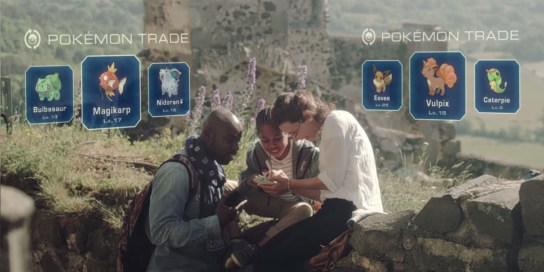
Pokemon, even if its first incarnation, has always been a social game and Pokemon Go is proving to be a brilliantly crafted take on the franchise’s social elements. I personally think Pokemon Go is a really unique app. I say app, because it’s honestly a little light on the actual game side. It’s more the social phenomenon that the game has created that keeps bringing me back to the app, checking to see if any new Pokemon are near me. Niantic has the basis of something amazing; if they improve upon the game’s features and add more of a built in social element (the ability to trade, battle near by trainers, etc) then Pokemon Go might be a near perfect social mobile adaptation of the Nintendo franchise. The developer seems to have plans to expand the game, and with their record breaking numbers it’s likely we’ll be hearing about Pokemon Go for years to come. We’ll keep watching this bizarre social experiment of catching fictional beasts out in our community and report back with any more sociologically interesting findings.


Nostalrius: Blizzard Shuts Down Popular Private Serve of the Original “Vanilla” World of Warcraft

World of Warcraft may be the most sociologically interesting game of all time because of the massive community the game has fostered in its 12 years of being active.  In those 12 years Blizzard has made some dramatic changes to the game, with new areas, races, and elements being added in with each update and expansion. While fans have been more or less positive about these expansions, recently a niche crowd of the WOW population grew nostalgic for the World of Warcraft of the past. Thus a private server named Nostalrius was created to give players an option to play the original, “vanilla”, World of Warcraft just as it was when it released in 2004.

hvjs9ze

This form of game  duplication falls into a murky waters when it comes to piracy. As it stands, it’s impossible to play the original vanilla WOW on an official server. Blizzard, for obvious reasons, has a stake in pushing their newer versions of the game that feature updated elements and graphics. What the team behind Nostalrius did was provide fans with an option to experience ( or experience again) a very specific version of the game that will most likely never be released officially by the developers. While what the team did is technically piracy (they’re distributing a game they don’t own for free) they are distributing a game that, for all intensive purposes, is financially dead: Nostalrius isn’t charging clients for the product and neither is Blizzard. Legacy servers are not a new thing, several MMOs offer legacy servers that allow players to play the original versions of their games, but the majority of legacy servers are officially ran or sanctioned. With World of Warcraft being the most popular MMO of all time, it’s only natural that Nostalrius grew in popularity and eventually reached a client base of 150,000 users (  a mere fraction of WOW’s 5 million subscribers). Despite being a fan-made project not seeking any financial compensation for their product, Blizzard has sent the team a cease and desist letter to halt all distributing and running of the game.

The Nostalrius team will be shutting down their server on April 10th and active users are already preparing for the end of the game’s world: clients across the world are actively participating in pilgrimages across the game’s world as  symbolic measures to bring in the servers demise.  “We never saw our community as a threat for Blizzard.” said the team in their open letter to Blizzard offering the company their help in providing fans with an option for legacy servers.

54jjay0

Cases like Nostalrius are particularly interesting in that they are instances in which a portion of a video game may simply no longer exist or be available to the general population. With video games slowing becoming more and more digital exclusive, certain games may become lost to time because the developers will no longer offer them or no longer have the means to offer them. In the case of WOW, fans came to Nostalrius because they were enthusiasts of something long-gone and fans of World of Warcraft as a whole. I’ve discussed these issues in the past, but it’s interesting to see the discussion come up around a very active game. Nostalrius and their community stark set on an in-game   pilgrimage to the apocalypse represents just how evolved and unique a video game community can become.. Some will revere the experience of playing the original game while other wills scoff and go back to the more updated version, but I do believe it’s an important thing to be given the opportunity to experience the game’s beginning. The in-game world of games like World of Warcraft are becoming more than just data online, they’re developing into shared experiences and worlds that hold sentimental value to those inhabiting them; when a online world ceases to exist it doesn’t simply disappear, it lives on in the memories and experiences of those who loved them. To a sociologists, we need to research and observe  how the advent of these digital worlds are effecting our social dimensions. If distant version of massive popular game can garner such a community, then certainly there is something more at work people merely playing a passive video game.

It is unfortunate that Blizzard will be forcing Nostalrius to shut down as it seems the server was only supplying fans with something Blizzard themselves are unwilling to offer. Perhaps one day Blizzard will head the advice of the team and provide fans with an official chance to experience the game’s beginnings. The story of Nostalrius reminds us to not take for granted the online games we love and play, because one they day they simply may not exist.

PCgamer’s piece on Nostalrius

twit
Follow us on Twitter @Socialvideogame!

Block’Hood: Can a Video Game Change How We Design a City?

Releasing tomorrow as an early access title on Steam is Block’hood,  an isometric neighborhood-building simulator. The game gives players more than 80 types of blocks to create unique and ecological neighborhoods and promotes players to find the optimum solution to creating cost efficient, sustainable communities.

blockhood_entra_extra

“Block”, the project’s first incarnation, was developed inside The University of Southern California’s School of Architecture as a open-source game that thought to plan the Los Angeles of tomorrow. Now, as Block’Hood, the game is open to the public and  has expanded its reach to designing the communities of tomorrow using cost efficient and resource smart practices. The game offers various ways of play including a “research mode”, a mode that requires players to play with real world values in mind, and a challenge mode that gives player specific scenarios and resource allocation to solve a building dilemma. With a message of conservation and  forethought towards building communities, resources management in the game is key to building a healthy city, for cities and buildings that don’t receive proper resource allocation and design will begin to decay and crumble.

The game will also be a tool of research, as the developers will share player creation and findings with academic communities and publications to further develop a better understanding towards how we can create better communities. With Block’hood being used as a tool for the academic community to use and discuss, the game has the potential to be much more than just a simulator.

This probably sounds like a advertisement for a game that isn’t even out. I haven’t had the chance to give it a try, but it sounds like a unique tool for those who are interested in architecture and community planning. Video games have developed to a point in which they have the potential to serve similar practical implementations in specific industry as more specialized complex programs. I’m not suggesting games like Block’hood replace programs like AutoCad or any advanced programs, but it’s great to see video games being developed to give the general public a taste of what goes into an industry they may not be apart of. It sounds trivial, but the designers and creators of the communities of tomorrow are the gamers building vast worlds in games like Minecraft. If a game can harness that curiosity and give the player the educational tools to make smart and practical decisions, then our future may be all the more brighter for it.  Even for those of us who won’t be the next generation of designers or architects, games like Block’Hood promote a better understanding of how we as a community use valuable resources and the cost our creations take on our environment and homes.

For us sociologist, we can observe Block’hood as another facet of society that video games have built their way into. This augmentation of society through video games is what is at the heart of the sociology of video games, as the more ingrained the medium becomes in our society the more we need to evaluate video games as a social institution. How we use video games and let them evoke change in our society has remained to be seen it is full extent, but games like Block’Hood point towards the medium being used for the betterment of society.

At the very least, the game looks like a fun lego-like creator for adults…So it has that going for it.

You can read a piece about Block’hood’s development from an academic tool to video game here!


This Day in Gaming History: A Wild Pokemon Appears

gam

Today marks the 20th anniversary of the Pokemon franchise, with February 27th 1996 being the Japanese release date of Pocket Monsters Red and Green on the Nintendo Gameboy. To say the original  Pokemon games were a momentous  release is an understatement, as they ushered in a cultural and societal phenomenon in both the United States and Japan. The franchise has gone on to become the second highest selling video game franchise of all time, second only to Mario, and has become the most successful handheld franchise of all time. It all started in 96 with this amazing game:

pokemon-red-and-green

One cannot tell the story of Pokemon without first mentioning the history of the developer behind it, Game Freak. Led by Satoshi Tajiri, Game Freak started in the game industry as a video game magazine featuring hand drawn artwork and writing. It wasn’t until 1989 that the team developed their first game, Mendel Palace for the Nintendo Entertainment System. From there Game Freak worked mostly on licensed games for Nintendo, including the titles Mario & Wario and Yoshi. It was around this time that Tajiri began conceptualizing Pokemon, a title that would take 6 years to complete development.

tumblr_m69y20zevy1qzj5ggo5_1280

Pokemon started from simple inspirations. Satoshi Tajiri, who headed up development of the game, had been fascinated by collecting insects as a child. He wanted to design a game that gave the player the same thrill of chasing and trading unique creatures as insect collecting gave him a child. Taking inspiration from one of his favorite shows of his youth, Ultraman, he wanted to incorporate a battle system that utilized captured monsters as party allies. These inspirations, paired with an interest in the Gameboy Link Cable that was introduced early in the handheld’s lifespan, grew the idea of a monster collecting game in which players could train, battle, and trade monsters with friends. In 1990,  Tajiri brought the concept to Nintendo under the title “Capsule Monsters”, who  turned the idea down. After shortening the name to CapuMon and subsequently changing it to Pocket Monsters due to copyright issues, Tajiri once again brought it to Nintendo. With the help of Shigeru Miyamoto putting his support behind the idea, the game was finally green lighted for development. The 6 year development of Pokemon Red and Green was one of technical difficulties, financial woes, and many unpaid overtime hours. When the game finally released in 1996 as Pocket Monsters Red and Green Versions, Game Freak had lost many of its developers and was on the verge of bankruptcy.  Despite its almost immediate international success years later, the Japanese release of the original game wasn’t the overnight success one would expect. It wasn’t until buzz about the game’s hidden 151st Pokemon that sales starting to pick up for the game, thus creating the cultural phenomenon that we know it as today.

green_mew
The original games had some..ugly sprites

Outside of Japan,  the game released as Pokemon Red and Blue, a slightly updated version of the original game with reworked sprites and details. Each version of the game held specific Pokemon only obtainable in  that specific version of the game. With the addition of Pokemon only achievable at the cost of another Pokemon and Pokemon that only evolved through trade, to obtain every Pokemon in the game required trading with another version of the game. This is where Pokemon becomes a milestone game in the social sphere of gaming; it is a game that requires players to interact and trade with others to obtain the game’s goal. While it’s inevitable that a player could just buy both versions of the game and a second gameboy, the intent of Game Freak was to promote a sense of community among gamers that fostered real loss and exchange. The developers wanted trading away special Pokemon to mean something for each player, and for their decisions and actions to have consequence in-game and in the real world.

maxresdefault

Years ago I wrote a more humorous look at the Pokemon series as an entity of social agent, but many of the lessons the game teaches players are about community and comradeship still hold true. It’s one of the few games of the era that has cooperation built into its success, despite a big emphasis of the game being about battling other trainers. Even today, whether it be with the game or the immensely successful card game, fans are comparing and trading Pokemon just like in 1996. There are few games that have had the cultural impact that Pokemon has had and I think it’s pretty likely we’ll see Pokemon remain popular for years to come.

UC Davis Creates an Interactive Game To Discuss Its Future

Tomorrow at 11am  UC Davis is launching Envision, an interactive video game designed to allow students, faculty, and associated members to come together to discuss and chart the university’s future. The game will be live for 36 hours, during which users can log in and meet with others in a virtual space.

envision-uc-davis_logo-290x181


UC Davis has created this game with the intent purpose of opening up the discussion of the university’s future to a wider population of students, giving them a virtual space to connect like never before. When it goes live for computers and mobiles, users will be able to share “micro-contributions” about their vision of the future of UC Davis, as well as add onto the visions of others. From their brief description, it sounds like the game will function akin to something like Reddit, where users can respond or add to specific threads of thought. A leaderboard system will be put into place to chart the contribution of users and winners will be awarded prizes, further promoting the “game” aspect of Envision.

https://www.youtube.com/watch?v=iiedtQpR88I

This is a pretty neat concept for a major University to attempt; it shows their dedication to gaming as a tool for social interaction and advancement. Online spaces have the ability to make for more neutral and accessible grounds for discussion, so hopefully UC Davis’ community will come out in force to chart its future. It is only open to those associated to UC Davis, but it will be interesting to see if this method of discussion proves to be a worthwhile method for Universities and organizations to consider in the future.

Check out UC Davis’ Press Release about the event

This Day in Gaming History: Nintendo’s Legend

gam

30 years ago on February 21st 1986, The Legend of Zelda released on the Nintendo Famicom Disk System in Japan. This original title in the long running Legend of Zelda franchise has had tremendous effect on shaping our modern day gaming culture and climate. Easily the most influential game in establishing conventions for subsequent adventure games, the franchise has revolutionized the gaming industry multiple times and it all started with this singular game.

cv0kya1uaaahvkl

What made this game so special?

combined_boxart

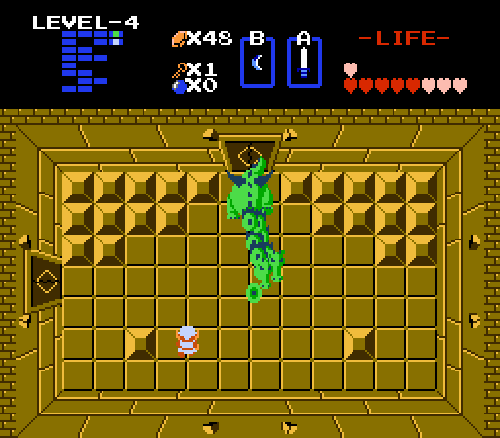
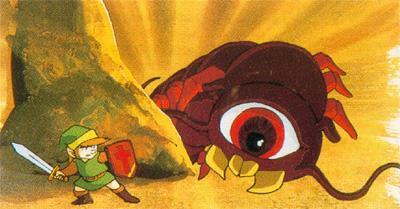
The Legend Of Zelda wasn’t the first adventure game by any means, and the game even draws significant influence from its predecessors such as Adventure for the Atari 2600, but what makes the game stand out is that it’s an amalgamation of what came before it. When Shigeru Miyamoto and his team at Nintendo began developing this game in 1985, they drew inspiration for various popular genres at the time, including puzzle and RPG games, and also from Miyamoto’s own personal experience of exploring . The game combines all these elements in a way that hadn’t been done previously and even paved the way for games outside of its genre to gain popularity on home consoles. The result is an approachable game that allows the gamer to explore a digital world  with very little direction or hand holding along the way. This approach of giving the player very little hint as to where to go and how to progress the game was a new approach for Nintendo, one that many of Nintendo’s employees felt was a gamble. With resolve, Miyamoto and his team stuck by their decision to keep the game vague and free of clear direction, desiring a true exploratory experience and with a hope that the game would develop a community.

zelda-21

Nintendo’s gambles paid off in ways they might not have expected. The Legend of Zelda became a word-of-mouth legend. Players would share hand drawn maps, secrets they discovered in the game, or notes on how to defeat a difficult enemy.  The game represented a true novelty in the gaming community: a game that bred discussion and sharing to discover everything it held. Beyond its sheer gameplay innovations, this aspect of the Legend of Zelda I believe is what makes it a true classic in gaming history and what make it the most relevant to the sociology of video games; it truly was one of the first games to promote social elements and cooperative sharing, elements that are now mainstays in the modern video game industry.

moldorm_loz

I can’t hide my personal bias, I love the game and the franchise. Admittedly, I have never beat the original game; I’ve only ever tried to beat it without the usage of guides and each time I’ve become lost several dungeons in. Despite this, I believe it stands as being an amazing game in its design and layout. It marvels me as to how both this and the original Super Mario were released within a year of each other, both of which were miles ahead of anything else on a home console at the time. With this year marking the 30th anniversary of the franchise, one can only hope that Nintendo delivers on their promise to release another innovative, immersive experience with Zelda Wii U (If it actually comes out this year).

the_legend_of_zelda_2015_nintendo_e3_2014_screenshoot


FBI Releases Anti-ISIS Propaganda Video Game

There’s been a lot of strange games released for all sorts of peculiar reasons: PETA’s anti-Animal Abuse Pokemon game and Shower With Your Dad Simulator 2015 come to mind as two particularly strange games with questionable motives. However, these games  fail in comparison to a new game released by the FBI. That’s right, the FBI. Allow yourself to take that in for a second: The United States Federal Bureau of Investigations has created a game and it’s just terrible.

I present to you: Slippery Slope, an anti-ISIS propaganda flash game meant to dissuade youths from falling into the trap of logic leading to violent extremism.

3004528-slip

The game is apart of the FBI’s “Don’t Be a Puppet” initiative, which is an online effort to educate impressionable youths about the dangers of extremism and warn them about the potential realities of such beliefs, including perpetrating hateful attacks based on race or religion. The program is meant to encourage teens to think for themselves and deploy skepticism and  practicality when coming across extremist ideas and rhetoric.

Let’s pretend for a second that this game is necessary and not a vapid attempt from an out of touch agency trying to  reach kids through patronizing means, how does the FBI intend to convey such a delicate and difficult message to kids? With Goats and explosions of course!

3004542-sheep
Minecraft is popular right? Just put a goat and radical text in there. Boom!

Included in the Don’t Be A Puppet’s interactive basement, the game is meant to be a original gameboy game entitled “The Adventures of Poonikins” starring the titular Poonikins, a goat who is apparently struggling with extremist beliefs. Design wise, it has a relatively simple  gameplay design: players control  Poonikins  while avoiding green walls as he traverses a vast green pasture attempting to make it to each of the game’s 6 finish lines. If Poonikins is to run into one of the green walls, he explodes instantaneously into various small blocks; a horrifying death for a confused goat. Upon passing a finish line and completing a level, the game displays “distorted logic text”, giving impressionable teens examples of harmful rhetoric.  Just on a purely  analysis of the game as a video game, Slippery Slope’s biggest problem lies in its horrendously touchy controls and it’s almost laughable difficulty; a tap of either arrow will send Poonikins flying faster than you can say, well, Poonikins. It’s just simply not well designed, featuring gameplay elements that feel like they would  fee stale even on  something like the Magnovx Odyssey.

Of course the greatest question is: What the hell does a goat avoiding walls and exploding have to do with radical extremism?  This game doesn’t convey any meaningful message in any way, if anything it just distracts from the initiatives overall message by being strange and absurd. Why is the goat’s name Poonikins? Does the FBI think Goats explode when touching green walls?  The Goat is a terrorist, is that whats going on? There are so many baffling questions unanswered by this one’s Goat dangerous descent into extremism.

So why am I bringing this up? What could this terrible game with questionable motives have to with sociology? On this blog I like to point out new ways video games are being implemented in our society, from usages in medical rehabilitation to being used as a means to weed out job candidates. These new implementations speak to how ingrained video games have become in our society; they are permeating into all aspects of society, giving us new ways to interact and carry about our regular lives. The FBI creating a video game with the intent purpose of educating youths is a pretty remarkable action, exemplifying society’s gradual shift towards an acceptance of the medium as a powerful tool in education. We’ve come to the point where video games, for better or worse, are transcending the the typical gaming conventions and being used for new and unique way every week. The FBI’s Slippery Slope may be an example of a poor harnessing of the power of the mediums ability to do more, but  it’s a novel one at the very least.

Still, it’s hard not come away from playing this game without feeling dirty.  If this game is the latest tool in counter terroism that the FBI can offer, maybe we need to rethink some things.

Play the Game For Yourself Here!

twit
Follow us on Twitter @Socialvideogame!


Square Enix Teams With Pacer to Stop Bullying

lifeisstrange

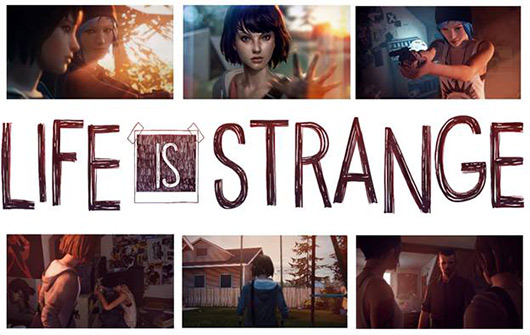
Square Enix announced a partnership with the Parent Advocacy Coalition for Educational Rights (PACER) to enact an anti-bullying initiative.  Starting on January 13th, Square Enix will donate towards PACER’s national Bullying Prevention Center for every tweet of #EveryDayHeroes they receive this week, a hashtag inspired by the game “Life is Strange”.

Join our cause by sharing your own #EverydayHeroes moments. Tell us a story about how you overcame adversity, stood up for what’s right, or helped a friend in need. For every post using the hashtag #EverydayHeroes from January 13 to January 19th, Square Enix will make a donation to PACER’s National Bullying Prevention Center. Share your story today, and give help to those who need it

Life is Strange is a 2015 title that tackles the theme of bullying, allowing the player to weigh in and progress the plot through choices that will shape the game and ending. The game, which has been awarded game of the year by several media outlets, is receiving a physical release this week, but is currently available on most major platforms.

You can watch Square’s promotional video to kick off the event here

Life is Strange is a perfect example of video games can be used to tackle real world problems and issues, and it’s refreshing to see a big corporation like Square-Enix partner with organizations trying to instill real change in the world. If you’re on twitter, please tweet the hashtag #EveryDayHeroes. It’ll take two seconds.