New Co-Authored Chapter: Designing Care(full) Online Play Communities for Youth

A quick 2025 update to share a co-authored chapter I co-wrote with some other amazing scholars entitled “Designing Care(full) Online Play Communities for Youth.” This is a chapter published in the collection Youth Wellbeing in a Technology Rich World, Edited by Carrie James and Mizuko Ito. I am so appreciative of the editors and organizers for including this chapter in the collection, and to my co-authors who have been spectacular to work with.

You can read the chapter at this link: https://wip.mitpress.mit.edu/pub/6kj51uj4/release/1

And finally, just a quick logistical update. The best places to reach me (to talk, connect, or share resources) are now on Bluesky and Linkedin. I love talking to scholars and students interested in sociology and video games, so please do not hesitate to connect!
Updates Summer 2024: I’m a PhD Now!

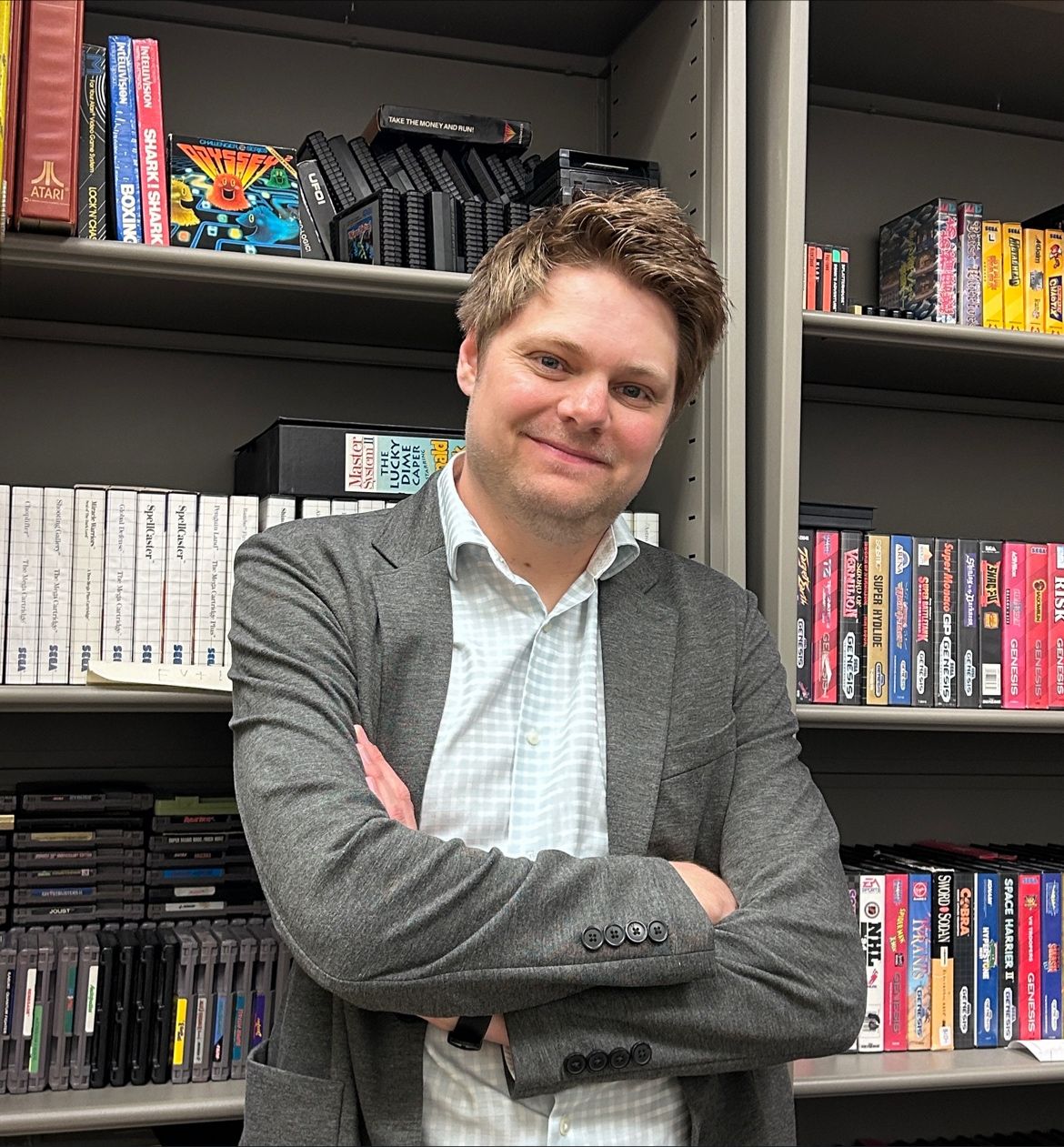
This past May I successfully defended my dissertation entitled “Bootleg Consoles: Culture, History, and Legitimacy at the Margins of Gaming”. I am so happy to say that (barring some paperwork) I have earned my PhD and the title doctor. It’s been a long trip to this point and I’m so grateful to my committee, the Informatics department at UC Irvine, and everyone who has supported me throughout my graduate career. I’m hopeful I can share more about the dissertation soon, but it will make it out in the world in the future at some point.

But I’m not done presenting this work just yet. I’ll be presenting at the Save the Games Symposium at the Strong Museum of Play in Rochester New York at the end of August. I’ll be talking about the importance of preserving bootleg video games and the work that needs to be done to make sure these games and devices don’t disappear forever.

And lastly, I’m on the job market! This year I’ll be pursuing teaching opportunities in sociology, games, and related fields. If you know a department or school that could use a sociologist who studies digital media and games, let me know! I’m happy to connect!

That’s all for now! Over the course of the next months, I’ll be submitting some more work to conferences, planning a class for the fall, and just generally surviving. But, I’m looking forward to continuing to research video games and sociology and connecting with other fellow academics and peers.

You can reach me on on Bluesky

You can also reach me on Linkedin

Upcoming Conference Presentations, Early 2024

After taking a year or so off to work on the dissertation, I’m back on the conference circuit to present some ongoing research.

I’ll be presenting on the Accessibility of Retro Video Games at the Pacific Sociological Conference this week (March 21st) and then I’ll be presenting some work on Bootlegging Video Game history at the History of Games Conference in May.

CREATOR: gd-jpeg v1.0 (using IJG JPEG v80), quality = 82

For those interested in getting into sociology more, attending conferences is a great way to learn more about the field, what work is being done, and network with other students and sociologists. Even if you’re not presenting, just attending conferences are usually pretty low-stakes ways of getting involved. Most conferences also need student volunteers, so you can probably attend free of charge if you’re willing to help out.

Recent Publication: Privileging the Past Problematic and Gendered Rhetoric in Retrogaming Content

A paper I wrote entitled “Privileging the Past
Problematic and Gendered Rhetoric in Retrogaming Content” is now available via the proceedings of the Foundations of Digital Games 2022 conference. I won best paper for this article and I’m really excited that it’s finally out for all to read.

Here’s the abstract to the article:

This paper presents qualitative analysis of 5 of the most popular retrogaming channels on the streaming site “YouTube” to understand how notions of gaming past are brought to bear on the present. Findings suggest that content creators draw upon personal histories and well-trodden discussions to present informational content about products of the past. However, these accounts are often situated in privileged and gendered accounts that are indicative of what Salter and Blodgett term “Toxic Geek Masculinity”. Although seemingly innocuous, these narratives potentially contribute to barriers of entry into the gaming community for marginalized individuals that do not fit within the hegemonic gaming norm.

If the article is unavailable to you for whatever reason please let me know and I’d be happy to share a copy.

Presentation and Paper at CHI-Play 2022

A paper I co-authored with Thomas Grace, and Katie Salen entitled “Policies of Misconduct: A Content Analysis of Codes of Conduct for Online Multiplayer Games” will be presented and published at CHI-Play 2022.

Update: you can now read the full paper here: https://doi.org/10.1145/3549513

Unfortunately I will not be able to attend the conference in-person, but I am very much looking forward to attending virtually.

Here’s an abstract for the paper:

In this paper we searched the websites of 60 popular online multiplayer games to locate their codes of conduct and then performed a content analysis on 32 unique codes of conduct. Our analysis consisted of a two-cycle coding process including initial coding, and then pattern coding for clustering categories and themes together. Our aim was to better understand how game companies include codes of conduct on their websites and what content they include in the codes of conduct. The two-cycle coding process identified five main themes: (1) game company values, (2) expectations of players, (3) bad behaviors and rules, (4) moderation practices, and finally (5) document structure. Our findings suggest that codes of conduct are routinely inaccessible, if present at all, and that codes of conduct are often framed around punitive legal language that reflect policies of misconduct rather than expressing communal values and expectations. Our findings can help contribute towards community management in online games and make codes of conduct more accessible for all stakeholders in online gaming communities. We have also provided design recommendations and a design process that should help guide game companies looking to create value focused codes of conduct.

Upcoming Presentations: FDG 2022, Athens Greece

I’ll be presenting research on the retrogaming community, as well as a brief presentation on my dissertation work, at the Foundation of Digital Games annual conference in Athens, Greece. The paper “Privileging the Past: Problematic and Gendered Rhetoric in Retrogaming Content” will later be published in the FDG22 proceedings (so stay tuned for that!)

If you’re also going to the conference or have interest in the presentation/paper, please feel free to reach out. Looking forward to sharing this research.

New Article: The Bootleg Connection

I’m so excited to share my newly published article entitled The Bootleg Connection: Micro Genius and the Transnational Circulation of Early Clone Consoles now available via the Journal of Game Histories, RomChip.

Micro Genius products

Here’s the abstract for the article:

Video game histories often depict the medium’s global rise as untroubled, with video games emerging from North America and Japan and meeting little to no resistance. Recent game scholarship has shown the flaws in this narrative, specifically its Western-centric bias and failure to acknowledge the numerous regional markets and local developers who contributed to the medium’s global popularity. This paper continues this work by considering an alternative, bootleg network of transnational gaming circulation. By exploring Micro Genius devices and their transnational legacy as a case study of bootleg gaming brands, this paper contends that alternative gaming experiences are not only important but critical to game history and the global game industry’s extraordinary reach. Originating in Taiwan, Micro Genius devices had an undocumented impact on the growth of the regional gaming market. Subsequently, the brand had an extensive afterlife as a transnational clone via three regional variants: the Dendy in Russia, the Pegasus in Poland, and the Samurai Micro Genius in India. The case of Micro Genius and its various rebrands shows how pirate brands not only invited regional communities into the video gaming market and culture but did so through complex transnational networks comparable to those of leading companies like Nintendo and Sega.

I’m so happy that this piece is finally out there. It’s been several years of work and really encompasses a lot of where my research is going.

New Article: Game studies, futurity, and necessity (or the game studies regarded as still to come)

An article I co-wrote with a few of my games labmates entitled Game studies, futurity, and necessity (or the game studies regarded as still to come) was recently published in the journal Critical Studies in Media Communications as apart a issue on the future of games research. It was truly a wonderful collaborative experience putting together this piece and hopefully it will be of interest to some of you.

Here’s the abstract for the article:

As members of the Critical Approaches to Technology and the Social (CATS) Lab at UC Irvine, we are particularly motivated by this special issue’s call to action. As a collective of interdisciplinary students at various stages in relevant degrees, we are the future of game studies. As such, this question strikes us not as one for speculation, but as a space to commit a set of shared values necessary for game studies to have a future—one that is more equitable, more sustainable, and more transparent. We argue that working towards this future will require an increased commitment to critiquing the relationship between industry and game-making practice; examining the sociopolitical landscape of both game culture and the world; and an attention to the institution of the university itself. Imagining the future in this way is a necessary practice, and a core component to scholarly critique. When we imagine the future, we can work both towards and against it. We do this work as researchers, but also as streamers, makers, critics, and players, each of whom brings our perspective to this special issue to articulate our vision of a critical game studies that strives for equity, sustainability, and self-reflexivity.

The full article can be found at this link. If for whatever reason you are unable to access the article, please feel free to reach out and I can help out.

Upcoming Presentations: PSA and Console-ing Passions

Just wanted to update the blog with a few presentations of research coming up. My presentations will be focused on a paper about privileged and gendered rhetoric in Retro Gaming content. Hopefully the paper will be available to the public soon.

In early April I’ll be presenting at the Pacific Sociological Association’s annual conference in Sacramento, CA.

In June I’ll be presenting (most likely virtually) at Console-ing Passions 2022, being held a the University of Central Florida.

I’m looking forward to attending these conferences and getting back to meeting other academics!