Games Studies and The Sociology of Video Games

14580391561

Having started upon a path towards advanced degrees with an emphasis in interactive media and online communities, it has increasingly become evident to me that there is no singular route to studying the emerging field of video games. As I have mentioned in the past, video games uniquely fall at the cross section of multiple disciplines, each with varying ways to analyze and interpret the social significance going on in these digital worlds.

Anthropology, Media Studies, Psychology, and, of course, Sociology, all offer valuable insights for researchers setting out upon this path towards the academia of video games, but the road isn’t probably the neatly paved one you hope it be. Academia, for all it affords and fails to be, is still a regimented system of bureaucracies and categories; those seeking to study video games in any of the aforementioned fields will undoubtedly come across hurdles and pitfalls. Despite this, we push on: we make concessions and we work at expanding the field inches at a time. A triumph has arisen in the developing field of  Game Studies, an interdisciplinary field for all of these traditional academic interests and more.

What is Game Studies?

Wikipedia (The student in me is rebelling) defines Game Studies as

The study of games, the act of playing them, and the players and cultures surrounding them. It is a discipline of cultural studies that deals with all types of games throughout history. This field of research utilizes the tactics of, at least, anthropology, sociology and psychology, while examining aspects of the design of the game, the players in the game, and finally, the role the game plays in its society or culture. Game studies is oftentimes confused with the study of video games, but this is only one area of focus; in reality game studies encompasses all types of gaming, including sports, board games, etc.

That all sounds great! But what does that all encompass? This really is a large umbrella term that captures multidisciplinary research across the vast subject matter of gaming. This isn’t to be confused with game design, which of course is a vastly different discipline centered around the creation of games themselves. The best place to start to understand Game Studies would be with the theory behind it. A foundational theory connecting these discipline comes from Dutch theorist Johan Huizinga in his extensive exploration into how play connects society and culture. To summarize in the most simplistic way, Huizinga believes that play is an essential part of the cultural membrane that connects, one that brings people together and sets rules and boundaries to define the rules of play.  This theory of play, originally formulated in the 1938  book Homo Ludens, has been expanded, reevaluated, and used to understand the cultural significance of gaming, even as it has evolved to to reach highly technological heights.

What role play holds in our life is an incredibly open and complex question, with endless angles for it to be tackled. Authors like Jesper Juul, Ian Bogost, Tracy Fullerton,and Jane McGonigal  have taken upon this question in vastly different ways and they are just the start. My current research has led me to tackle this issue from a different take as well: evaluating what role deviance and punishment play in virtual worlds. Still, there is much to be explored and much to understand. Game Studies sounds to be a haven for all these inquiries and more.

What’s the Issues?

You may be thinking “Well, that sounds all great. Why aren’t we [academics interested in video games] all just flocking to Game Studies then?” .  Unfortunately it’s not as easy as just that.  Academia  is slow to move and currently there are no programs that offer advanced degrees in game studies. Fortunately, Bonnie “Bo” Ruberg of The University of Southern California has been nice enough to put together a guide to obtaining a PhD in Game Studies. Their advice? Get in where you can. Find universities that have academics and professors who work and write in Game Studies, applying to their departments or related ones.  Graduate programs are often about who you know, so such a recommendation is definitely valuable; find individuals you want to work with, not schools that you want to go to on name alone.

Of course graduate programs aren’t for everyone, and one is certainly able to contribute to the field without an advanced degree. For those not wishing to  go back to school, the best thing I think one can do is create work and submit it to the appropriate sources. For all of you lovely game enthusiasts, an online journal for game studies has  been created: Game Studies.

The Journal’s mission statement is:

To explore the rich cultural genre of games; to give scholars a peer-reviewed forum for their ideas and theories; to provide an academic channel for the ongoing discussions on games and gaming.

Sounds perfect…Now to just produce something worthwhile.

All of this is to say that we, gaming academics, have options and avenues available to us. It won’t be an easy route, but perhaps will prove to be a fruitful one.  I am of course not in any way a Game Studies expert, so any oversights or generalizations can be attributed to ignorance. Of course I’m always willing to learn more, so if you have any insight or information that you feel I am leaving out, please let me know.

I hope this post was helpful. For any regulars (the few of you), I apologize for the lack of posts. Graduate school has a way of making you not feel like writing in your free time. I’m hoping to write and share more in the coming weeks.  And now it’s time for me to bury myself in piles of graduate assignments and research.

New Research Finds Adult Men are Choosing Video Games Over Full-Time Work

It’s the end times my friends: Video games are destroying our economy.

New research coming out the Princeton, The University of Chicago, and University of Rochester has found a correlation between the abundance of high quality video games and uneducated adult men choosing to remain out of the workforce. The study itself isn’t yet available, but the Washington Post has a good summary of the study’s findings and an evaluation of what they may mean.

imrs

The study compares unemployment rates of adult men with happiness levels and screen time usage and found that, despite having higher unemployment rates than in previous years, adult men are on average reporting having higher levels of happiness, which is potentially tied to their increase in average video game usage. It’s a pretty interesting study with some pretty big implications:

While young men might temporarily enjoy a life of leisure, the implications could be troubling for them as well as the economy. The young men aren’t gaining job experience that will better equip them to work in their 30s and 40s. That, in turn, could lead to a lifetime of decreased wages, limited opportunities and challenges such as depression and drug use — problems that the United States is already seeing in areas hit with heavy job losses.

These are interesting findings, and in some way makes logical sense: the abundance of media is making people more content, unemployed or not. However, there are potentially other variables that are effecting this relationship. It’s not absurd to think that a contributing factor to adult men not entering the work force is because of the entry level job have been considerably reduced in recent decades due to shrinking opportunities for the working class: rather than enter the work force working for Mcdonalds and making next to little money, many adult men choose to stay at home and focus on their happiness instead.

imrs-happy

For an economist, these are certainly concerning findings because they exemplify how potentially disenfranchised uneducated adult men are with job opportunities. At the same time, it’s positive to see that happiness levels are steadily rising, potentially because of video games. Whats bad for the economy may be good for the individual.

I would need to read the entire study, including their methods, to make a better critique and analysis of it, but it’s great to see video games gradually become a more researched field. I highly recommend at least reading the Washington Post article as the research does do a good job of looking at the whole picture. Video games are important sociological variables that are pervading in all parts of society, so it’s great to see different disciplines starting to struggle with their place in society.

Block’Hood: Can a Video Game Change How We Design a City?

Releasing tomorrow as an early access title on Steam is Block’hood,  an isometric neighborhood-building simulator. The game gives players more than 80 types of blocks to create unique and ecological neighborhoods and promotes players to find the optimum solution to creating cost efficient, sustainable communities.

blockhood_entra_extra

“Block”, the project’s first incarnation, was developed inside The University of Southern California’s School of Architecture as a open-source game that thought to plan the Los Angeles of tomorrow. Now, as Block’Hood, the game is open to the public and  has expanded its reach to designing the communities of tomorrow using cost efficient and resource smart practices. The game offers various ways of play including a “research mode”, a mode that requires players to play with real world values in mind, and a challenge mode that gives player specific scenarios and resource allocation to solve a building dilemma. With a message of conservation and  forethought towards building communities, resources management in the game is key to building a healthy city, for cities and buildings that don’t receive proper resource allocation and design will begin to decay and crumble.

The game will also be a tool of research, as the developers will share player creation and findings with academic communities and publications to further develop a better understanding towards how we can create better communities. With Block’hood being used as a tool for the academic community to use and discuss, the game has the potential to be much more than just a simulator.

This probably sounds like a advertisement for a game that isn’t even out. I haven’t had the chance to give it a try, but it sounds like a unique tool for those who are interested in architecture and community planning. Video games have developed to a point in which they have the potential to serve similar practical implementations in specific industry as more specialized complex programs. I’m not suggesting games like Block’hood replace programs like AutoCad or any advanced programs, but it’s great to see video games being developed to give the general public a taste of what goes into an industry they may not be apart of. It sounds trivial, but the designers and creators of the communities of tomorrow are the gamers building vast worlds in games like Minecraft. If a game can harness that curiosity and give the player the educational tools to make smart and practical decisions, then our future may be all the more brighter for it.  Even for those of us who won’t be the next generation of designers or architects, games like Block’Hood promote a better understanding of how we as a community use valuable resources and the cost our creations take on our environment and homes.

For us sociologist, we can observe Block’hood as another facet of society that video games have built their way into. This augmentation of society through video games is what is at the heart of the sociology of video games, as the more ingrained the medium becomes in our society the more we need to evaluate video games as a social institution. How we use video games and let them evoke change in our society has remained to be seen it is full extent, but games like Block’Hood point towards the medium being used for the betterment of society.

At the very least, the game looks like a fun lego-like creator for adults…So it has that going for it.

You can read a piece about Block’hood’s development from an academic tool to video game here!


ESA: Essential Facts About Gamers and Politics

banner

Oh Electronic Software Association, you’ve given me an early Christmas present. The ESA is the foremost data collector of statistics and data on video game consumption, usage, and attitudes.  Annually this blog reports on their essential facts about video game consumption, but today they’ve released a special report on their findings on how politically engaged gamers are. They’ve created a easy to read infographic of all of these statistics that I will be pulling from.

Now that were are officially a year away from the 2016 election, such statistics are as timely as ever. Spoiler alert: Most gamers  don’t think America’s leadership is a monarchy ruled by Princess Zelda.

votingThe results are overwhelmingly positive: gamers are very politically engaged. In a survey that asked whether or not they would vote in the 2016 election, 80% of gamers said they were going to exercise their right to vote. This is in comparison to non-gamers, which had a percentage of 75% respondents saying they were going to vote in next years election.

“100 million gamers will vote next year…Gamers are engaged, informed and hold strong opinions on critical issues. From both sides of the aisle, and in every state across the country, they will influence the course of our nation’s future.”

partyIn terms of political party, gamers are split even with an equal amount identifying as
Republican and Demographics. This doesn’t surprise me all that much, as it closely represents the general demographics on the United States, further showing that gamers are the general population. That said, significantly more gamers identify as conservative than liberal. Why gamers skew heavily social conservative is beyond me, and on what issues they lean conservative isn’t specified

Lastly the survey looked at what gamers think about specific issues.

issues

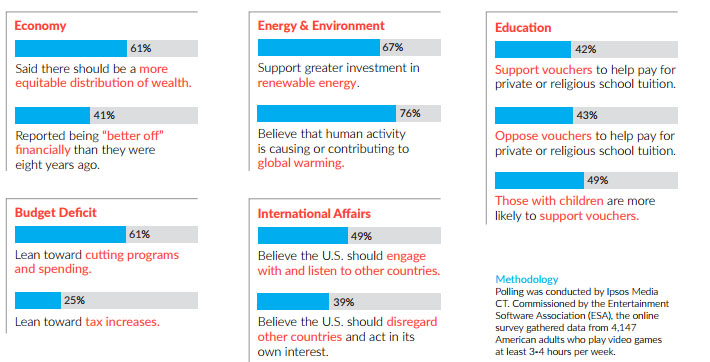
There’s some really interesting insights into how they fall on issues and this is really one of the first studies to actually ask these specific questions.  Despite the majority classifying themselves as “conservative” their political leanings on issues definitely have some socially liberal slants.

With the statistics out of the way, we can hypothesize as to why gamers tend to be more politically active than non-gamers (or at least say they are). It could certainly have something to do with their connection to online communities; video game communities are gathering places for people to discuss on-going issues. Places like NeoGaf’s off-topic forums ignite intellectual debates in their threads, and this creates public awareness for issues people may not typically come across in their daily lives. Whatever the reason for this political engagement, it’s a beautiful thing to see gamers getting politically active. There are issues out there that concern all gamers; A more politically engaged community is one that has a greater voice.

I think Simon Rosenberg, president and founder of NDN, says it best in the ESA press release:

What is so striking about this research is how deeply mainstreamed video games have become in our culture…The views of gamers are as diverse as the nation itself, and there can be little doubt now that playing video games is a near universal activity at the very core now of the national experience in the U.S.”

Not to brag or anything, but I’ve been saying that for years…Yeah, I’m cool.

Please head over the ESA website and support this type of research. We need more of this stuff, it really does make for a more educated and informed video game community.

Pew Research Center’s 2015 Findings on Console Ownership

Less progressive parts of the gaming community are in an uproar today, as a new survey suggest that more American women own video game consoles than their male counterparts. Should chauvinistic males flee the medium for fear of cooties? We’ll look into that finding and more!

next_gen_consoles

The Pew Research Group is a well respected, non-partisan ,and non-advocacy research group that gathers data on public issues, attitudes, and trends shaping America and the world. This week they released their findings on technology device ownership, ranging from tablets to video game consoles. It’s great data to comb through, but I’ll be focusing specifically on the findings of console ownership.

Let me start of my saying this: It’s ridiculous that there is a backlash to this survey. Read any article reporting this survey and you’ll be met with juvenile comments from people saying it’s poor research, a conspiracy of sorts, or a sign that video games are going to hell. Regardless of the validity of the data,  such comments and responses prove that there still exists a vocal minority that represent backwards and offensive views. If this survey is true, we as a community should be thrilled that this once male dominated medium is now a more inclusive one. A diverse video game community is a stronger community and  these negative views do not represent the entire video game community.

With that said, lets examine the finding:

The number that is grabbing the most headlines is the finding that 42% of women own video game consoles, while only 37% of men own a console.  This result is contrary to what most would assume, as the ESA report on video game consumption found that male gamers were still in the majority. However, it’s not as inconceivable as it once was; female gamers are on the rise and they make up nearly half of the gaming population.

With that said, there are certain consideration to think about when looking at this data, such as does this data include respondents who are parents and own video game consoles because their children? Likewise, does this include respondents who bought video game consoles because of their multimedia uses and not their video game uses, and would otherwise not consider themselves “gamers”?  Although we don’t have an answer for these questions and these aren’t suggestions for why the data is as it is, such questions allow us to better interpret and hypothesize about the data in front of us. To create a better picture of console ownership, additional probing questions would have to be asked.

Next the survey looks specifically at the breakdown of race in regards to console ownership. This data is actually quite interesting if only for the fact that it’s not something most research groups typically delve into when conducting research concerning video game demographics. That said, it’s not all that surprising; the percentage of people who play video games is relatively similar across each race.

Likewise, the data on educational attainment  and community type is relatively unremarkable. It is worth noting that the educational attainment data is mostly tied directly with financial ability to purchase video games.

As stated at the bottom of the survey, the sample size surveyed was 948 respondents. This is a pretty healthy sample size; more could be included, but it’s viable enough to work off of.  The Research Group goes into their complete methodology behind the survey for anyone with lingering doubts about the survey. Given that, should we take all of this data at face value? Not necessarily. As I mentioned, this data doesn’t give the complete picture. There may be reasons why certain stats are what they are, but the data does  gives us a better picture than we had before.

In all, this isn’t the most earth shattering survey response. Not all data is shocking or dramatic, a lot of time surveys just confirm what we mostly assume. However, it’s important for groups like the Pew Research Group to conduct these surveys because they give us the raw data that we need to formulate our arguments and theories. They’re out there doing the hard work for us. No body wants me calling 948 people asking about whether or not they have video games, I swear.

Report on the Status of Teens’ Use of Technology in Social Life

The PEW Research Group has recently released their 2nd  of 3 reports on “Teens, Technology &  Friendships”. PEW, which describes themselves as  “a nonpartisan fact tank that informs the public about the issues, attitudes and trends shaping America and the world”,  has conducted extensive research to academically confirm something we all probably know: Teenagers are using technology  to maintain social relationships.

thispos

If you’re mind has just been blown, please take sometime to compose yourself and in the near future you might want to reconnect with society (Google has self-driving cars now, don’t be scared). The report itself is actually pretty insightful and explores how teenagers use video games in their social life more thoroughly than any study I have seen previously. It’s obviously isn’t going to be ground breaking conclusions, but a big part of sociology is academically documenting and observing trends in society.

There’s a lot of information we could go over, most of which dealing with how teens are using social media sites and apps like Twitter, Instagram, and Facebook to create and maintain social ties, but for the sake of only going over what most pertinently concerns this blog we’ll only be delving into the report as it concerns video games. LET’S JUMP IN:

“52% of all teens spend time with friends playing video games; 13% play with friends daily.”

In line with what the ESA reported on video game usage for 2015, this statistic doesn’t surprise me. Gamers in general are becoming more and more social, so it’s only natural that you’d see teenagers take advantage of this as well. Games like World of Warcraft and Halo are cited as specific games that have been used as tools for socialization within teen social groups.

“Overall, 72% of teens ages 13 to 17 play video games on a computer, game console or portable device. Fully 84% of boys play video games, significantly higher than the 59% of girls who play games. Playing video games is not necessarily a solitary activity; teens frequently play video games with others. Teen gamers play games with others in person (83%) and online (75%), and they play games with friends they know in person (89%) and friends they know only online (54%). They also play online with others who are not friends (52%).

This is a little confusing to read because of all the numbers. The way to read these numbers is the percentage of respondents that fell into that group. Don’t try and add them up, as individuals may fall into multiple categories (for example, a teen may respond  that he plays online regularly with friends he met online AND plays with people who are not friends).

What’s interesting here is to examine just how much video games have pervaded our culture. On whole 42%* of Americans play video games regularly, so for 72% of teenagers to play video games  regularly one can hypothesize that the number of Americans who play games regularly will probably continue to go up year to year. Likewise, just the sheer number of teens playing online is remarkable. 10 years ago that amount probably would have been halved. It’s not all that surprising, what with all major consoles being online  and the majority of AAA games having some sort of online mode, but it’s dazzling to see for someone who grew up in an era in which video games were mostly a solitary activity.

  • -38% of all teen boys share their gaming handle as one of the first three pieces of information exchanged when they meet someone they would like to be friends with; just 7% of girls share a gaming handle when meeting new friends.

  • -Of teens who have met a friend online, 57% of boys have made a friend playing video games. That amounts to 34% of all teenage boys ages 13 to 17.

These two are particularly interesting, just because these aren’t the type of statistics most studies will look into.  It makes sense that a good portion of teens making friends online would do so in a video games, as it’s a common ground for people to meet and share something they’re both interested in.  If anything, I’m more interested what the relationships of people meeting in others  online grounds would be; forums potentially have the same effect, but social media sites are more of an oddity in my mind. Regardless, it shows that technology is being used in various ways to strengthen and even create relationships.

When playing games with others online, many teen gamers (especially boys) connect with their fellow players via voice connections in order to engage in collaboration, conversation and trash-talking. Among boys who play games with others online, fully 71% use voice connections to engage with other players (this compares with just 28% of girls who play in networked environments).

This one is the statistic I found to be the most interesting, as one might be able surmise a bigger problem at work.  With 59% of girls playing video games, it’s surprising that only 28% responded that they play with voice communications. In a interview by Kotaku, a lead author of the report concluded that this means only about 9% of girls playing video games are using voice communication in online games. Why the low number? The study unfortunately does not go into why this may be, but if I had to guess I would say they may be a mix of practical and troubling reasons for the community. I don’t want to make assumptions, but it wouldn’t surprise me if one of the reasons found were because teens girls had negative experiences when playing online with others. I’ll leave it there.

This chart is exemplifies this gender difference between how male and females are using video game communities. For boys, video games are being used as social outlets in the same way text messaging and social media is being used, which is something one might not automatically assume.

There’s much more in depth analysis in the report itself, which can be found here in its entirety. The grand take way to the entire report is that technology isn’t causing the social relationships of teens to diminish. Yes, teens aren’t connecting the same way they did 20 years ago, but they’re still connecting and the social bonds they create aren’t any less real or solid. Technology, in many ways, is augmenting the ways we connect with others and even allowing us to reach groups and people that we wouldn’t otherwise be able to connect with.  So, the next time you see a teen on their phone don’t scoff or dream of the “good ol’ days”, just realize that society advances and restructures how we socialize.

*Data from ESA 2015 Report

Follow us on Twitter!

Time’s “Everything You Know About Boys and Video Games Is Wrong”

A new Time’s piece is claiming that everything you know about boys and video games is wrong. I don’t know if exclusive knowledge on either subject is false, but you may as well throw away all of your beliefs about both boys and video games. Rosalind Wiseman, whose work you probably have experienced without even knowing it (Her book was the basis for the movie “Mean Girls” for example) explores how middle school and highschool boys view sexism in video games. Should we care? Is this study worth your time?  “Forget Everything You Know About Research Studies”

The interest in the subject matter began when she started noticing her students being annoyed by overly sexualized characters in their handheld games (Candy Crush 3 features some real bosomy candy bars). She specifically mentions “Game of War” which is an incredibly popular mobile game that has, as its mascot, Kate Upton dressed in a outfit very inappropriate for the battlefield. Thus, she decided to team with her research group to survey kids from across the country to get their perspective on sexism in the video game industry. She surveyed  more than 1,400 middle and high school students with a questionnaire that asked them to agree or disagree with certain statements relating to sexism and objectification of females in gaming. The results, she claims, will stun you (They probably wont).

To preface, I want talk about the presumption the article takes: it assumes that young boys are drawn to games that features women in scantily clad clothing and feature a male protagonist.  This assumption is an odd one, as teenagers and middle school students aren’t the target audience for games that feature these characters. Obviously puberty is difficult and young boys hormone are insane, but that doesn’t mean they want sexism or objectified women in all aspects of their lives. If anything,  I would argue that young men have more shame when it comes to characters being over sexed because they  feel embarrassed to play games with on-screen characters they don’t want their family seeing. Adults, on the other hand, could care or less, which is why they are the target audience for games with more explicit characters. As such, I don’t think a results that claim that boys are “more progressive” than we believe is a stunning new finding.

Terrible anecdote time: From my own personal experience, I wouldn’t have wanted to play or had games around that featured sexist characters.  For example when I was a teenager, I wasn’t particularly proud of playing Final Fantasy X-2 at points. It’s a perfectly harmless game that features the games heroines in ridiculous outfits, but otherwise it’s actually a pretty solid game. Being a fan of the original I naturally wanted to play the sequel, but was embarrassed at times because some of the silly and ridiculous scenarios and outfits the game would place the characters in. I also knew others who chose not to play the game as a result (Probably more so because it looks like a girls game, but regardless). FFX-2 is also a very low offending game, so I can’t imagine how others would feel with more explicit characters and games.

Nevertheless, back to the claims:

Boys believe female characters are treated too often as sex objects

47% of middle school boys agreed or strongly agreed, and 61% of high school boys agreed or strongly agreed. “If women are objectified like this it defeats the entire purpose of fighting,” Theo, an eighth-grader who loves playing Mortal Kombat, told us. “I would respect the [female] character more for having some dignity.”

This one is the that’s garnering the most debate. It’s a difficult thing asking middle-school children about objectification, as it’s a complex concept that a lot of them may not understand. That said, the results aren’t as overwhelmingly positive as piece seems to make them out to be.  If only 47% of middle schoolers and 61% of highschoolers agreed with the statement that women are being objectified it leaves a healthy portion of kids that either don’t agree or have no particular opinion on the matter.  I have other issues with the research method (or lack there of in terms of description), but we’ll come back to those issues.

Both boys and girls aren’t more likely to play a game based on the gender of the protagonist

70% of girls said it doesn’t matter and 78% of boys said it doesn’t matter. Interestingly, boys care less about playing as a male character as they age and girls care more about playing as a female one.

With more female characters in gaming becoming the norm, it’s positive to see this response.  I have a sneaking suspicion that this question was influenced by the wording however, as the results are almost too overwhelmingly in favor of not caring whether the protagonist is male of female. Likewise, I’ll discuss that a little more in a bit.

Girls play a variety of game genres

26% played first-person shooter games like Call of Duty and HALO, 36% played role-playing games like Skyrim and Grand Theft Auto, and 17% played sports games like FIFA and Madden. (19% did not play games, compared to 3% of boys.)

This one if the most straightforward, and represents a lot of the data that the ESA reported on with their yearly findings.

The survey isn’t currently available and I haven’t been able to find a copy of it. If I had a better sense of what was asked I could make a more informed decision on this study, but as of right now it’s all conjecture. I bring up that I’m unsure of the answers, as the statements seem like they could have been led in some way. The way someone phrases a question can dramatically effect the way someone answers it. For example, a questionnaire that asks “Do you care if the video game protagonist is your same gender” is a radically different question than ” Who do you prefer to play as: Male, Female, or it doesn’t matter”. This isn’t to suggest that the results would be different, but if you’re going to make bold claims that claims everything we know is wrong, you should have a strong methodology to back up your research. This takes us to the surveys bigger issue:

roswise

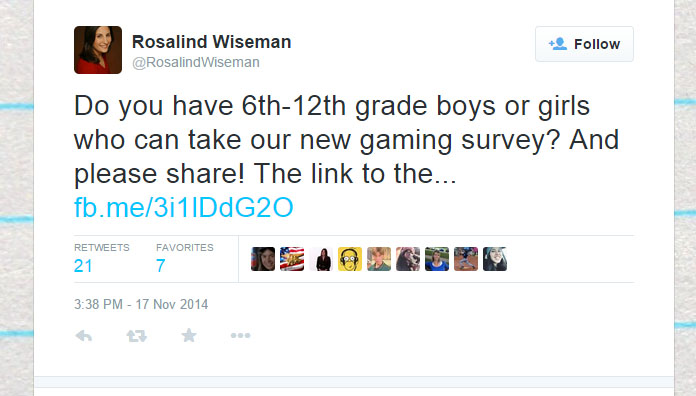
The gaming community is questioning some of the research methods, as it seems that a portion of the respondents were distributed via twitter and using Survey Monkey.  That right there is a red flag, as one’s twitter following is clearly not representative of a general population and  survey monkey in no way  prevents people from lying about their age to take the survey.  These two facts alone are grounds to throw the whole thing into question, as it’s just not proper science.

It’s a shame, as this is an interesting question and one that, with a proper methodology, could potentially yield similar results. If video Games  are to become an academic medium then we must adhere to tried and true forms of scientific methodology. Faux science isn’t going to cut it.

Study Shows Link Between Excessive Gaming and Behavioral Issues

SHOCKING HEADLINE: A new study posted in  the Journal of Psychology of Popular Media Culture finds a correlation between playing games for an extended amount of time and behavioral issues in teenagers. KEEP THAT POKEMON AWAY FROM THEM TWEENS, OR YOU’RE GONNA GET TROUBLE!

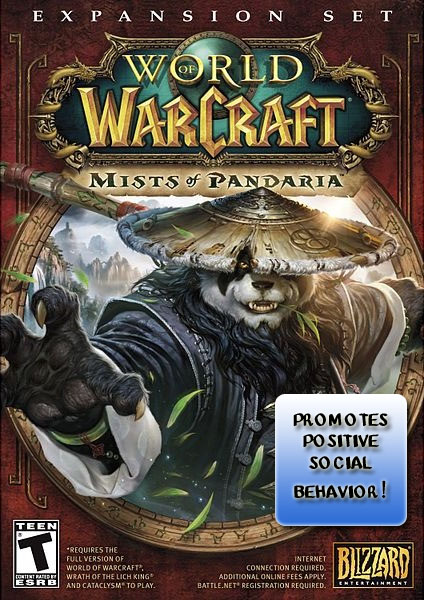
The new study posted in  the Journal of Psychology of Popular Media Culture  evaluated the amount of time spent on video games per day and the behavior habits of teenage students in class. The Washington Post has a pretty good break down of the study in general, so check it out here. As you might expect, teens who played more than 2 hours a night (on average) exhibited more behavioral issues, such as hyperactivity, and were less interested in their academics. The sun is also hot, and Mario sometimes jump (SPOIIILLLEERRRR).  Furthermore, the study found that gamers who played solitary video games  showed less of these behavioral and academic problems than those who played competitive online games. However, teenagers who played online social games were less likely to exhibit social problems and were found to be more emotionally stable. PUT THAT ON THE BOX BLIZZARD!

Untitled-1

I apologize if I sound cynical about the first half of the study, but this form of study is one that we’ve seen several times in the past few years.  It’s correlation without causation. It’s easy to find a common thread in video games between respondents that are hyperactive and young because it’s an easy target. 10 years ago similar studies were done to say that internet use is leading to behavioral issues, 30 years ago it was TV corrupting our kids, and 60 years ago it was too much Radio leading kids astray (NPR led me to satanism).  It’s not to say that video game consumption isn’t an issue, but it’s a outlet for other isss. We have a habit of demonizing whatever media is popular among youths as corrupting, which in this era is video games.

That said, the study is one step in understanding how video games effect our lives, which is obviously something we like here on the blog. It may not be a drastic leap forward, but perhaps it will pave the way for future research evaluating how video games lead to specific social behaviors. A step is still a step, right? We’ll get there one day…

New Study Shows Benefits of Narrative in Video Games

Coming out of the University of Innsbruck  and Albert Ludwigs University of Freiburg, we have some research that probably won’t set the world on fire, but is interesting nonetheless.  The study looks at the benefits of narration in video games on the players experience and satisfaction, in addition to the benefits towards theory of mind (We’ll talk about what that is a little later).  It’s a pretty jargon heavy and technically written piece of research, but it’s worth a read if you’re interested in how a narrative can change a player’s experience.

You may be saying: “Hey! That sounds pretty obvious you dolt!”. I would first ask you to not call me a dolt (You know how that makes me feel…) and secondly I would say it’s a little more complicated than it sounds. Essentially the researchers found that narrative games create immersion that allows for players to better develop a sense of understanding towards the thoughts and beliefs of others (via those of in-game characters), in addition to finding that narratives in game increases satisfaction in players. The finding towards theory of mind (which I terribly boiled down above)  are small, but beneficial. The uses for such benefits could be used in future practices with an example being in working with kids with social development issues.

Is that Mario or a playboy bunny…?

I told you it wouldn’t set the world on fire with fascination. Hey, not all research studies can be exciting pieces that reveal to you that all gamers have a slight sexual attraction to plumbers because of Super Mario Land 2**** (Specifically that game, for whatever reason)

**** Research is in the process. Please don’t steal my brilliant idea

New Study Suggests Violent Video Game Releases Coincide with Low Crime Rates

Quick one today folks! Another week, another article claiming that violent video games have X effect on society. There seems to be a pendulum with these types of studies; one article will claim to have found a link between violent video games and violence and the following week another new study will claim that there is no effect. This study is..a little different.

Coming out of Villanova, a psychology researcher and professor claims that violent video games actually lessen the amount of violent crimes during launch periods of bigger violent video games (Halo, GTA, etc). Are the villains of the world really too busy ranking up gamerscores to go and commit crimes? That’s pretty much what it sounds like the piece is claiming. Essentially, violent crime offenders are among the target audience who plays violent video games and when a new title comes out the amount of violent crimes seems to decrease.

There can be other explanations as to why this is occurring that we can ponder off the top of our heads. Big titles like GTA and Halo typically come out at towards the end of the year, as that’s many company’s biggest earning season. Certainly something else may be going on during these times that have little to do with video games (More people are in their houses earlier in the night, police enforcement is typically more alert for crimes during holiday seasons, etc). The article itself tries to think through what potential reasons could be effecting this outcome, so it’s certainly not a definitive statement on the researcher’s part.

The research goes onto claim that people with specific personality types playing violent video games are more likely to increase their aggression, but that people without those personality types will not be effected These are claims that were based on research that was conducted years ago by the same researcher. These proposed claims seem almost obvious; if you claim yourself to be an “angry person” then you committing a violent crime is more likely, regardless of if you play video games or not.

Which of Pixar characters are most likely to commit a violent crime after playing Halo?

I wish I could go more into the article, but unfortunately I’m not able to get the entire piece because I’m a poor individual, but you can certainly purchase the entire research paper here!