This Day in Gaming History: A Wild Pokemon Appears

gam

Today marks the 20th anniversary of the Pokemon franchise, with February 27th 1996 being the Japanese release date of Pocket Monsters Red and Green on the Nintendo Gameboy. To say the original  Pokemon games were a momentous  release is an understatement, as they ushered in a cultural and societal phenomenon in both the United States and Japan. The franchise has gone on to become the second highest selling video game franchise of all time, second only to Mario, and has become the most successful handheld franchise of all time. It all started in 96 with this amazing game:

pokemon-red-and-green

One cannot tell the story of Pokemon without first mentioning the history of the developer behind it, Game Freak. Led by Satoshi Tajiri, Game Freak started in the game industry as a video game magazine featuring hand drawn artwork and writing. It wasn’t until 1989 that the team developed their first game, Mendel Palace for the Nintendo Entertainment System. From there Game Freak worked mostly on licensed games for Nintendo, including the titles Mario & Wario and Yoshi. It was around this time that Tajiri began conceptualizing Pokemon, a title that would take 6 years to complete development.

tumblr_m69y20zevy1qzj5ggo5_1280

Pokemon started from simple inspirations. Satoshi Tajiri, who headed up development of the game, had been fascinated by collecting insects as a child. He wanted to design a game that gave the player the same thrill of chasing and trading unique creatures as insect collecting gave him a child. Taking inspiration from one of his favorite shows of his youth, Ultraman, he wanted to incorporate a battle system that utilized captured monsters as party allies. These inspirations, paired with an interest in the Gameboy Link Cable that was introduced early in the handheld’s lifespan, grew the idea of a monster collecting game in which players could train, battle, and trade monsters with friends. In 1990,  Tajiri brought the concept to Nintendo under the title “Capsule Monsters”, who  turned the idea down. After shortening the name to CapuMon and subsequently changing it to Pocket Monsters due to copyright issues, Tajiri once again brought it to Nintendo. With the help of Shigeru Miyamoto putting his support behind the idea, the game was finally green lighted for development. The 6 year development of Pokemon Red and Green was one of technical difficulties, financial woes, and many unpaid overtime hours. When the game finally released in 1996 as Pocket Monsters Red and Green Versions, Game Freak had lost many of its developers and was on the verge of bankruptcy.  Despite its almost immediate international success years later, the Japanese release of the original game wasn’t the overnight success one would expect. It wasn’t until buzz about the game’s hidden 151st Pokemon that sales starting to pick up for the game, thus creating the cultural phenomenon that we know it as today.

green_mew
The original games had some..ugly sprites

Outside of Japan,  the game released as Pokemon Red and Blue, a slightly updated version of the original game with reworked sprites and details. Each version of the game held specific Pokemon only obtainable in  that specific version of the game. With the addition of Pokemon only achievable at the cost of another Pokemon and Pokemon that only evolved through trade, to obtain every Pokemon in the game required trading with another version of the game. This is where Pokemon becomes a milestone game in the social sphere of gaming; it is a game that requires players to interact and trade with others to obtain the game’s goal. While it’s inevitable that a player could just buy both versions of the game and a second gameboy, the intent of Game Freak was to promote a sense of community among gamers that fostered real loss and exchange. The developers wanted trading away special Pokemon to mean something for each player, and for their decisions and actions to have consequence in-game and in the real world.

maxresdefault

Years ago I wrote a more humorous look at the Pokemon series as an entity of social agent, but many of the lessons the game teaches players are about community and comradeship still hold true. It’s one of the few games of the era that has cooperation built into its success, despite a big emphasis of the game being about battling other trainers. Even today, whether it be with the game or the immensely successful card game, fans are comparing and trading Pokemon just like in 1996. There are few games that have had the cultural impact that Pokemon has had and I think it’s pretty likely we’ll see Pokemon remain popular for years to come.

UC Davis Creates an Interactive Game To Discuss Its Future

Tomorrow at 11am  UC Davis is launching Envision, an interactive video game designed to allow students, faculty, and associated members to come together to discuss and chart the university’s future. The game will be live for 36 hours, during which users can log in and meet with others in a virtual space.

envision-uc-davis_logo-290x181


UC Davis has created this game with the intent purpose of opening up the discussion of the university’s future to a wider population of students, giving them a virtual space to connect like never before. When it goes live for computers and mobiles, users will be able to share “micro-contributions” about their vision of the future of UC Davis, as well as add onto the visions of others. From their brief description, it sounds like the game will function akin to something like Reddit, where users can respond or add to specific threads of thought. A leaderboard system will be put into place to chart the contribution of users and winners will be awarded prizes, further promoting the “game” aspect of Envision.

https://www.youtube.com/watch?v=iiedtQpR88I

This is a pretty neat concept for a major University to attempt; it shows their dedication to gaming as a tool for social interaction and advancement. Online spaces have the ability to make for more neutral and accessible grounds for discussion, so hopefully UC Davis’ community will come out in force to chart its future. It is only open to those associated to UC Davis, but it will be interesting to see if this method of discussion proves to be a worthwhile method for Universities and organizations to consider in the future.

Check out UC Davis’ Press Release about the event

This Day in Gaming History: Nintendo’s Legend

gam

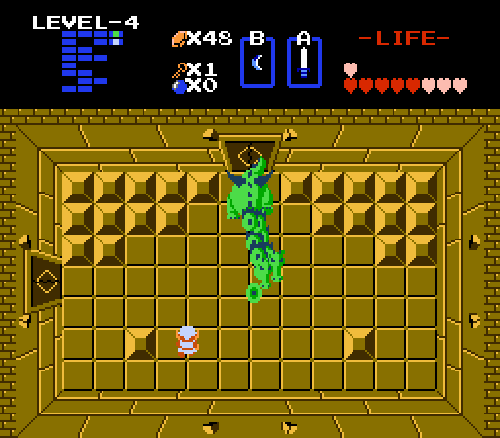
30 years ago on February 21st 1986, The Legend of Zelda released on the Nintendo Famicom Disk System in Japan. This original title in the long running Legend of Zelda franchise has had tremendous effect on shaping our modern day gaming culture and climate. Easily the most influential game in establishing conventions for subsequent adventure games, the franchise has revolutionized the gaming industry multiple times and it all started with this singular game.

cv0kya1uaaahvkl

What made this game so special?

combined_boxart

The Legend Of Zelda wasn’t the first adventure game by any means, and the game even draws significant influence from its predecessors such as Adventure for the Atari 2600, but what makes the game stand out is that it’s an amalgamation of what came before it. When Shigeru Miyamoto and his team at Nintendo began developing this game in 1985, they drew inspiration for various popular genres at the time, including puzzle and RPG games, and also from Miyamoto’s own personal experience of exploring . The game combines all these elements in a way that hadn’t been done previously and even paved the way for games outside of its genre to gain popularity on home consoles. The result is an approachable game that allows the gamer to explore a digital world  with very little direction or hand holding along the way. This approach of giving the player very little hint as to where to go and how to progress the game was a new approach for Nintendo, one that many of Nintendo’s employees felt was a gamble. With resolve, Miyamoto and his team stuck by their decision to keep the game vague and free of clear direction, desiring a true exploratory experience and with a hope that the game would develop a community.

zelda-21

Nintendo’s gambles paid off in ways they might not have expected. The Legend of Zelda became a word-of-mouth legend. Players would share hand drawn maps, secrets they discovered in the game, or notes on how to defeat a difficult enemy.  The game represented a true novelty in the gaming community: a game that bred discussion and sharing to discover everything it held. Beyond its sheer gameplay innovations, this aspect of the Legend of Zelda I believe is what makes it a true classic in gaming history and what make it the most relevant to the sociology of video games; it truly was one of the first games to promote social elements and cooperative sharing, elements that are now mainstays in the modern video game industry.

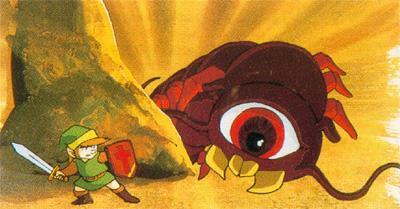
moldorm_loz

I can’t hide my personal bias, I love the game and the franchise. Admittedly, I have never beat the original game; I’ve only ever tried to beat it without the usage of guides and each time I’ve become lost several dungeons in. Despite this, I believe it stands as being an amazing game in its design and layout. It marvels me as to how both this and the original Super Mario were released within a year of each other, both of which were miles ahead of anything else on a home console at the time. With this year marking the 30th anniversary of the franchise, one can only hope that Nintendo delivers on their promise to release another innovative, immersive experience with Zelda Wii U (If it actually comes out this year).

the_legend_of_zelda_2015_nintendo_e3_2014_screenshoot


FBI Releases Anti-ISIS Propaganda Video Game

There’s been a lot of strange games released for all sorts of peculiar reasons: PETA’s anti-Animal Abuse Pokemon game and Shower With Your Dad Simulator 2015 come to mind as two particularly strange games with questionable motives. However, these games  fail in comparison to a new game released by the FBI. That’s right, the FBI. Allow yourself to take that in for a second: The United States Federal Bureau of Investigations has created a game and it’s just terrible.

I present to you: Slippery Slope, an anti-ISIS propaganda flash game meant to dissuade youths from falling into the trap of logic leading to violent extremism.

3004528-slip

The game is apart of the FBI’s “Don’t Be a Puppet” initiative, which is an online effort to educate impressionable youths about the dangers of extremism and warn them about the potential realities of such beliefs, including perpetrating hateful attacks based on race or religion. The program is meant to encourage teens to think for themselves and deploy skepticism and  practicality when coming across extremist ideas and rhetoric.

Let’s pretend for a second that this game is necessary and not a vapid attempt from an out of touch agency trying to  reach kids through patronizing means, how does the FBI intend to convey such a delicate and difficult message to kids? With Goats and explosions of course!

3004542-sheep
Minecraft is popular right? Just put a goat and radical text in there. Boom!

Included in the Don’t Be A Puppet’s interactive basement, the game is meant to be a original gameboy game entitled “The Adventures of Poonikins” starring the titular Poonikins, a goat who is apparently struggling with extremist beliefs. Design wise, it has a relatively simple  gameplay design: players control  Poonikins  while avoiding green walls as he traverses a vast green pasture attempting to make it to each of the game’s 6 finish lines. If Poonikins is to run into one of the green walls, he explodes instantaneously into various small blocks; a horrifying death for a confused goat. Upon passing a finish line and completing a level, the game displays “distorted logic text”, giving impressionable teens examples of harmful rhetoric.  Just on a purely  analysis of the game as a video game, Slippery Slope’s biggest problem lies in its horrendously touchy controls and it’s almost laughable difficulty; a tap of either arrow will send Poonikins flying faster than you can say, well, Poonikins. It’s just simply not well designed, featuring gameplay elements that feel like they would  fee stale even on  something like the Magnovx Odyssey.

Of course the greatest question is: What the hell does a goat avoiding walls and exploding have to do with radical extremism?  This game doesn’t convey any meaningful message in any way, if anything it just distracts from the initiatives overall message by being strange and absurd. Why is the goat’s name Poonikins? Does the FBI think Goats explode when touching green walls?  The Goat is a terrorist, is that whats going on? There are so many baffling questions unanswered by this one’s Goat dangerous descent into extremism.

So why am I bringing this up? What could this terrible game with questionable motives have to with sociology? On this blog I like to point out new ways video games are being implemented in our society, from usages in medical rehabilitation to being used as a means to weed out job candidates. These new implementations speak to how ingrained video games have become in our society; they are permeating into all aspects of society, giving us new ways to interact and carry about our regular lives. The FBI creating a video game with the intent purpose of educating youths is a pretty remarkable action, exemplifying society’s gradual shift towards an acceptance of the medium as a powerful tool in education. We’ve come to the point where video games, for better or worse, are transcending the the typical gaming conventions and being used for new and unique way every week. The FBI’s Slippery Slope may be an example of a poor harnessing of the power of the mediums ability to do more, but  it’s a novel one at the very least.

Still, it’s hard not come away from playing this game without feeling dirty.  If this game is the latest tool in counter terroism that the FBI can offer, maybe we need to rethink some things.

Play the Game For Yourself Here!

twit
Follow us on Twitter @Socialvideogame!


Square Enix Teams With Pacer to Stop Bullying

lifeisstrange

Square Enix announced a partnership with the Parent Advocacy Coalition for Educational Rights (PACER) to enact an anti-bullying initiative.  Starting on January 13th, Square Enix will donate towards PACER’s national Bullying Prevention Center for every tweet of #EveryDayHeroes they receive this week, a hashtag inspired by the game “Life is Strange”.

Join our cause by sharing your own #EverydayHeroes moments. Tell us a story about how you overcame adversity, stood up for what’s right, or helped a friend in need. For every post using the hashtag #EverydayHeroes from January 13 to January 19th, Square Enix will make a donation to PACER’s National Bullying Prevention Center. Share your story today, and give help to those who need it

Life is Strange is a 2015 title that tackles the theme of bullying, allowing the player to weigh in and progress the plot through choices that will shape the game and ending. The game, which has been awarded game of the year by several media outlets, is receiving a physical release this week, but is currently available on most major platforms.

You can watch Square’s promotional video to kick off the event here

Life is Strange is a perfect example of video games can be used to tackle real world problems and issues, and it’s refreshing to see a big corporation like Square-Enix partner with organizations trying to instill real change in the world. If you’re on twitter, please tweet the hashtag #EveryDayHeroes. It’ll take two seconds.

Pew Research Center’s Report on Gaming & Gamers

pew-research-center-logo

The Pew Research Center, a nonpartisan research group that conducts polling and demographic research, has released 17 page long report on their findings about Gamers and Gaming. This is an incredibly insightful report for anyone conducting sociological research on current issues in gaming or  seeking the demographic make up of the video game community. It’s a pretty lengthy report, but I’ll try and break down some of the highlights.

The group posed the following questions to a survey of over 2000 Americans.

  • Do you ever play video games on a computer, TV, game console, or portable device like a cellphone? Yes, No, Don’t know, Refuse
  • Do you think this is true for most video games, true for some games but not others, NOT true for most video games, or are you not sure?
    • Video games help develop good problem solving and strategic thinking skills. 
    • Video games are a waste of time.
    • Video games portray women poorly.
    • Video games promote teamwork and communication.
    • Video games portray minority groups poorly.
    • Video games are a better form of entertainment than watching TV.
  • Based on what you know about video games, please tell me if you agree or disagree with the following statements. Agree, Disagree, Don’t Know, Refuse
    • Most people who play video games are men.
    • People who play violent video games are more likely to be violent themselves
  • Some people use the term “gamer” to describe themselves as a fan of gaming or a frequent game-player. Do you think the term “gamer” describes you well, or not? Yes Gamer, No, Not Gamer, Don’t know, Refuse

Additional probing questions were asked about video game causing violence, how racial groups were represented in games, and how video games represent women.

Let’s go over some of their discoveries!

In regards to who plays video games and considers themselves gamers, the report found that only 10% of respondents considered themselves to be gamers, despite nearly half of respondents answering that they play video games.

PI_2015-12-15_gaming-and-gamers_1-01
Respondents in older age brackets were less likely to identify as a gamer

The demographics of gender in gaming is similar to what the ESA reported earlier in the year, but there’s a considerable difference between the number of women and men who identify as gamers, perhaps signalling a disconnect between women and gaming culture.

Why is there such a big difference between people who play games and identify as gamers? It could be that by identifying as a gamer you’re admitting you are a part of a bigger culture that many respondents desire not to be counted upon. The term gamer may carry with it perceived connotations that aren’t appealing to more casual or infrequent consumers.

With regards to the questions regarding video games as  cultural and societal entities, the report found that a good portion of the population believe that video games can provide positive effects.

PI_2015-12-15_gaming-and-gamers_0-02 (1)


I believe this graph is a particularly important one, because it represents a practical and reasonable view of video games within society. As with any medium, video games have a varying range in terms of intellectual and interactive value; some games will be your action fueled titles that don’t challenge you to work out problems, while others can be great sources of cooperative play and brain stimulation. It’s unfortunate that the medium often gets labeled as being only its biggest titles (Call of Duty, Madden, GTA) when there are plenty of games that challenge players to think outside of the box, work together, or take witness to a wonderful tale.

The study also asked questions to respondents in regards to how they perceive violent video games as agent in creating  real world violence.

PI_2015-12-15_gaming-and-gamers_2-02

The majority of respondents did not believe that violent video games lead to violent actions, despite some groups believing they do. It’s clear that younger men and women disagree with the statement, but that the issue is still one that is very much up for discussion and debate among the community.

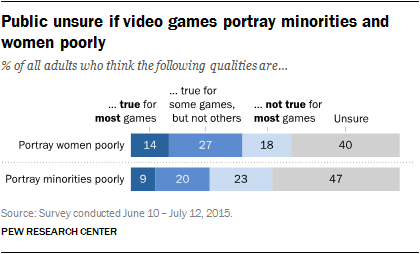
Lastly, we’ll look at the study’s finding on public perception of representation in gaming:

porreay womenminor

This one is a little surprising, as the majority of respondents didn’t choose to weigh in one way or another. It’s clear that more respondents believe that only some games exhibit poor representation of women and minorities, which is a fair statement of video games, but it is alarming that that a healthy portion believe that most games have poor portrayals. This shows that proper representation within video games of women and minorities is an ongoing struggle and that the general population simply do not know about it.

There’s a lot more in the actual report that I highly recommend checking out. This kind of data is rare, but it helps us gain a better understanding of how video games are being viewed in our society and what we need to work on as a community.  For sociologist, such data is invaluable because it gives insight to the social problems existing at the intersection of sociology and video games.

Charts and graphs provided by the  Pew Research Center

For more news and sociological insights, follow us on WordPress or Twitter

twit
Follow us on Twitter @Socialvideogame!


Pew Research Center’s 2015 Findings on Console Ownership

Less progressive parts of the gaming community are in an uproar today, as a new survey suggest that more American women own video game consoles than their male counterparts. Should chauvinistic males flee the medium for fear of cooties? We’ll look into that finding and more!

next_gen_consoles

The Pew Research Group is a well respected, non-partisan ,and non-advocacy research group that gathers data on public issues, attitudes, and trends shaping America and the world. This week they released their findings on technology device ownership, ranging from tablets to video game consoles. It’s great data to comb through, but I’ll be focusing specifically on the findings of console ownership.

Let me start of my saying this: It’s ridiculous that there is a backlash to this survey. Read any article reporting this survey and you’ll be met with juvenile comments from people saying it’s poor research, a conspiracy of sorts, or a sign that video games are going to hell. Regardless of the validity of the data,  such comments and responses prove that there still exists a vocal minority that represent backwards and offensive views. If this survey is true, we as a community should be thrilled that this once male dominated medium is now a more inclusive one. A diverse video game community is a stronger community and  these negative views do not represent the entire video game community.

With that said, lets examine the finding:

The number that is grabbing the most headlines is the finding that 42% of women own video game consoles, while only 37% of men own a console.  This result is contrary to what most would assume, as the ESA report on video game consumption found that male gamers were still in the majority. However, it’s not as inconceivable as it once was; female gamers are on the rise and they make up nearly half of the gaming population.

With that said, there are certain consideration to think about when looking at this data, such as does this data include respondents who are parents and own video game consoles because their children? Likewise, does this include respondents who bought video game consoles because of their multimedia uses and not their video game uses, and would otherwise not consider themselves “gamers”?  Although we don’t have an answer for these questions and these aren’t suggestions for why the data is as it is, such questions allow us to better interpret and hypothesize about the data in front of us. To create a better picture of console ownership, additional probing questions would have to be asked.

Next the survey looks specifically at the breakdown of race in regards to console ownership. This data is actually quite interesting if only for the fact that it’s not something most research groups typically delve into when conducting research concerning video game demographics. That said, it’s not all that surprising; the percentage of people who play video games is relatively similar across each race.

Likewise, the data on educational attainment  and community type is relatively unremarkable. It is worth noting that the educational attainment data is mostly tied directly with financial ability to purchase video games.

As stated at the bottom of the survey, the sample size surveyed was 948 respondents. This is a pretty healthy sample size; more could be included, but it’s viable enough to work off of.  The Research Group goes into their complete methodology behind the survey for anyone with lingering doubts about the survey. Given that, should we take all of this data at face value? Not necessarily. As I mentioned, this data doesn’t give the complete picture. There may be reasons why certain stats are what they are, but the data does  gives us a better picture than we had before.

In all, this isn’t the most earth shattering survey response. Not all data is shocking or dramatic, a lot of time surveys just confirm what we mostly assume. However, it’s important for groups like the Pew Research Group to conduct these surveys because they give us the raw data that we need to formulate our arguments and theories. They’re out there doing the hard work for us. No body wants me calling 948 people asking about whether or not they have video games, I swear.

Extra Life: Playing Games To Save Lives

Just a quick one today. I wanted to bring notice to an awesome cause and annual event.

“Extra Life unites thousands of players around the world in a 24 hour gaming marathon to support Children’s Miracle Network Hospitals. Since its inception in 2008, Extra Life has raised more than $14 million for local CMN hospitals.”

Extra-Life is an event that brings together gamers from all over the world to play games in support of the Children’s Miracle Network  of Hospitals.  In collaboration with the ESA, the event  challenges gamers to raise funds through pledges to their gaming marathon.  Participants will attempt to game for a full 24 hours, all for the cause of raising funds for a much deserved cause. Interested gamers can create a fundraising goal for themselves or a team at the Extra Life Website. This years event will take place  next weekend on November 7th, 2015 (Though they’ll take donations for any day!).

Whether you want to participate yourself, watch some streams of participating gamers, donate to the cause, or simply find out more information, head on over to Extra-Life.org for more details.

Such an awesome event just goes to show the amazing good that the gaming community can do when we come together for a righteous cause.

Who is The Average Gamer?

With the 2015 Essential Facts about the Computer and Video Game Industry recently explored, I thought it would be interesting to use all of the data to create a picture of who the average gamer is.

How are constructing this picture? Using the Data that the ESA gathered in their annual report on the demographics of the video game community we can pull it all together to create a hypothetical person. Granted, this person does not represent the entirety of the video game industry (in fact they probably won’t represent a lot of gamers), but it will convey the most typical gamer.

Why is This Being Done? There’s a lot of application to this kind of data. By understanding who the “average gamer” is, we can determine who the industry is primarily catered towards. While we’re making strides in being a more inclusive industry, the video game industry is still one of marketing and product creation with the average consumer in mind. With an understanding of who their target audience is, we can better understand how to expand that audience.

Views in the past. It goes without saying that one’s idea of the average gamer is something that has changed quite significantly in recent time. Years ago video games were thought to be primarily a children’s activity, but we’re discovering that this is no longer the case. The industry is no longer one dominated by young boys; we’re seeing that the industry is diversifying more and more as we go on. Thus, it’s important to reevaluate how he picture the average gamer:

Who is the average gamer?

We’re creating a person; we’ll need a name for this person. Let’s call this person Avery (Yeah, it’s a little on the nose..) Who is Avery? How old is Avery? Is Avery a male or female? What games does Avery play? Who is Avery playing with? How much time does Avery spend playing video games? LET’S FIND OUT WHO THIS AVERY IS.

Avery is a 35 year old male. In Avery’s household, there is one other person in the house that plays video games. The household owns at least one dedicated video game console, but Avery also plays a good amount of his video games on his PC. Avery isn’t new to video games, in fact Avery has been playing video games for 13 years. Avery plays games in moderation; he actually only plays about 3-4 hours of gaming a week. However, the usage of his console doesn’t end there; Avery uses his console to watch movies, watch TV and other forms of media. When he does get sometime to play games, he’s playing mostly social games, action games, and puzzle/card/board games. He plays with others either online or in person, but when he does it’s primarily with his friends. He spends a fair amount on video games per year, as he believes that video games are a good value for his money in comparison to other forms of media (dvds, theaters, etc.) Recently Avery has made a switch to buying more games digitally than physically. Last year, some of the games Avery most likely played were Call of Duty: Advanced Warfare, Madden, and the Sims 4.  Video games are becoming a greater and greater part of Avery’s everyday life; the time he plays per week are increasing every year and the amount of money he spends on games is also increasing. How long will Avery remain the average gamer? That remains to be seen.

If Avery was a parent:

Avery is knowledgeable about his children’s video game usage. He’s aware of the the ESRB ratings of each game and monitors the content of the game his kids are playing. He believes that its the parent’s responsibility to limit the amount of time their kids are playing games, surfing the internet, and watching TV. Avery believes video games are a positive part of his kids live’s, and will even play with his kids from time to time.

Admissions:

1) Race statistics on the video game industry seemingly don’t exist, or at least there isn’t a reputable source that I could find. Many studies examine racial representation and racial preference in video games, but not necessarily the demographics on the industry as a whole. That said, it’s not unreasonable to assume that the racial make-up of the American video game industry isn’t that far off from the general make-up of the United State’s demographics. This leads me to assume that the average American gamer is most likely Caucasian.

2) This portrait of the average gamer is representative of the United States, and may not be reflective of  other communities. Obviously we can assume that some of the statistics will carry over (Male dominated, for example, is one that is most likely true of most communities)

3) I’m only working with the research at hand. Unfortunately I’m not able to conduct my own research to narrow down other aspects of this portrait, and as a result we’re still left with a lot of mysteries about the average game.

So there you have it, a partial look at who the average gamer is. I hope this has been somewhat insightful and helpful for anyone trying to gather a better understanding on the video game industry. If not….eh, I tried.

Video Games Being Used in New Medical Practices

It’s an interesting world we live in, one in which video games are constantly finding new ways to infiltrate our daily lives. We’ve already seen school utilizing video games for teaching purposes, and even video games serving as parts of business interviews, but medical institutions seem like the last place you’d imagine to be playing video games. Fortunately this article is not about medical schools using the game “Trauma Center” to teach potential surgeons.

Scalpels not included.

A new trend in the medical is looking towards video games as medical tools. This trend is really novel and interesting, especially since 10 years ago we probably wouldn’t imagine that we’d be using video games to aid in physical therapy or in any realm dealing with the medical profession. These are in no way the first time we’ve seen video game being utilized in physical therapy and as medical tools, but they certainly are ones that do it in new and interesting ways.

Researchers at the Nationwide Children’s Hospital have developed an interactive video game that is being used to measure upper extremity movement in younger patients with muscular dystrophy who are unable to walk. The game, which is zombie themed and utilizes a Xbox Kinect, has patients extending their arms to push back a force field protecting them in the game. The game, which is currently only being used in clinical trials, has had very positive feedback from both patients and parents.   The game, which charts the improvement and changed for patients over the course of time, was developed because of the sheer lack of outcome measure for this population of patients.

Another new tool in therapy has emerged for patients with Multiple Sclerosis. The National Multiple Sclerosis Society have given a grant to researchers to develop a game that will be used to help in Multiple Sclerosis treatment and rehabilitation. The game, “Recovery Rapids”, uses an Xbox Kinect and has the patient guiding and propelling a kayak. The game also asks questions to the patients in order to track the patients progress in other everyday activities such as brushing their teeth or drinking. Developers of the game hope that it will be a cost effective and fun way for patients with M.S to do daily rehabilitation and recovery, a group whom have very few options when it comes to physical therapy option.

So why should we care about these instances of games being used for physical therapy and medical means? Is it because we’re worried that we’re potentially missing out on GOTY and that we should sneak in these facilities to play these games? No…Though, I did hear that some of these games are better than the recent Assassin’s Creed game (TAKE THAT UBISOFT!). We should care because video games are embedding themselves into facets of life that have previously been untouched by the medium. While these news pieces have more to do with field beyond Sociology, it’s important to think of the social impact that such games can have on our society. With video games becoming more than just virtual toys our perspective on them and their utility changes and they become a greater part society. HEY MAN. IT’S IMPORTANT.

As a physical therapists responding to the game being developed for young boys with Muscular Dystrophy puts it “They have to spend hours with us doing nothing that’s easy, only hard things. Looking at their faces after they play this game where they get to just play and be kids is a lot of fun to see.” That’s key. To find new ways in which video games can reach, aid, and even brighten the day of new audiences is the real reason we’re seeing this trend.  You probably shouldn’t get your hopes up for Nintendo to be diving into this market ,(Though to be fair, Wii Fit and their purposed Vitality sensor certainly do come close) it’s not unlikely that we’ll see more games used as medical tools develop.