FBI Releases Anti-ISIS Propaganda Video Game

There’s been a lot of strange games released for all sorts of peculiar reasons: PETA’s anti-Animal Abuse Pokemon game and Shower With Your Dad Simulator 2015 come to mind as two particularly strange games with questionable motives. However, these games  fail in comparison to a new game released by the FBI. That’s right, the FBI. Allow yourself to take that in for a second: The United States Federal Bureau of Investigations has created a game and it’s just terrible.

I present to you: Slippery Slope, an anti-ISIS propaganda flash game meant to dissuade youths from falling into the trap of logic leading to violent extremism.

3004528-slip

The game is apart of the FBI’s “Don’t Be a Puppet” initiative, which is an online effort to educate impressionable youths about the dangers of extremism and warn them about the potential realities of such beliefs, including perpetrating hateful attacks based on race or religion. The program is meant to encourage teens to think for themselves and deploy skepticism and  practicality when coming across extremist ideas and rhetoric.

Let’s pretend for a second that this game is necessary and not a vapid attempt from an out of touch agency trying to  reach kids through patronizing means, how does the FBI intend to convey such a delicate and difficult message to kids? With Goats and explosions of course!

3004542-sheep
Minecraft is popular right? Just put a goat and radical text in there. Boom!

Included in the Don’t Be A Puppet’s interactive basement, the game is meant to be a original gameboy game entitled “The Adventures of Poonikins” starring the titular Poonikins, a goat who is apparently struggling with extremist beliefs. Design wise, it has a relatively simple  gameplay design: players control  Poonikins  while avoiding green walls as he traverses a vast green pasture attempting to make it to each of the game’s 6 finish lines. If Poonikins is to run into one of the green walls, he explodes instantaneously into various small blocks; a horrifying death for a confused goat. Upon passing a finish line and completing a level, the game displays “distorted logic text”, giving impressionable teens examples of harmful rhetoric.  Just on a purely  analysis of the game as a video game, Slippery Slope’s biggest problem lies in its horrendously touchy controls and it’s almost laughable difficulty; a tap of either arrow will send Poonikins flying faster than you can say, well, Poonikins. It’s just simply not well designed, featuring gameplay elements that feel like they would  fee stale even on  something like the Magnovx Odyssey.

Of course the greatest question is: What the hell does a goat avoiding walls and exploding have to do with radical extremism?  This game doesn’t convey any meaningful message in any way, if anything it just distracts from the initiatives overall message by being strange and absurd. Why is the goat’s name Poonikins? Does the FBI think Goats explode when touching green walls?  The Goat is a terrorist, is that whats going on? There are so many baffling questions unanswered by this one’s Goat dangerous descent into extremism.

So why am I bringing this up? What could this terrible game with questionable motives have to with sociology? On this blog I like to point out new ways video games are being implemented in our society, from usages in medical rehabilitation to being used as a means to weed out job candidates. These new implementations speak to how ingrained video games have become in our society; they are permeating into all aspects of society, giving us new ways to interact and carry about our regular lives. The FBI creating a video game with the intent purpose of educating youths is a pretty remarkable action, exemplifying society’s gradual shift towards an acceptance of the medium as a powerful tool in education. We’ve come to the point where video games, for better or worse, are transcending the the typical gaming conventions and being used for new and unique way every week. The FBI’s Slippery Slope may be an example of a poor harnessing of the power of the mediums ability to do more, but  it’s a novel one at the very least.

Still, it’s hard not come away from playing this game without feeling dirty.  If this game is the latest tool in counter terroism that the FBI can offer, maybe we need to rethink some things.

Play the Game For Yourself Here!

twit
Follow us on Twitter @Socialvideogame!


Square Enix Teams With Pacer to Stop Bullying

lifeisstrange

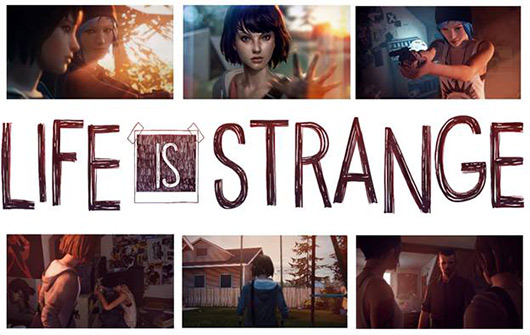
Square Enix announced a partnership with the Parent Advocacy Coalition for Educational Rights (PACER) to enact an anti-bullying initiative.  Starting on January 13th, Square Enix will donate towards PACER’s national Bullying Prevention Center for every tweet of #EveryDayHeroes they receive this week, a hashtag inspired by the game “Life is Strange”.

Join our cause by sharing your own #EverydayHeroes moments. Tell us a story about how you overcame adversity, stood up for what’s right, or helped a friend in need. For every post using the hashtag #EverydayHeroes from January 13 to January 19th, Square Enix will make a donation to PACER’s National Bullying Prevention Center. Share your story today, and give help to those who need it

Life is Strange is a 2015 title that tackles the theme of bullying, allowing the player to weigh in and progress the plot through choices that will shape the game and ending. The game, which has been awarded game of the year by several media outlets, is receiving a physical release this week, but is currently available on most major platforms.

You can watch Square’s promotional video to kick off the event here

Life is Strange is a perfect example of video games can be used to tackle real world problems and issues, and it’s refreshing to see a big corporation like Square-Enix partner with organizations trying to instill real change in the world. If you’re on twitter, please tweet the hashtag #EveryDayHeroes. It’ll take two seconds.

Pew Research Center’s Report on Gaming & Gamers

pew-research-center-logo

The Pew Research Center, a nonpartisan research group that conducts polling and demographic research, has released 17 page long report on their findings about Gamers and Gaming. This is an incredibly insightful report for anyone conducting sociological research on current issues in gaming or  seeking the demographic make up of the video game community. It’s a pretty lengthy report, but I’ll try and break down some of the highlights.

The group posed the following questions to a survey of over 2000 Americans.

  • Do you ever play video games on a computer, TV, game console, or portable device like a cellphone? Yes, No, Don’t know, Refuse
  • Do you think this is true for most video games, true for some games but not others, NOT true for most video games, or are you not sure?
    • Video games help develop good problem solving and strategic thinking skills. 
    • Video games are a waste of time.
    • Video games portray women poorly.
    • Video games promote teamwork and communication.
    • Video games portray minority groups poorly.
    • Video games are a better form of entertainment than watching TV.
  • Based on what you know about video games, please tell me if you agree or disagree with the following statements. Agree, Disagree, Don’t Know, Refuse
    • Most people who play video games are men.
    • People who play violent video games are more likely to be violent themselves
  • Some people use the term “gamer” to describe themselves as a fan of gaming or a frequent game-player. Do you think the term “gamer” describes you well, or not? Yes Gamer, No, Not Gamer, Don’t know, Refuse

Additional probing questions were asked about video game causing violence, how racial groups were represented in games, and how video games represent women.

Let’s go over some of their discoveries!

In regards to who plays video games and considers themselves gamers, the report found that only 10% of respondents considered themselves to be gamers, despite nearly half of respondents answering that they play video games.

PI_2015-12-15_gaming-and-gamers_1-01
Respondents in older age brackets were less likely to identify as a gamer

The demographics of gender in gaming is similar to what the ESA reported earlier in the year, but there’s a considerable difference between the number of women and men who identify as gamers, perhaps signalling a disconnect between women and gaming culture.

Why is there such a big difference between people who play games and identify as gamers? It could be that by identifying as a gamer you’re admitting you are a part of a bigger culture that many respondents desire not to be counted upon. The term gamer may carry with it perceived connotations that aren’t appealing to more casual or infrequent consumers.

With regards to the questions regarding video games as  cultural and societal entities, the report found that a good portion of the population believe that video games can provide positive effects.

PI_2015-12-15_gaming-and-gamers_0-02 (1)


I believe this graph is a particularly important one, because it represents a practical and reasonable view of video games within society. As with any medium, video games have a varying range in terms of intellectual and interactive value; some games will be your action fueled titles that don’t challenge you to work out problems, while others can be great sources of cooperative play and brain stimulation. It’s unfortunate that the medium often gets labeled as being only its biggest titles (Call of Duty, Madden, GTA) when there are plenty of games that challenge players to think outside of the box, work together, or take witness to a wonderful tale.

The study also asked questions to respondents in regards to how they perceive violent video games as agent in creating  real world violence.

PI_2015-12-15_gaming-and-gamers_2-02

The majority of respondents did not believe that violent video games lead to violent actions, despite some groups believing they do. It’s clear that younger men and women disagree with the statement, but that the issue is still one that is very much up for discussion and debate among the community.

Lastly, we’ll look at the study’s finding on public perception of representation in gaming:

porreay womenminor

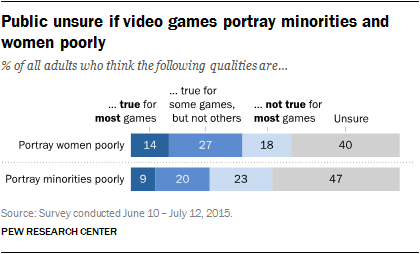
This one is a little surprising, as the majority of respondents didn’t choose to weigh in one way or another. It’s clear that more respondents believe that only some games exhibit poor representation of women and minorities, which is a fair statement of video games, but it is alarming that that a healthy portion believe that most games have poor portrayals. This shows that proper representation within video games of women and minorities is an ongoing struggle and that the general population simply do not know about it.

There’s a lot more in the actual report that I highly recommend checking out. This kind of data is rare, but it helps us gain a better understanding of how video games are being viewed in our society and what we need to work on as a community.  For sociologist, such data is invaluable because it gives insight to the social problems existing at the intersection of sociology and video games.

Charts and graphs provided by the  Pew Research Center

For more news and sociological insights, follow us on WordPress or Twitter

twit
Follow us on Twitter @Socialvideogame!


ESA: Essential Facts About Gamers and Politics

banner

Oh Electronic Software Association, you’ve given me an early Christmas present. The ESA is the foremost data collector of statistics and data on video game consumption, usage, and attitudes.  Annually this blog reports on their essential facts about video game consumption, but today they’ve released a special report on their findings on how politically engaged gamers are. They’ve created a easy to read infographic of all of these statistics that I will be pulling from.

Now that were are officially a year away from the 2016 election, such statistics are as timely as ever. Spoiler alert: Most gamers  don’t think America’s leadership is a monarchy ruled by Princess Zelda.

votingThe results are overwhelmingly positive: gamers are very politically engaged. In a survey that asked whether or not they would vote in the 2016 election, 80% of gamers said they were going to exercise their right to vote. This is in comparison to non-gamers, which had a percentage of 75% respondents saying they were going to vote in next years election.

“100 million gamers will vote next year…Gamers are engaged, informed and hold strong opinions on critical issues. From both sides of the aisle, and in every state across the country, they will influence the course of our nation’s future.”

partyIn terms of political party, gamers are split even with an equal amount identifying as
Republican and Demographics. This doesn’t surprise me all that much, as it closely represents the general demographics on the United States, further showing that gamers are the general population. That said, significantly more gamers identify as conservative than liberal. Why gamers skew heavily social conservative is beyond me, and on what issues they lean conservative isn’t specified

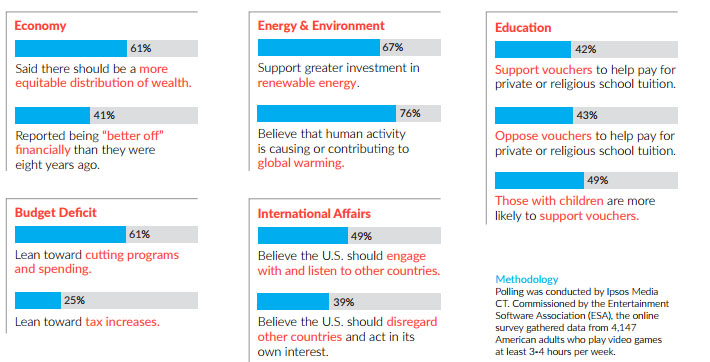
Lastly the survey looked at what gamers think about specific issues.

issues

There’s some really interesting insights into how they fall on issues and this is really one of the first studies to actually ask these specific questions.  Despite the majority classifying themselves as “conservative” their political leanings on issues definitely have some socially liberal slants.

With the statistics out of the way, we can hypothesize as to why gamers tend to be more politically active than non-gamers (or at least say they are). It could certainly have something to do with their connection to online communities; video game communities are gathering places for people to discuss on-going issues. Places like NeoGaf’s off-topic forums ignite intellectual debates in their threads, and this creates public awareness for issues people may not typically come across in their daily lives. Whatever the reason for this political engagement, it’s a beautiful thing to see gamers getting politically active. There are issues out there that concern all gamers; A more politically engaged community is one that has a greater voice.

I think Simon Rosenberg, president and founder of NDN, says it best in the ESA press release:

What is so striking about this research is how deeply mainstreamed video games have become in our culture…The views of gamers are as diverse as the nation itself, and there can be little doubt now that playing video games is a near universal activity at the very core now of the national experience in the U.S.”

Not to brag or anything, but I’ve been saying that for years…Yeah, I’m cool.

Please head over the ESA website and support this type of research. We need more of this stuff, it really does make for a more educated and informed video game community.

Pew Research Center’s 2015 Findings on Console Ownership

Less progressive parts of the gaming community are in an uproar today, as a new survey suggest that more American women own video game consoles than their male counterparts. Should chauvinistic males flee the medium for fear of cooties? We’ll look into that finding and more!

next_gen_consoles

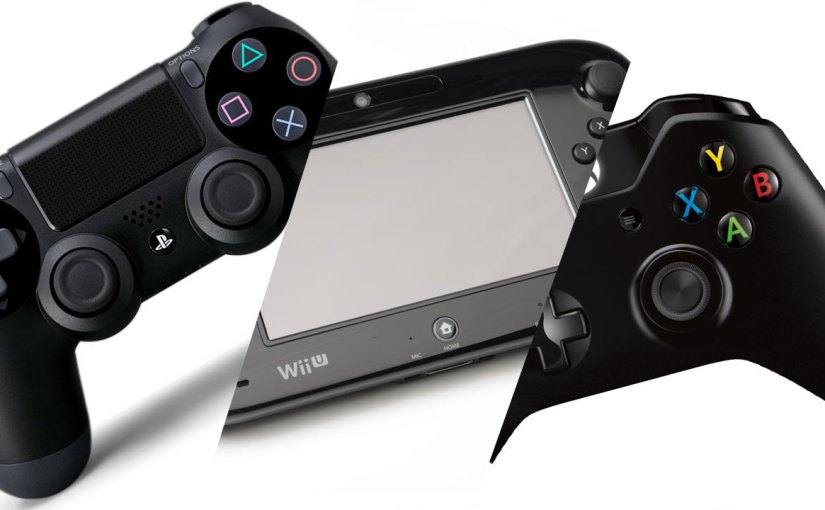
The Pew Research Group is a well respected, non-partisan ,and non-advocacy research group that gathers data on public issues, attitudes, and trends shaping America and the world. This week they released their findings on technology device ownership, ranging from tablets to video game consoles. It’s great data to comb through, but I’ll be focusing specifically on the findings of console ownership.

Let me start of my saying this: It’s ridiculous that there is a backlash to this survey. Read any article reporting this survey and you’ll be met with juvenile comments from people saying it’s poor research, a conspiracy of sorts, or a sign that video games are going to hell. Regardless of the validity of the data,  such comments and responses prove that there still exists a vocal minority that represent backwards and offensive views. If this survey is true, we as a community should be thrilled that this once male dominated medium is now a more inclusive one. A diverse video game community is a stronger community and  these negative views do not represent the entire video game community.

With that said, lets examine the finding:

The number that is grabbing the most headlines is the finding that 42% of women own video game consoles, while only 37% of men own a console.  This result is contrary to what most would assume, as the ESA report on video game consumption found that male gamers were still in the majority. However, it’s not as inconceivable as it once was; female gamers are on the rise and they make up nearly half of the gaming population.

With that said, there are certain consideration to think about when looking at this data, such as does this data include respondents who are parents and own video game consoles because their children? Likewise, does this include respondents who bought video game consoles because of their multimedia uses and not their video game uses, and would otherwise not consider themselves “gamers”?  Although we don’t have an answer for these questions and these aren’t suggestions for why the data is as it is, such questions allow us to better interpret and hypothesize about the data in front of us. To create a better picture of console ownership, additional probing questions would have to be asked.

Next the survey looks specifically at the breakdown of race in regards to console ownership. This data is actually quite interesting if only for the fact that it’s not something most research groups typically delve into when conducting research concerning video game demographics. That said, it’s not all that surprising; the percentage of people who play video games is relatively similar across each race.

Likewise, the data on educational attainment  and community type is relatively unremarkable. It is worth noting that the educational attainment data is mostly tied directly with financial ability to purchase video games.

As stated at the bottom of the survey, the sample size surveyed was 948 respondents. This is a pretty healthy sample size; more could be included, but it’s viable enough to work off of.  The Research Group goes into their complete methodology behind the survey for anyone with lingering doubts about the survey. Given that, should we take all of this data at face value? Not necessarily. As I mentioned, this data doesn’t give the complete picture. There may be reasons why certain stats are what they are, but the data does  gives us a better picture than we had before.

In all, this isn’t the most earth shattering survey response. Not all data is shocking or dramatic, a lot of time surveys just confirm what we mostly assume. However, it’s important for groups like the Pew Research Group to conduct these surveys because they give us the raw data that we need to formulate our arguments and theories. They’re out there doing the hard work for us. No body wants me calling 948 people asking about whether or not they have video games, I swear.

Extra Life: Playing Games To Save Lives

Just a quick one today. I wanted to bring notice to an awesome cause and annual event.

“Extra Life unites thousands of players around the world in a 24 hour gaming marathon to support Children’s Miracle Network Hospitals. Since its inception in 2008, Extra Life has raised more than $14 million for local CMN hospitals.”

Extra-Life is an event that brings together gamers from all over the world to play games in support of the Children’s Miracle Network  of Hospitals.  In collaboration with the ESA, the event  challenges gamers to raise funds through pledges to their gaming marathon.  Participants will attempt to game for a full 24 hours, all for the cause of raising funds for a much deserved cause. Interested gamers can create a fundraising goal for themselves or a team at the Extra Life Website. This years event will take place  next weekend on November 7th, 2015 (Though they’ll take donations for any day!).

Whether you want to participate yourself, watch some streams of participating gamers, donate to the cause, or simply find out more information, head on over to Extra-Life.org for more details.

Such an awesome event just goes to show the amazing good that the gaming community can do when we come together for a righteous cause.

Developers Adapting Educational Games to New U.S Standards

New U. S standards in education are changing the way developers create educational games. GET YOUR EDUCATIONAL STANDARDS CORRECT, MATHBLASTER.

Common Core, a set of K-12 educational standards in math and language arts, has been adopted by 45 states across the United States, leading to new standards and guidelines in teaching. These new standards are an issue of hot debate right now, as many states are receiving push back and negative feedback to these newly adopted standards. According to multiple sources, including Education World and The Hechinger Report, game developers are racing to develop games that meet the standards laid out in common core.

This isn’t surprising for anyone tracking the development and implementation of video games in the  classroom. Recent research estimates that the market growth of educational games will increase substantially in the coming years; the industry of educational game is   a big and profitable one. The goal for these companies is to see their games be implemented into the classroom, which isn’t a lofty goal considering that over 70% of classrooms were found to incorporate video games in someway.

New on IOS: “Putt-Putt Reforms Education”

The number is only likely to rise in the coming years as more and more schools implement new technology into their classrooms, possibly fundamentally changing how children retain and learn new information. This is really interesting stuff, as just in the last decade we’ve seen how video games can be used as positive tools for educational reinforcement. From personal experience, educational games were used as a positive reinforcement tool in certain classes I took in elementary school. They worked, as students eagerly wanted to get their work done to be able to have more time playing games like “Sticky Bear” and “The Electric Chalkboard”. That was nearly 20 years ago, so I can’t imagine how complex and useful the games are now and days.  If this is to become a norm in education, we’ll have to track and evaluate the potential changes it has on both education and socialization.

Was there an educational game that really made a difference for you or a family member? Let me know, I’m interested to know how games shaped different learning habits.

In China Proposed Credit Score System Will Drop Score For Video Game Purchases

Live in China? Thinking about buying the newest Metal Gear Solid game? I hear in this one Snake-NO BUYING VIDEO GAMES ALLOWED

Gamers in China might want to think twice before purchasing their next video game, as China’s new credit score system may dock citizens for activities the government deems worthless.  Reports  are coming out about the new system which may change the buying and social media tendencies of Chinese citizens.  Jay Stanley of the American Civil Liberties has a particularly good piece on why this system might be cause for concern.\\

I’ll try and summarize the story

This past summer a new credit score system was introduced in China by the IT Giants who run the majority of China’s social media networks. They introduced it along side an App named “Sesame Credit”, which enables users to view their credit scores.The system seemed harmless, as credit score systems are programs that exist in many industrialized nations and, as of right now, the Sesame Credit app and system is optional; Chinese citizens don’t have to download the app or have a credit score assigned to them. However the Chinese government this week announced that a credit score system will be mandatory by the year 2020. It’s not yet know if it will be Sesame Credit (though it most likely will be) or a new program. That’s all fine and good, but what is being reported to affect your credit score is the real cause for concern:

China’s new credit score system will punish people for buying video games, posting anything political on social media, and even for having friends that post political things.

Hey…What? Even handheld games?

Sorry Tomorrow Children, not even you will be accepted.

Obviously this issue is much bigger than just one that involves video games, and stems from a government that is imposing heinous lifestyle restrictions on its people..but still, what the hey? Historically China has had a restrictive history with video games, but things looked promising when they released their ban on console games earlier this year. Inevitably this condemnation of video games in the way of hurting one’s credit score will result in more piracy, which is already a considerable problem in China. How should we as the gaming community take such an act? It’s hard to say, as this strike against the hobby of video games is such a small problem in comparison to the bigger issue at hand. This new credit system looks to reinforce a strict class system, as credit scores will be used to determine one’s “opportunities in life”: if one is fit to serve in local politics, be hired for certain jobs, etc. What worse, is the system is reportedly going to dock users scores for things friends say on social media, meaning that the system will create a pseudo social pressure to not saying anything controversial for fear of it ruining, not only your own credit score, but your friends’ as well.  Such a system will be detrimental to those seeking a change in politics and ideology in China.

We’ll have to keep an eye on this story as it progresses, as it could be pretty harmful to the burgeoning video game community in China.

Games For Change Student Challenge

Games For Change, an awesome organization that promotes and develops games that have a social impact on the world, has launched a challenge to New York City students: Make a game about a real world issue in your local community.

Games for Change partnered with the New York City Department of Education to work with NYC teachers to teach them how to teach game design to their students. Sometimes you gotta teach the teachers to teach so that they can teach.  Participating Teachers and schools will work with students to create original games about social issues facing them and their community by creating game design courses in their schools. However, the program isn’t just for kids from schools that run these programs, any student from NYC can submit a game to the program.

Students have the option of 1 of 4 themes, each depicting an ongoing issue in the NYC community. The themes are structured, so you probably won’t see any games about the social woe of Pizza rat.  Students will then create a digital game with one of these themes in mind, and submit their game by the end of January 2016. Six winning games will be named and the creators will receive prizes and awards.  

games for change

The Games for Change Challenge seems like a really innovative way to spark an interest in social issues and game design in the NYC students. While only centralized to NYC, it’s great to see such a program taken underway. Hopefully such a project will spark other projects from G4C, or other similar organizations. With this and the Street Arcade, we’re seeing kids take to games to convey social issues more and more.

“The Street Arcade” – Teens Create Games to Combat Social Issues

A quick one today for anyone interested in seeing some socially infused games in the Chicago area. Steve Ciampaglia, an assistant professor at Northern Illinois University spent the summer with his partner, Kerry Richardson, working with a group of 13 teens to create video games that feature social issues. They’re inviting the public to come and join them in showing off their hard work at “Street Arcade” on September 2nd in Chicago.

From Ciampaglia’s description, the games all tackle a social issue for which the teens wanted to discuss. These themes range from the representation of minorities in the media to the challenges of immigration. To see video games that tackle social issues is in itself really awesome, but that fact that it’s teens making these games make them all the more worthy of note and discussion. More and more we’re seeing that video games can be powerful tools of social change, so it’s heartening to see that such a event and project exist.

You can find out all about the games and the event  at NIU’s news piece  right here!