Study Tries to Tie Video Games to Risky Behavior, Does So Poorly

Study Tries to Tie Video Games to Risky Behavior, Does So Poorly

A New study by a German research team wants to make you believe that playing video games will increase your likelihood of preforming risky behavior. This is it boys and girls: the definitive piece of research to tell you once and for all that video games are bad for you and are going to turn you to a life of crime….Or maybe it’s a poorly conducted experiment making wild assumptions based on very little findings.

So what’s this study all about? Let’s take a look from the study’s abstract (I’m not going to buy the PDF only for the purpose of ridicule, that would be silly)

The present study investigated whether the consumption of risk-glorifying video games increases health-related risk-taking in real life. Participants were assigned to 1 of 2 conditions, whereby they either played a risk-glorifying video racing game or a risk-neutral video game for 25 minutes. Afterward, they were given the option of a saliva test in the context of a medical checkup.

So, the goal of this study is to see if playing certain types of video games makes people less likely to take a saliva test.  Let’s forget about all the rest for a moment, and ask “Why is not wanting to take a saliva test deemed risky behavior?”.ex Was not taking a useless medical test the best way for this study to convey risky behavior? Ask participants if they want to play a round of Russian Roulette, pet a chained up dog, eat at Arby’s; all of these options would of been a better determinant of risky behaviors. If given the option between taking a Saliva test from strangers who are conducting research on me and not taking a saliva test from strangers who are conducting research on me, I think I would choose the latter. Then again, maybe I’ve just been playing too many high-risk games.

Ok, ok, maybe I’m just ridiculing for the sake of ridiculing. The participants were told that the saliva test “would identify a rare but important metabolic disorder”, but participants would have to wait 20 minutes for the results.  Thus, those who didn’t take the chance to be screened were taking a risky chance. Let’s forget that some participants probably were smart enough to figure out that the study was most likely had something to do with the 25 minutes of video games they were made to play out of nowhere, is not wanting to sit around to see if you have a disorder than you most likely don’t have that risky of an action? It’s questionable.

So what did the research find?

Our data showed that exposure to risk-glorifying video games (video racing games) increases actual general health-related risk-taking behavior. That is, players of risk-glorifying video games were significantly less likely to participate in the health checkup test than players of risk-neutral games.

Sure, alright. I certainly can remember one time after playing 30 minutes of “Mario Kart Double Dash”(Most likely deemed risk-glorifying) that afterwards I felt like I was invincible. The following 24 hours was spent on a risk-taking high in which I boxed a bear and let a 4 drunken four year old drive me around while I slept on the top of the car roof. But enough about me,  if the difference between the group was enough of a change, then maybe they have something here. How many people did the study sample? Couple thousand?1000? More?

82 university students (43 women and 39 men).

ONLY 82 STUDENTS? And the sample was split between the two groups. So, each test was based on 40 or so students. That’s a ridiculously small sample size for a study seeking to make assumptions about an entire population of gamers. Even most college student research studies have more participants than that. Not to mention, if there’s one things college students hate doing it’s sitting around doing nothing. They have homework to do and beers to pong. WHY WAS THIS PUBLISHED? Oh, that’s right- because it’s a controversial issue.

What were the results?

Only 12 of the participants who played one of the racing games (risk-glorifying) agreed to take the saliva test, compared to 28 who blew it off. Among those who played the other games (risk-neutral), a majority (24) agreed to take the test, while 17 opted out.

So there you have it. 12 out of 40 (30%) taking the test compared to the 24/41 (60%) in the second group.  That’s double the percentage! But when 1 participant equals 2.5% of your population, the difference between the percentage is only really  about 10 people. 10 people is not enough to make an assumption about an entire population, it’s asinine to do so. If this study wanted to provide a legitimate hypothesis the study would have:

  1. Had a bigger sample size
  2. Conducted the experiment more than once before publishing their results or making claims.
  3. Use a sample group that isn’t homogenous.

But of course, doing studies like this is hard, and results probably won’t be as nicely round as their 82 sample group. So should we be concerned that video games are making our kids and us more risky? Not based on this study. Even if this study was conducted more effectively, the results wouldn’t necessarily mean that it’s only video games that are producing this result. One would have to ask if it’s media in general, or what other types of media bring about this change. Those questions weren’t asked.
Preserving The History of Video Games

Preserving The History of Video Games

Here’s a very interesting piece about the International Center for the History of Electronic Games (ICHEG), a group seeking to preserve the history of video games.

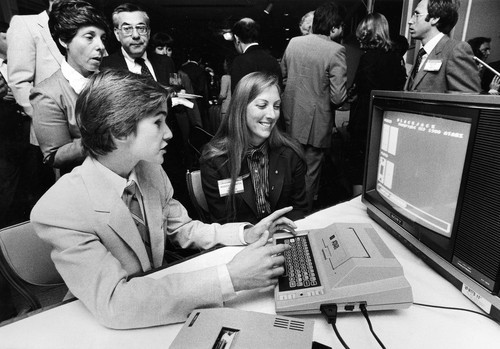
A dress code was once strictly enforced when playing video games

You may be saying “Hey, that’s not that hard. Games are like..you know, collectable and what not”, but you’d be somewhat wrong. In an increasingly digital market, some video games run the risk of being lost to the ages. THE AGES.

That’s where the hardworking men and women of the ICHEG come in; they’re preserving, recording, and watching as video game history unfolds.

So what does preserving the history of video games even mean? Collecting a bunch of old arcade cabinets? Having a physical copy of every game ever made? Sure. A little of column A, a little of Column B. As the article points out, sheer collection isn’t enough; in fact, most collectors of old machines don’t realize that by having an old arcade collecting dust in their basement isn’t particularly good for the machine. That’s why groups like the ICHEG are collecting games in a manner closer to art museums collecting art. Preserving for the future and for personal use.

Gaming exists as a medium that could potentially see its history disappear, as cartridges and machines that games are on weren’t made to last 20+ years.  For example, kids born in the 80s and 90s are only gradually learning that their Pokemon Red/Blue/Yellow, Gold/Silver’s batteries can die and erase all of their memory(NOT MY LEVEL 100 GRIMER!)

At the ICHEG, It’s more than mere collection of the games themselves, the groups seeks to maintain the theories and thoughts that went into games that made gaming history.

“This is part of our larger mission,” Dyson says. “We want to preserve design materials and media, as well as the physical products. We have Will Wright’s notes on The Sims and Spore, we have Roberta and Ken Williams’ notes on Phantasmagoria, we have a decade’s worth of notes from Ralph Baer.”

Dyson says all of these materials serve a larger purpose, to not only have a digital archive of games and related media, but the design and theory behind the entire medium as well. The ICHEG is working to have all of the notes, schematics and design documents available online to the public.

Cool. Similarly, they’re seeking to create 10-15 minute videos of all of the games they archive, to keep digital footage of what the game is about. These “sparknotes” of the games will keep an archive for future generations to at least see what “50:Cent Bullet Proof” was all about (Spoiler Alert: Shooting and Rap).

But there are bigger issues that the group is dealing with, especially given the gradual increase of downloadable games: with many developers releasing digital copies only, once the hardware they’re released on becomes outdated there will be little to no physical trace of them in the future. That’s an issue, and a big concern of people who oppose the gradual shift towards DRM. Even before DRM became an issue, certain games are were so scarcely distributed that very few copies exist of the games at all. What will become of these lost games?

Don’t believe me? Let me give you an example from a very prominent franchise. I give you the case study of, Legend of Zelda: The Ancient Stone Tablets.

Not many people know about this  game, or the other BS Zelda games that were released in a similar time frame. I’m using this one as an example, as it’s really the only “new” addition to the franchise that does not have a physical copy of the game.

Broadcasted to Stalleaview owners (A Japanese downloadable entertainment service) in 1997, the game was very much like a playable TV show with live broadcasting of voices and commentary. It was essentially a second quest to the SNES title “A Link To The Past”, but complete with a brand new storyline and new dungeon layouts.  Players could download the episode and play it in an allotted time frame, or wait for it re-air at a later date. Already sounds complicated, right? Well, the game was only re-aired a few times, which was already more times than most Stalleaview games. No physical copy of the game exists (aside from maybe somewhere in the depths of Nintendo’s archives) and the only current way to play the game is through emulation. However, even in emulation much of the music and commentary have been completely lost. Looking into such games will only lead you to want to write angry letters to Nintendo pleating for them to release more than the same 10 games on their downloadable services.

Now there may be some better games to display this point, but I just enjoy talking about this one (Link To The Past is my favorite game). Anyways, cases like this goes to show a problem: when piracy and emulation are the only means to play certain video games, what does that say for video game preservation? Whatever it says, it’s not good.

Video Game preservation is a big issue, as without proper preservation it’s one of the first mediums that we may see completely lose a lot of its history. If Video games are to stand as an justified art form and medium, it needs a rich documentation and preservation of its history.  It’s not only up to the ICHEG, it’s up to us all:

“We want to help raise awareness inside and outside of the industry,” Dyson says. “We want to stress the importance of video games and the need to preserve them. And we don’t have an endgame, an end time in all of this.”

Sorry for the geek out. I just find the ICHEG’s work really fascinating and important. Where do I sign up to be an intern?

Go check out the ICHEG’s Website!

More about LOZ: The Ancient Tablets

Can Video Games Help Kids Read Classic Books?

Can Video Games Help Kids Read Classic Books?

Probably not, but the people at Amplify have invested a pretty penny in the hope that they can! This article was posted today on USAToday and it asks the question whether video games can motivate kids to read classic books like Alice and Wonderland or Frankenstein. Evidently, kids aren’t reading the classics anymore and are instead off listening to their rap music, playing a shim sham, or twirling a tire (Or whatever kids do).

At risk, my friends, is our future. I don’t think I have to tell you, but if kids don’t read the classics then our society will fall into a hellish landscape of deviancy and  stupidity. At first it’s the classics they don’t read, then its your Miranda rights, and lastly it’s the label on the bottle of poison that says “do not drink”. Anarchy and hellfire will take hold and WE’LL ALL BE DOOMED because the kids didn’t read Moby Dick.

Games like “Alice: Madness Returns” have already attempted to make learning the tales of classic games fun, by making them exceedingly violent and full of hacking and slashing

That of course is the most likeliest of outcomes. To offset this inevitable demise, Amplify has created “Lexica”, which the article describes as:

massive role-playing game for young teens that invites them to interact with characters from great novels and read the books outside of class if they want to get ahead in the game

Sounds riveting. The game’s world is apparently one in which the worlds books are being safeguarded from the dullards of the world so that no one can read them. Characters from the classics book escape from the books to seek help and seek out players to read them. Literary types are the most needy. It’s then up to players to assist the characters by reading books outside of the game. Players will be reward with in game rewards such as abilities and items. Sounds like a novel idea (HA HA!), but what’s going to motive these kids to play this game?

“The Evil Empire, as it were, believes that you’re not smart enough and you’re not good enough,” he says. “You’re certainly not good enough to write something yourself, because only great writers can be the ones who create books. And, in fact, you probably shouldn’t even be reading these things, because you’re not smart enough.”

Oh. The game actively tells you that you’re not good enough, and that’s supposed to motivate kids to prove them wrong. What about the kids that don’t? They’ll just be defeated and forever cast into a life of stupidity? Negative reinforcement is the best way to motive kids!

Will this work? I’m skeptical. Lexica certainly wouldn’t be the first educational game designed to teach kids classic literature, in fact there’s been plenty of titles attempting to do so throughout gaming history. What the developers of the game intend to do is make the game apart of school’s curriculum, but if no one adopts the game then it’ll most likely never see the light of day. Teenagers aren’t morons. They’ll know when they’re being tricked into reading books, and they don’t need video games to persuade them to do so.  The bigger question is “Is there a need?” Every generation worries that the next is lacking skills or knowledge that they hold dear, but it’s never really the case. TV was marked as an indicator that kids would eventually lose interest in reading and that our kids were in trouble. It didn’t stop kids from reading, and neither will video games.

Sony’s Wonderbook hoped to make reading fun! It flopped!

“The main educational goal is to get kids to be doing more reading of an ambitious sort outside the classroom. Kids today probably read more words than ever before, but they’re tweets or text messages from each other. This is to try to get them to do something which they’re not doing as part of their daily habits, which is reading books of a reasonably ambitious sort.”

Or to sell more tablets. While Amplify seems pretty noble in their journey to save the classic for kids, they’re really just pushing software and products. The article goes on to tell about Amplify’s new tablet that they have just released for a cheap $349 with a two year subscription. Certainly, if they were more motivated by teaching kids the classics they wouldn’t make their program for a tablet that is overpriced to only the most affluent of families.

What this article really gets at is that video games are increasingly being used as tools of education and socialization. They’re teaching our kids and engaging them in ways that weren’t before possible. While it’s unclear weather games like Lexica are the future of this socialization and education through video games is unclear, but certainly they’re a stab at it.

But maybe I’m too pessimistic. Maybe we should be looking to video games to help educating our kids. I had educational video games that I played when I was younger, and my favorite part of computer class was playing Sticky Bear, but I don’t know how much they really aided in my education. That said, video games in general probably did help me develop essential reading skills when I was a kid. Games that were text heavy like Legend of Zelda or Pokemon probably further developed my reading and comprehension skills, and today’s youth certainly seem to have a thing for playing tablet games at a young age, so perhaps it’s not so farfetched. However, I just highly doubt we’ll look back on Lexica as a tool of education that turned thousands of kids onto classic literature. Prove me wrong Amplify.


Study Shows Parents Are More Positive about Media Use, But Not Video Games

Study Shows Parents Are More Positive about Media Use, But Not Video Games

Northwestern University published this report last about parents’ attitudes towards media use for their children. Exciting stuff! Well, maybe not so. However, it’s worth a read because the study finds shows some interesting insights about changing attitudes towards media.

“hehe! We were told to each wear a different bright color!”

tl dr: The study finds that today’s parents have much more positive attitudes about allowing their kids to consume media than in past years. A majority of parents are not weary of letting their children consume most types of media, as they’re not worried that their kids will become addicted and have to spend their lives as circus folks ( I may be assuming the latter).

With the exception of video games, parents think more positively than negatively about the impact of media (including TV, computers and mobile devices) on children’s reading and math skills, and their creativity.

Math skills are a stretch, but this fact shows an interesting trend: today’s parents, who grew up with computers, TV and other forms of media are less weary of these mediums because of it. What didn’t get them won’t get their kids, right? Meh. That said, the study still finds that traditional forms of family activities still reign predominant in most house holds. Also, interestingly the number of households the article deem ” Media centric” and Media Moderate” is considerably higher than those deemed “Media-light” (Media-Light sounds like a milk substitute). What this could mean is that, while parents may say traditional forms of family bonding are at the heart of their family activities, it could very well be that media plays a far bigger role than they would like admit.

However, what is most relevant about this study to sociology and video games is that parents, despite this positive trend towards media, are still relatively negative about video game use for this kids.

Parents view video games more negatively than TV, computers or mobile devices. Parents rated video games as more likely to have a negative effect on children’s academic skills, attention span, creativity, social skills, behavior and sleep than any other medium.

Peachy. The study doesn’t say if this is a improvement upon previous studies or not, but we’ll just focus on this negativity. The concerns come mostly from parents worrying that video games will effect their children’s physical activity, though that seemingly isn’t a concern for the other forms of media (Surfing the net sounds physical!). These are valid concerns, granted, but should we be more weary of video games than other forms of media on our kids physical activity? Probably not, but it’s an easy target. Likewise, concerns of effects on academic skills, creativity, and attention span are questionable in comparison to other media. With such an array of video games out there, and especially with the amount of video games being created to push creativity and education in young children, it’s hard for me to believe that video games are more destructive to a children’s attention span, intelligence, and creativity than television or the computer.

If video games are to become more widely accepted as tools of socialization, parents needs to be aware of their values and the options they offer. With research and proper insight, parents can choose video games that promote health values in children. Not all children games are angry birds (I loathe Angry birds) or run of the mill cartoon tie ins, so games challenge kids to think out side of the box and inspire them to be more creative. Being a product of growing up with video games myself, I honestly believe games made me more creative and analytical. Games like Zelda taught me to examine my surroundings and think beyond what I can see, while games like Mario Paint inspired me to be more creative than I could be with mere paper and pen. …And Duck Hunt taught me hunt duck, but that’s besides the point. The point is, video games aren’t the menace they’re often made out to be. Like TV and other forms of media, what you get out of a video game comes down to your selection.

Lastly, the study was of 2300 parents. That’s a decent sample size, but it’s not huge. As a result, we have to question whether this represents parents as whole. Likewise, the study did not say how their results were gathered or how they chose their sample size; all good questions to ask if we’re choosing this study to represent a population.


Can Video Games Alleviate LGBT Anti-Bullying?

Can Video Games Alleviate LGBT Anti-Bullying?

Short answer: Kind of, but not quite.

This article explores how video games may be a “cure” anti-LBGT bullying. It questions whether video games as stress relievers can have help bullied LBGT gamers cope. That’s..kind of a claim?  The article ties stress relief as an method for coping with bullying, but I have to ask: isn’t that only treating the symptoms?

But don’t take it from me:

“I have been bullied quite a bit up until I reached the end of high school,” says Matt Conn, cofounder of Gaymer X, an LBGT gaming conference happening this August in San Francisco. “I wished I could have just been myself and honest about being a queer geek. … Games were my only escape for me. They allowed me to live in another world … having a team with me as we stormed Booster’s Castle in Super Mario RPG or defeating the evil Porky in Earthbound … really was magical.”

Video games certainly have stress relieving qualities (Have you played Flowers? SERENITY), and wanting to get into another state of mind is certainly a viable option for anyone having a hard day.

thheee sttressss juussssttt meeellltttssss

But I have to ask: Are video games any more stress relieving than other mediums? Books? Tv? The internet? The article isn’t claiming they are, but it’s not asking the question either. In fact, as the article points out video game communities and multiplayer games are often riddled with homophobic comments and bullying as well. These certainly aren’t issues in the other mediums mentioned, or at least not as prevalent.

Likewise, the article questions if video games can “cure” Anti-Bullying without really talking about changing the mindset of those doing the bullying. That’s….hard to do. But that’s not to subtract from what they do: Video games allow for LBGT youths to escape for a moment, and that’s certainly something positive.

With   number of LBGT gamers  in the video game community making a place for themselves more and more LBGT youths have outlets to be and express themselves on the internet and in games. In time, perhaps Video games may be able to change the mindset of people taking part in bullying of LGBT, but unfortunately it’s a slow uphill march towards acceptance.

Female Employee Calls out Game Developer Boss’ Sexism with Awesome Prank

Female Employee Calls out Game Developer Boss’ Sexism with Awesome Prank

This is just a bit of great and funny news. A post that originated on “The Hawkeye Initiative”(which if you haven’t already gone and checked out you should do immediately) from a anonymous female employee of a gaming developer that was unhappy with a prominently displayed poster in their office shows how bringing to light issues of sexism can both be positive and fun (YEAH  TALKING ABOUT SEXISM IS GREAT!).

The poster in question:

image03

Our CEO loves this picture. It is to all appearances his favorite piece of comic art for the game. He had it blown up poster-sized, framed, and displayed on the out-facing wall of his office. There, it looms over the front room like a ship’s figurehead. It is the first thing workers and visitors see when they enter the building and the last thing they see when they leave. This little lady’s undermeats have been the open- and close- parens to my work world for the last six months.

To give a little background, the “Hawkeye Initiative” is a an internet movement to replace female comic book characters in impossible or provocative  poses with the very masculine and alluring Hawkeye to comment on the depiction and representation of females in comic books. Essentially, they’re taking Powergirl’s skimpy poses and replacing them with bulging Hawkeye (Oh my!)

Thus, in keeping with the Hawkeye Initiative’s message, the employee got together with one of the developer’s artists and made this poster:

image04

After replacing the posters, the CEO of the company had this to say to the employee:

“That was a brilliant prank. You called me on exactly the bullshit I need to be called on. I put up pictures of half-naked girls around the office all the time and I never think about it. I’m taking you and Sam to lunch. And after that, we’re going to hang both prints, side by side.”

Hey, that worked out. That was nice. The mastermind of this all also shared some insightful things that she learned from this experience:

This wonderful experience has taught me two things that I hope to carry with me for the rest of my career in STEM (science, technology, engineering and math) and in gaming. It taught me this:

  1. Lots of men (like Sam) are already sympathetic to the stupid, constant crap women put up with in gaming/STEM, and they are ready and willing to call that crap onto the carpet.
  2. And, most importantly, many of the guys who are behind that stupid, constant crap are totally decent, open-minded human beings who just don’t realize they’re doing it. You know how sometimes you don’t realize how much you and your girlfriend are talking about shoes or menstruation until some dude walks into the room? Well sometimes guys don’t realize how much they’re talking about titties.

We just haven’t been around enough for them to notice.

So what does this teach us? Nothing? That we should replace pictures of things we dislike with things we like? It just goes to show that Sexism doesn’t have to be a silently fought issue. While no one is suggesting that all bosses/ceos/ people in charge are going to react like this great boss, one has avenues to breach these matters. And it’s true, the gaming industry is filled with more progressive minded individuals than you would think, so perhaps it’s time for men in the gaming industry to wise up a little more to the junk that their female co-workers have to deal with.

Should we have a Hawkeye initiative for the video game industry? Nathan Drake taking on the poses of Lara Croft per chance? Ryu striking the same poses of his female counterparts? As I type this, I wish I had the drawing ability to make these so.

How Objectificiation Hurts Video Games

How Objectificiation Hurts Video Games

(Caution, main picture on the article is a little on the NSFW side)

Here’s an article that was posted on the NYTimes Live site. To be honest, it’s not the greatest article, but it brings about a good point and is worth questioning. The author’s main argument is that objectification in video games is hurting games and the industry. I this true? Is he wrong? Should we care? Are there any horse socks? Is anyone even listening?

The author contends that female characters are typically objectified to the point of them being nothing more than objects to save; the quest isn’t about saving an individual, it’s about retrieving an object.The article uses the example of Princess Peach to exemplify this objectification, not as a object of of sex appeal, but as a character who represents the nothingness of many created female characters. It’s true, what do we know about Peach besides the fact that she gets kidnapped a lot, likes to bake cakes, and is occasionally not in the castle she’s supposed to be in? Then again, Mario Characters (Or even Nintendo characters in general) probably aren’t the best example of fleshed out characters. But it’s true, a lot of female characters in video games tend to be fairly one dimensional (NOT 2D EVEN. HARDY HAR HAR) and stereotype based. You needn’t look further than most Japanese RPGs to prove this. Without  a doubt, these one-sided characters are hurting the representation of females in gaming, and not providing accurate role models and representations to gamers, but that’s not really the point the author is making.

The author is making the argument that this objectification of females in gaming is hurting developers where they care the most: the wallet.

We see a cover with a woman dressed in something that would give a stripper doubts, we automatically think “well that’s probably crap” and don’t buy it. This is a fairly big chunk of how women are portrayed on game covers, so publishers look at it and think the problem is women, not the portrayal of women.

HEY, THANKS FOR THAT QUOTE. Is this true of most gamers? I don’t I think it is. If we’ve learned anything from the media, it’s that sex sells. Would Dead Or Alive be as popular of a franchise without the complete objectification of women? Probably not. Hell, there’s even complete MMOs out there that were created on the idea “LET’S MAKE AN GAME WITH A BUNCH OF NAKED CHICKS”. Likewise, with a good portion of the gaming populace being teenage boys, it’s hard not to say that this gaming philosophy is working.

Speaking for myself, I agree with the author: games with large amount of “boob exposure” on the cover typically sway me away from looking further into them. Take Lollipop Chainsaw for example- a over the top, over-sexualized, ridiculous hack-in-slash that supposed to be decent

I will happily buy a game with such bad box art. I mean, sexiness aside, it’s still really ugly. Needless to say, not all games have women sexualized to this degree, and the game itself is a tad bit of a parody. However most gamers won’t know that, but will that sway them not buying the game? That wasn’t really the issue with this particular game, but it’s debatable.

So what should be done? Should sex appeal be removed from games all together? No. I wouldn’t say that. It has it’s place. Done correctly, a game that deals with themes of sexuality and objectification can actually be great.

Take for example Catherine on the PS3/360, a game where the cheating main character must make a decision between choosing his long term, less exciting girlfriend, or a very sexualized younger girl he has a one night stand with. Amongst many other themes, the game deals with subjects of infidelity, relationships, and objectification.It does it with great storytelling, consequences for your action, and interesting perspectives.


Unfortunately most games aren’t Catherine, and most developers are content with merely painting one dimensional characters with little remorse for the consequences. This isn’t an issue with female characters only, we should be asking more from our developers out of characters in general. Deeper characters = deeper experiences. That said, we should also be weary of games that are simply using sex to sell us a product.

So whether you agree with the author or not about whether objectification is hurting gaming developers, it certainly remains an issue in gaming and media in general.


Nintendo Patching Gay Marriage “Bug” in Popular Japanese Game

Nintendo Patching Gay Marriage “Bug” in Popular Japanese Game

Oh boy. This is a strange one. This week Nintendo released a patch for their popular life simulator 3DS title “Tomodachi Collection” that fixes  bug that allows for same-sex relationships. Tomodachi is a Japanese life simulator title for the 3DS in which players can use their Wii/3DS Created Miis to interact, fall in love, and socialize with other characters (Think Animal Crossing or the Sims). The patch supposedly fixes a bug in the game that allows for two male Miis to fall in love, get married, and even have kids. I use the word bug, because it seems that Nintendo did not initially intend for same-sex couples in this game at all ( In fact, the bug does not work for 2 female Miis). The bug only works when a Mii is transferred over using the 3DS’ Mii Transfer system.

It’s only strange if you haven’t seen the movie “Junior”

The patch, according to Nintendo, fixes “Human relations that become strange”. What Nintendo deems strange is unknown, as there’s plenty of relationships that become strange without having anything to do with same-sex coupling (It’s highly unlikely that the game will fix the hundreds of Hitler Miis out there hooking up with Miis of elderly women).

So we have to ask the question: Is patching the game to not allow same-sex relationships the right thing to do? It’s a tough one, especially for Nintendo. Tomodachi Collection wouldn’t be the first life simulator to allow for same-sex relationships, as games like “The Sims” have already allowed for Same-sex sims to fall in love, get married, and even do the nasty together. That said, Tomodachi Collection is a game primarily aimed at kids (Although it’s odd that a life simulator is aimed at a group of people whom, you know, just started life) and having two males conceive a baby together is less than natural (Granted, no more odd than consuming a leaf and turning into a raccoon that can fly). Although one could make the argument that they could simply fix the males getting pregnant aspect and not the relationship aspect. But should they? Nintendo never intended to take a stance on the issue to begin with, and patching the game does not necessarily mean that they are taking a stance. Nintendo isn’t exactly the company you expect to be shaking things up, so it’s only natural for them to be playing it safe with this. Then again, many fans of the game are already disappointed that the game has been patched, eliminating their ability to choose their relationships in the game.

Nintendo is certainly taking the cautious route with this one, but we have to ask: “should our game developers be promoting progressive social issues and social causes?”. Video games are a great tool of socialization, and in making games with progressive social issues is certainly one way of slowing inching towards social change. Perhaps games like Tomodachi Collection can be tools of change.

Then again, Nintendo hasn’t even developed a perfect system for me to play with my friends over the internet, do I really want to them taking the reigns on social issues that don’t have to do with Turtle/lizard creatures being second class citizens? Probably not.

Can Video Games Teach Young Girls To Be Rich?

Can Video Games Teach Young Girls To Be Rich?

http://www.forbes.com/sites/jordanshapiro/2013/05/09/can-video-games-teach-our-daughters-to-be-rich/

These two articles came out in the last few days, and they examine how children’s gaming is gendered, and ask the question “what are games teaching or not teaching our daughters”. The authors ask how video games can be used to teach young girls the attributes and qualities that young women often lack (like the drive to be the financial breadwinner) that young men seemingly gain. They evaluate video games as tools of socialization that are instilling these qualities in boys, and not girls.

Super Princess Peach teaches young girls to save the day by using their emotions.

Media at large paints women as the damsel in distress much more often than as a strong female lead, and video games are no different. The princess role is as old as writing itself, and characters like Peach and Zelda are certainly only modern interpretation. Even though we’ve seen Peach take the reigns in games like Super Princess Peach, Super Paper Mario, and every Mario Sports title ever (SHE CHEATS IN MARIO STRIKERS. YOU KNOW IT. I KNOW IT), lead female roles in video games are still rare.  Certain franchises have been more progressive than others, enabling players to choose between genders (See Mass Effect, Pokemon, etc) but the majority of story driven games are often centered around males; there’s some, but not too many. Likewise, games with female main characters tend to have their protagonist silent (see Metroid, Portal 2)

Final Fantasy XIII Prominently features Lightning as the main character…A lot of male gamers..didn’t like her (Then again they hated everyone in the game)

But is their hypothesis true? Can video games be used to make young girls more ambitious? Certainly. Why not. Hey, ok. Video games are inevitably a tool of socialization in today’s world; young boys and girls are learning lessons and characters from their on screen personas ( I learned how to be a battle toad from Battle Toads). Thus, it’s important that young girls have strong role models in their games, rather than merely pushing gender roles upon our young.  Likewise, it’s up to us to monitor and know about the games our kids our playing and to choose games and stories that reflect the ideas and attributes we want to instill in our kids.

Some awesome games with strong female characters:

  • Beyond Good and Evil
  • Mirror’s Edge
  • Tomb Raider (Eh)
  • Portal 2
  • Metroid Prime Triology

Please comment or share your thoughts, favorite games with female leads, or anything!


Misogynism in Video Games: Struggles and Solutions

Misogynism in Video Games: Struggles and Solutions

This interesting article hit the web last week. It chronicles one female’s gamers struggle towards acceptance in both her online communities and her real world gaming community.

“A lot of ‘gamer’ guys just never respected my opinions,” she said. “I’ll be talking about games with my friends, and there would be this one guy who always thought my taste in games were too girly and childish […] He said I wasn’t a ‘real gamer.’” Even so close to home, female gamers are met with hostility for expressing their interest in video games.

This unfortunate story tells a truth about the gaming industry: it’s kinda sexist. Well, maybe not kinda, maybe REALLY sexist. Female gamers, whom make up a healthy population of the gaming world (coming in at 47%) are often still disregarded as casual on non-gamers. That’s not to mention that the majority of video game being developed are specifically aimed at young males, rather than their female counterparts.

Cooking Mama’s not part of the problem, right? OH NO!

Where’s this hostility coming from? Well, I don’t know if I need to say this, but: YOUNG MEN ARE STUPID, HORMONE DRIVEN, ASSHOLES. That is to say, place a young male gamer on the internet and let them loose with pure anonymity as their dark side comes out. You needn’t look further than a message board flame war for this (OH GOD, THE WARS I’VE SEEN!). With the veil of the internet, young male oppress and harass female gamers in ways they’d never do in person. However, as this article contends, the harassment and oppression doesn’t end online- female gamers are often disregarded and marginalized by their peers, dismissed as non-gamers or casual gamers. The picture of a “hardcore gamer” in the eyes of many males game is only one gender.

So what can we do? This isn’t a karate movie in which Hilary Swank is going to train and prove her worth to boys (No one makes The Next Karate Kid references, and for good reason..). We as gamers need to realize that we have to play nicely. Gaming is no longer the introverted activity it once was, and that your gaming world is all of our gaming world. We also need to examine what makes a gamer; is it the type of games we play, or the people we are? Likewise, developers need to keep in check the messages and images they conveying, and putting forth. Through acknowledgement and acceptance, marginalization in the gaming world will one day disappear.