A quick 2025 update to share a co-authored chapter I co-wrote with some other amazing scholars entitled “Designing Care(full) Online Play Communities for Youth.” This is a chapter published in the collection Youth Wellbeing in a Technology Rich World, Edited by Carrie James and Mizuko Ito. I am so appreciative of the editors and organizers for including this chapter in the collection, and to my co-authors who have been spectacular to work with.
And finally, just a quick logistical update. The best places to reach me (to talk, connect, or share resources) are now on Bluesky and Linkedin. I love talking to scholars and students interested in sociology and video games, so please do not hesitate to connect!
This past May I successfully defended my dissertation entitled “Bootleg Consoles: Culture, History, and Legitimacy at the Margins of Gaming”. I am so happy to say that (barring some paperwork) I have earned my PhD and the title doctor. It’s been a long trip to this point and I’m so grateful to my committee, the Informatics department at UC Irvine, and everyone who has supported me throughout my graduate career. I’m hopeful I can share more about the dissertation soon, but it will make it out in the world in the future at some point.
But I’m not done presenting this work just yet. I’ll be presenting at the Save the Games Symposium at the Strong Museum of Play in Rochester New York at the end of August. I’ll be talking about the importance of preserving bootleg video games and the work that needs to be done to make sure these games and devices don’t disappear forever.
And lastly, I’m on the job market! This year I’ll be pursuing teaching opportunities in sociology, games, and related fields. If you know a department or school that could use a sociologist who studies digital media and games, let me know! I’m happy to connect!
That’s all for now! Over the course of the next months, I’ll be submitting some more work to conferences, planning a class for the fall, and just generally surviving. But, I’m looking forward to continuing to research video games and sociology and connecting with other fellow academics and peers.
After taking a year or so off to work on the dissertation, I’m back on the conference circuit to present some ongoing research.
I’ll be presenting on the Accessibility of Retro Video Games at the Pacific Sociological Conference this week (March 21st) and then I’ll be presenting some work on Bootlegging Video Game history at the History of Games Conference in May.
For those interested in getting into sociology more, attending conferences is a great way to learn more about the field, what work is being done, and network with other students and sociologists. Even if you’re not presenting, just attending conferences are usually pretty low-stakes ways of getting involved. Most conferences also need student volunteers, so you can probably attend free of charge if you’re willing to help out.
I’m so excited to share my newly published article entitled The Bootleg Connection: Micro Genius and the Transnational Circulation of Early Clone Consoles now available via the Journal of Game Histories, RomChip.
Micro Genius products
Here’s the abstract for the article:
Video game histories often depict the medium’s global rise as untroubled, with video games emerging from North America and Japan and meeting little to no resistance. Recent game scholarship has shown the flaws in this narrative, specifically its Western-centric bias and failure to acknowledge the numerous regional markets and local developers who contributed to the medium’s global popularity. This paper continues this work by considering an alternative, bootleg network of transnational gaming circulation. By exploring Micro Genius devices and their transnational legacy as a case study of bootleg gaming brands, this paper contends that alternative gaming experiences are not only important but critical to game history and the global game industry’s extraordinary reach. Originating in Taiwan, Micro Genius devices had an undocumented impact on the growth of the regional gaming market. Subsequently, the brand had an extensive afterlife as a transnational clone via three regional variants: the Dendy in Russia, the Pegasus in Poland, and the Samurai Micro Genius in India. The case of Micro Genius and its various rebrands shows how pirate brands not only invited regional communities into the video gaming market and culture but did so through complex transnational networks comparable to those of leading companies like Nintendo and Sega.
I’m so happy that this piece is finally out there. It’s been several years of work and really encompasses a lot of where my research is going.
Wanted to share a review of Life is Strange 2 by CaLea Johnson, who shares an interest in the intersection of sociology and video games.
Here is CaLea’s description about herself and her interests:
“I am a blogger who likes to write about the sociological aspects of video games. Examining how and why video game developers include social issues into games forms interesting viewpoints. I encourage people to enjoy playing video games through an analytical lens as this can create entertaining learning experiences!”
I’ll post the introduction of the review, but I encourage you to go to her original blog post here and share/comment there. Thanks to CaLea for sharing your interest in the subject!
—————————-
Life is Strange 2 Review — A Riveting Adventure
Video game developers don’t tackle social issues very often because it’s challenging to talk about subjects that are so sensitive. Dontnod Entertainment boldly accepted the challenge by creating Life is Strange 2. The result is a compelling choice-based game that explores how Mexicans experience racism in America.
The plot of Life is Strange 2 is the most fascinating part of the game. It’s centered around two brothers, Sean and Daniel Diaz, whose world is turned upside down when their father, Esteban, is wrongfully murdered by a cop. To make matters worse, Daniel’s newfound telekinetic powers accidentally kill the cop. The kids decide to flee America and seek refuge in Puerto Lobos, Mexico to avoid being separated.
The bravery of the developers is admirable since they centralized the plot around racism. When Esteban is shot by the cop, the main theme of the game becomes crystal clear. It focuses on the fact that some perceive certain ethnic groups as inherently dangerous. In other words, some people are guilty before being proven innocent. Furthermore, the Diaz brothers encounter many who are consumed by bigotry and hatred while traveling, forcing them to face the harsh reality of being a minority in America.
Issues about fan labor, peripheral game development, and bootlegs games are increasingly becoming important topics to me, and this paper touches upon a lot of concepts and ideas I find interesting. Broadly the paper argues that games developed outside of the traditional games industry are wrongfully denied legitimacy because of lacking certain western-centric notions of “gaming realness”. I hope it’s an interesting article for you all and (hopefully) I’ll have more articles to share in the future.
Just wanted to update the blog with two unfortunate cancellations about presentations of research.
I was accepted to the Digital Games Research Association’s annual conference in Tampere Finland to present my on-going research. The presentation was tentatively entitled Platforms at the Peripheries:A Case Study Analysis of Historic Bootleg Consoles. Of course the conference has been cancelled due to the global pandemic. An extended abstract for the research will be published in the Conference’s proceedings in the next few months.
I was accepted to the American Sociological Association’s annual conference in San Francisco California to present a paper I wrote entitled Gaming Tastes: Cultural Hierarchies Amongst Video Game Consoles and Devices. The paper broadly looks at communal hierarchies of gaming hardware through concepts by Pierre Bourdieu. This conference has also been cancelled due to the global pandemic. Discussion of a virtual conference are in the works, so we’ll see what happens.
I wanted to share these two projects to extend my willingness to discuss and share info about these areas for any potential academics or interested parties. I’m always happy to chat with individuals about this research, so please do hesitate to send a message.
As unfortunate as it is for these conferences to be cancelled, they are done in an attempt to keep everyone safe. I’m extremely grateful for all of the organizers and peer reviewers for their hard work, and for the conference officials for making the swift and hard decisions to cancel. Hopefully everyone’s hard work won’t go to waste and we’ll be back to physical meetings in 2021.
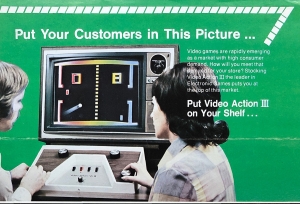
I wanted to share a guest blog post I did for the Strong Museum of Play’s Play Stuff Blog during my summer fellowship there last year. The post entitled, Clones in the Archives: Console and Software Cloning Practices in the Early Years of Video Games, is a short look at how console cloning contributed to the global proliferation of video games in the 1970s and 1980s. It narrows in on cloning narratives around Pong Clones and Famicom clones (Famiclones) and seeks to understand if these narratives differ in meaningful ways. It also briefly reflects on doing archival research and the amazing opportunity I was given by the Strong Museum.
This historical piece has increasingly become a tent pole of my understanding around cloning practices more broadly, as well as foundation for situating how video game history favors specific narratives over other. Hopefully I’ll have some more pieces of this project to share in the future, but the Play Stuff Blog post should give you an idea as to where my research is heading.
I wanted to share an area of research I’m currently engaged with, particularly looking at what are typically referred to as Bootleg Consoles as meaningful social artifacts that make up regional gaming identities.
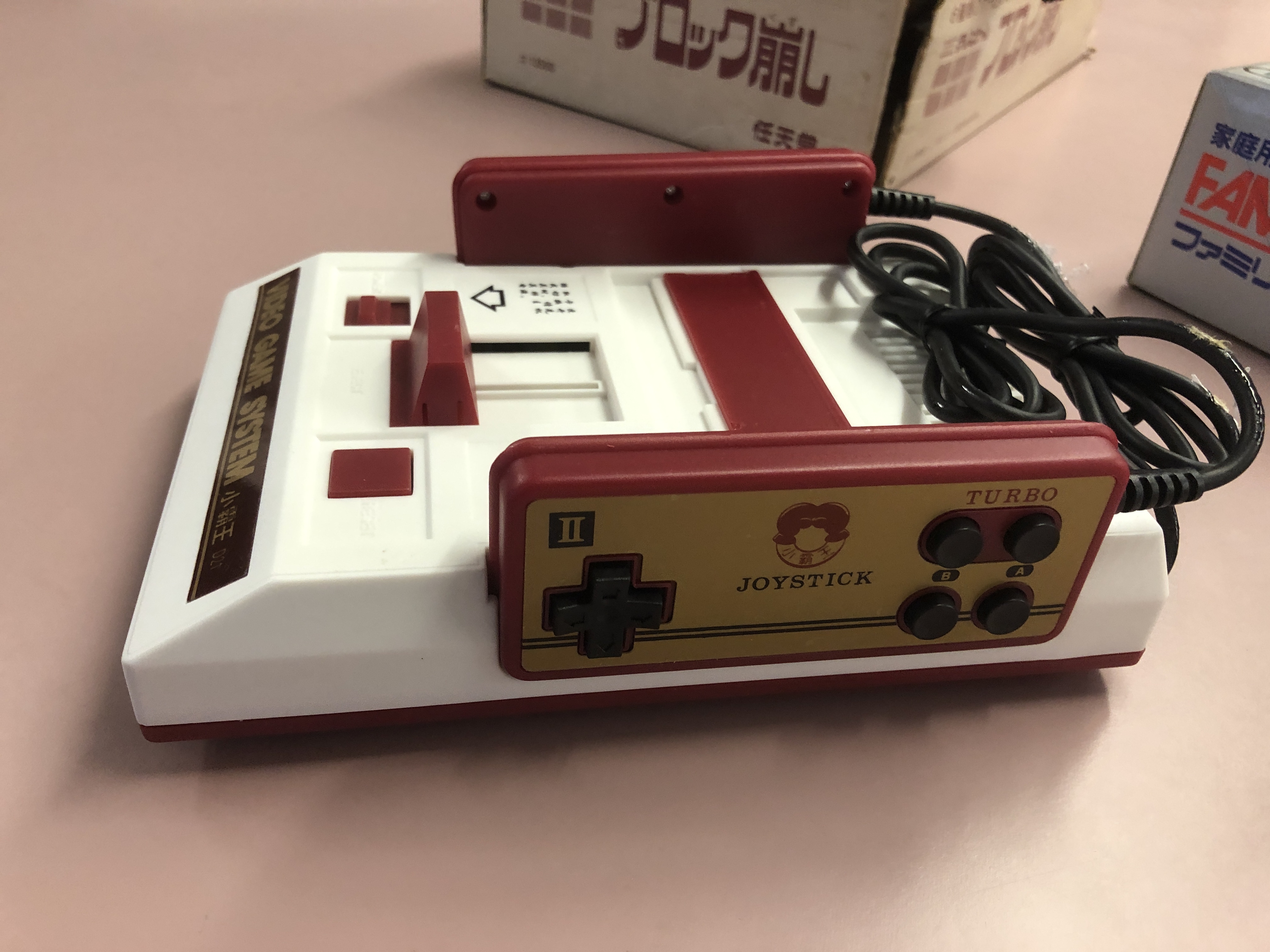
A Subor Famicom clone, not licenced by Nintendo
Broadly, the term bootleg console can be used to refer to any third party video game device that plays another manufacturer’s software without the intent permission from the original developer. Bootleg consoles of the past had traditionally been cloned devices that enable one to play physical software on a non-licensed device. During the early years of the industry, these types of devices sprung up all around the world in areas left untapped by big name game developers (Atari, Sega, Nintendo, etc.) and many countries had their own variations that they fondly remember.
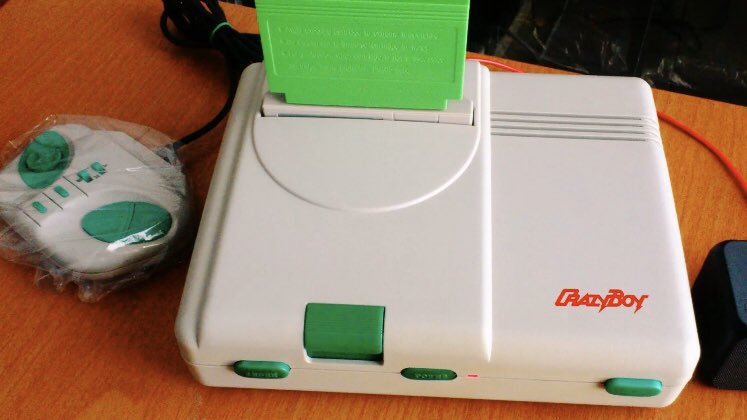
The CrazyBoy famiclone.
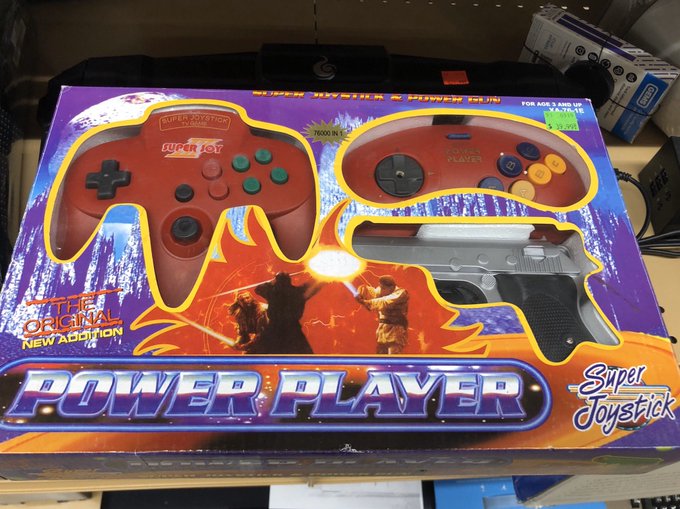
Modern bootleg consoles exist somewhere between cloned consoles and straight emulation, and many device tend to be marketed as all-in-one devices similar to official products like the NES Classic or Sega Genesis Mini. These devices tend to feature a swath of pirated games at a fraction of the cost of official products, with the most common platform pirated still being the Famicom/Nintendo Entertainment System.
Power Player device, an example of modern bootlegs on the market
Looking more critically at these devices as platforms that are more than just cheap cash-ins or pirateware may yield interesting results about gaming more broadly, and how the industry as created a platform hierarchy through I.P and access.
One way that I am examining this project is through a twitter account that collects, documents, and share many of these types of devices. You can check the twitter account @Bootlegconsoles.
The intent of this account is to share knowledge and experiences around these devices, and does not condone piracy. You can support this project by simply sharing or subscribing to this twitter account, but also by sharing your own experiences with these devices!
I’ll be sure to share more info on this project as it progresses.
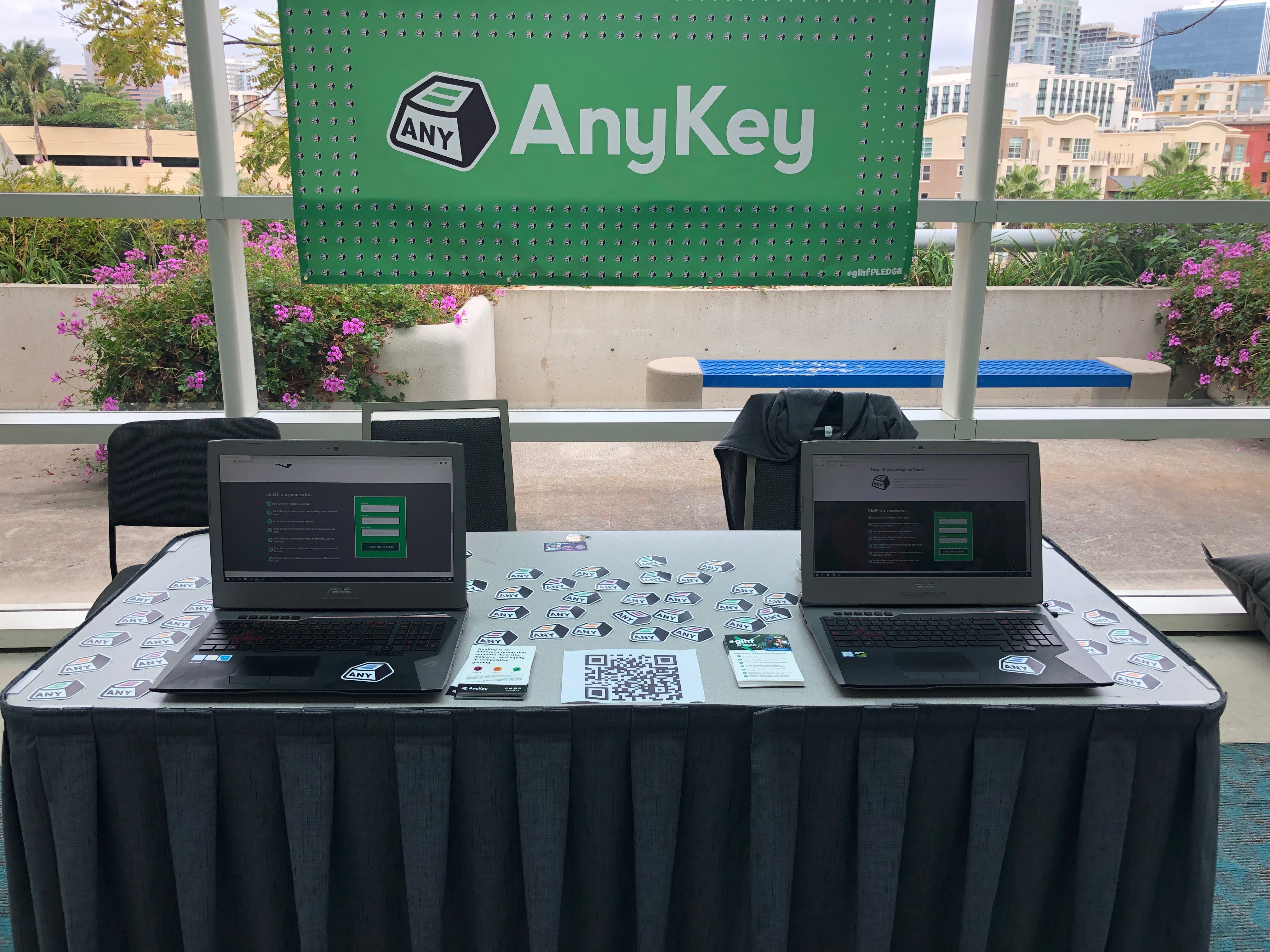
This past week AnyKey, an advocacy group that promotes diversity and inclusion in gaming, relaunched their Good Luck Have Fun Pledge. I had the pleasure of representing the organization at TwitchCon 2019 in San Diego this past weekend.
I met a lot of engaged gamers and streamers and was really moved by all of the positive responses we received regarding the pledge and the work AnyKey does. For those who have not heard or taken the pledge, it is pretty simple. The GLHF pledge asks individuals to:
Be a good sport whether I win or lose
Know that people online are real people and my words have real impact
Set a positive example with my behavior
Speak up against discrimination, hate speech, harassment, and abuse
Show integrity by honoring the rules, my opponents, and my teammates
Stop, listen, and reassess if I’m told that my words or actions are harmful
Respect others, even if their sincere opinions are different from my own
The GLHF pledge is a part of a larger initiative to curb toxicity in gaming spaces, with a big emphasis being placed on esports and streaming. If you’re a twitch member you can also earn yourself a twitch global community badge icon, which your followers can then click and take the pledge for themselves.
AnyKey is hoping to have 1 million gamers take the pledge by 2020 and so far they’re nearing 300,000 at the time of this post. It’s a simple way of showing you’re not willing to stand for toxic behavior online. You can also support the cause by using the tag #glhfpledge on twitter and following AnyKey.






 The Sociology of Videogames