

Vice’s “The Invisible People: Why Asians Need to Be Better Represented in Video Games”

376266_v1

Vice News posted an article by Khai Trung Le entitled “The Invisible People: Why Asians Need to Be Better Represented in Video Games” that discusses the the lack or representation and misrepresentation of Asians in video games. It’s an interesting subject that often doesn’t get brought up in the community all that often. Before we discuss the article, here are some important tidbits from the article:

The issue of representation is perhaps more difficult to confront because Asians have always occupied a significant presence in games history, culture, and production, creating the assumption of a non-issue. China, Japan, and South Korea are strong markets for video games with their own idiosyncrasies, studios and market influence, and are certainly as responsible for propagating these tropes as Western developers and publishers. Nor do Asian men experience the same career barriers within the tech sector and generally are not currently under the extremities of harassment and hate felt by others: not under threat of deportation or assumptions of terrorist sympathies, nor under fear of trigger-happy law enforcement. Fortunately, there has been no organized social-media movement against Asians—although some of the coarser language certainly focused on ethnicity—but rather a continuous disregard.

Nevertheless, 49 percent of Asian American respondents to a 2015 Nielsen survey “strongly disagreed” with the statement of “all races have ample representation/inclusion in video game characters.” This is more than twice as high as Hispanic and African American respondents, and similarly more than twice as high than women that “strongly disagreed” with the same statement toward gender.

I think the reason representation in video games doesn’t often get brought up in regards to Asian communities is that there is a misconception that Asian characters are being well represented in video games, primarily due to Japanese characters having a good deal of representation in the medium. There in lies the issue; the terms Asian is such a broad term referring to such a vast number of cultures and people that one population within the umbrella term receiving representation in no way should trivialize other groups’ lack of representation. One Asian community does not represent all Asian communities, and nor should representation be looked at as a form of checking of groups.

The article is pretty articulate in regards to the problems of representation in gaming, but it should be noted that the article’s focus seems to be arguing more so for representation of Asian Americans within gaming, rather than Asian communities outside of the United States. Perhaps this division goes without saying, but the article doesn’t make the distinction which will perhaps lead viewers to extend his viewpoint to more communities than just Asian Americans. Regardless, representation within the Asian American community in general is a subject matter that extends to many forms of media and gaming is no different. As the author puts forward, we’re seeing some positive portrayals in recent games but a significant portion of Asian Americans feel that video games are underrepresenting or misrepresenting their communities. With more emerging game development communities forming in Asian countries like China and S.Korea, hopefully we’ll begin to see other Asian communities better represented within gaming as a whole. Similarly, American developers need to be more conscious of representing the entire American population within their game, which needs to include the various Asian American communities that call the United States home. More diverse characters with more diverse backgrounds mean for more interesting games.

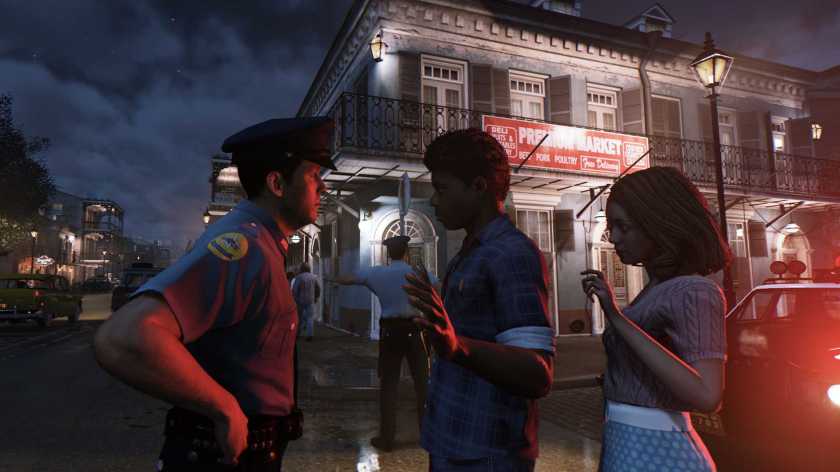
Mafia III Will Utilize Racism as a Gameplay Mechanic

2KGMKT_MAFIA3_DELUXE_PREORDER_STEAM_capsule_main

The upcoming 2K game’s/Hanger 13’s “Mafia III” has some interesting gameplay elements that may change the way gamers think about racism in America. Set during the late 1960s, Mafia 3 places players in the role of Lincoln Clay, an African American Vietnam War veteran who is returning to his home after serving overseas. The game’s narrative has Clay seeking revenge on the Italian Mafia for the deaths of several of his childhood friends. To enact revenge, Clay will form his own mafia in the hopes of achieving revenge for his friends and earning himself a better life.

For anyone who has played a Mafia game in the past, this doesn’t sound far off from standard fare. However, this will be first time the series has introduced a character of color as the main protagonist for the game. For the developers, this isn’t a cosmetic change they wanted to make lightly: creating a character of color set in the world of  the 1960s means that the character would interact with the world differently than a white character. As a result, the developers decided to make how characters and area react to the protagonist’s skin color a part of the gameplay itself.

mafia-iii-24

Haden Blackman and Harms, creative director and lead writer of Mafia III respectively, shared some insight with IGN on how they’re making Mafia III reflect the turbulent times of the 1960s:

The behavior of pedestrians and NPCs – certainly not everywhere throughout the game, but in large sections of it – there are places where if Lincoln looks out of place and seems out of place, people will react to that…There are places you can go that just being there is an offence and will elicit a police response. ..We aren’t so naïve to think that a single game could cure racism, but if we can get the player to think, ‘Why am I being treated differently here than in other parts of town?’ then I think we’ve done something worthwhile.”

It’s an innovative design element, one that could potentially open some eyes to hardships that many people of color face in their every day lives. We’ll have to see how it’s fully implemented when Mafia 3 comes out in the fall, but it’s great to see a developer be cognizant  enough to  realize that their characters and action have to reflect the world in which they are set. As Haden Blackman eludes to, if the game can change the way people think about privilege and make people even slightly more sympathetic to those who have to deal with everyday racism then the game will have accomplished something great.

Check out IGN’s piece on Mafia III

New Study Suggest Video Games May Be Enforcing Racism

They did it everyone. They found the link between playing video games like Kirby and being a bigot…Well, not really. However, A recent study coming out of Ohio State University has found some interesting findings regarding racism and video games. This study may make your reconsider your next gaming choices.

In Saints Row you can be a thug of any race or gender! Or not, I haven’t played it.

Published in the journal Social Psychological and Personality Science the study questioned what  happens when white video game players find themselves playing as black video game characters in violent video games. The first experiment had 120 white students play the violent video game Saints Row. Participants were randomly given either a white protagonist or a black protagonist in the game. Furthermore, players were given one of two missions – break out of prison or go to a chapel without harming others. After each play sessions participants were given the Implicit Association Test (IAT) to reveal any hidden biases they may have had by having participants link white and black faces to either negative or positive categories. The results found that players that were using black avatars were more likely to link negative categories to black faces than those who used white avatars. Similarly, it was found that players who played the more violent mission were more likely to agree with the statement “It’s really a matter of some people not trying hard enough; if blacks would only try harder they could be just as well off as whites”.  Yeesh, that’s harsh.

We’re getting into some scary findings here kiddos, but it doesn’t stop there. A second experiment was conducted to further these findings. In this follow up experiment, 141 more white college students were asked playing either WWE Smackdown vs. RAW 2010 or Fight Night Round 4. As in the previous experiment, participants were assigned either a white or black avatar and then given the IAT to measure their biases. However, after each play sessions participants had the opportunity to give their unseen partner (presumably their opponent) a punishment in the way of hot sauce, which the participants knew they disliked. The results found were inline with those of the previous experiment; players who played as black avatars were more likely to associate negative categories with black faces than those who played as white characters. In regards to the hot sauce portion of the experiment, players who played as black avatars gave their partners 115% more hot sauce than those who played as white avatars. Clearly, something about playing as black avatars makes white players want to dish out some hot sauce.

What this suggests is that something about playing as black avatar characters, especially in violent scenarios, reinforces negative stereotypes about the black community in white video game players and makes them more aggressive towards others. While it’s a general perspective to believe that more minority characters will make general audiences more empathetic to people of colors, this study suggests that negative and unbalanced minority characters may only fuel further racism and bias. Regardless of this study’s findings or not, clearly there is a lack of balanced and progressive minority characters in the video game industry.

gtav-screenshot1

One thing the study does not do is offer reasons why this may occur, other than their go-to embedded racism. Embedded racism may be the perpetrator, but one must consider that there may be something more at work. It would be interesting if the same experiments would be done with a control group of only black video game players: would the same results be found or would the results be flipped. One consideration the study does not offer is disassociation: players could potentially be more likely to be more aggressive when they have a further distance between themselves and their character. Not relating to their character on race may be making players relate less, and thus become more aggressive and more likely to act out. Of course this doesn’t offer a solution as to why they would be biased towards racial stereotypes, but it’s a consideration.

This study tells us something that we already know: negative characters lead to negative attitudes and actions. Playing as a violent killer is negative, regardless of the race of the character or player. I’m not suggest we pacify or censor our games, but instead me more conscious of the media we’re consuming and how it effects us. It often is more fun to be violent in a video game than not, but perhaps we should only be giving our gaming palettes opportunity to be violent.