
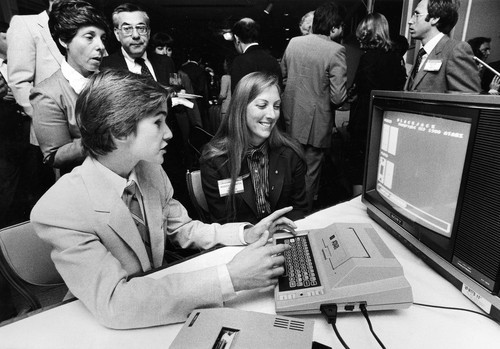
Preserving The History of Video Games
Here’s a very interesting piece about the International Center for the History of Electronic Games (ICHEG), a group seeking to preserve the history of video games.

You may be saying “Hey, that’s not that hard. Games are like..you know, collectable and what not”, but you’d be somewhat wrong. In an increasingly digital market, some video games run the risk of being lost to the ages. THE AGES.
That’s where the hardworking men and women of the ICHEG come in; they’re preserving, recording, and watching as video game history unfolds.
So what does preserving the history of video games even mean? Collecting a bunch of old arcade cabinets? Having a physical copy of every game ever made? Sure. A little of column A, a little of Column B. As the article points out, sheer collection isn’t enough; in fact, most collectors of old machines don’t realize that by having an old arcade collecting dust in their basement isn’t particularly good for the machine. That’s why groups like the ICHEG are collecting games in a manner closer to art museums collecting art. Preserving for the future and for personal use.
Gaming exists as a medium that could potentially see its history disappear, as cartridges and machines that games are on weren’t made to last 20+ years. For example, kids born in the 80s and 90s are only gradually learning that their Pokemon Red/Blue/Yellow, Gold/Silver’s batteries can die and erase all of their memory(NOT MY LEVEL 100 GRIMER!)
At the ICHEG, It’s more than mere collection of the games themselves, the groups seeks to maintain the theories and thoughts that went into games that made gaming history.
“This is part of our larger mission,” Dyson says. “We want to preserve design materials and media, as well as the physical products. We have Will Wright’s notes on The Sims and Spore, we have Roberta and Ken Williams’ notes on Phantasmagoria, we have a decade’s worth of notes from Ralph Baer.”
Dyson says all of these materials serve a larger purpose, to not only have a digital archive of games and related media, but the design and theory behind the entire medium as well. The ICHEG is working to have all of the notes, schematics and design documents available online to the public.
Cool. Similarly, they’re seeking to create 10-15 minute videos of all of the games they archive, to keep digital footage of what the game is about. These “sparknotes” of the games will keep an archive for future generations to at least see what “50:Cent Bullet Proof” was all about (Spoiler Alert: Shooting and Rap).
But there are bigger issues that the group is dealing with, especially given the gradual increase of downloadable games: with many developers releasing digital copies only, once the hardware they’re released on becomes outdated there will be little to no physical trace of them in the future. That’s an issue, and a big concern of people who oppose the gradual shift towards DRM. Even before DRM became an issue, certain games are were so scarcely distributed that very few copies exist of the games at all. What will become of these lost games?
Don’t believe me? Let me give you an example from a very prominent franchise. I give you the case study of, Legend of Zelda: The Ancient Stone Tablets.

Not many people know about this game, or the other BS Zelda games that were released in a similar time frame.  I’m using this one as an example, as it’s really the only “new” addition to the franchise that does not have a physical copy of the game.
Broadcasted to Stalleaview owners (A Japanese downloadable entertainment service) in 1997, the game was very much like a playable TV show with live broadcasting of voices and commentary. It was essentially a second quest to the SNES title “A Link To The Past”, but complete with a brand new storyline and new dungeon layouts. Players could download the episode and play it in an allotted time frame, or wait for it re-air at a later date. Already sounds complicated, right? Well, the game was only re-aired a few times, which was already more times than most Stalleaview games. No physical copy of the game exists (aside from maybe somewhere in the depths of Nintendo’s archives) and the only current way to play the game is through emulation. However, even in emulation much of the music and commentary have been completely lost. Looking into such games will only lead you to want to write angry letters to Nintendo pleating for them to release more than the same 10 games on their downloadable services.
Now there may be some better games to display this point, but I just enjoy talking about this one (Link To The Past is my favorite game). Anyways, cases like this goes to show a problem: when piracy and emulation are the only means to play certain video games, what does that say for video game preservation? Whatever it says, it’s not good.
Video Game preservation is a big issue, as without proper preservation it’s one of the first mediums that we may see completely lose a lot of its history. If Video games are to stand as an justified art form and medium, it needs a rich documentation and preservation of its history. It’s not only up to the ICHEG, it’s up to us all:
“We want to help raise awareness inside and outside of the industry,” Dyson says. “We want to stress the importance of video games and the need to preserve them. And we don’t have an endgame, an end time in all of this.”
Sorry for the geek out. I just find the ICHEG’s work really fascinating and important. Where do I sign up to be an intern?
Go check out the ICHEG’s Website!
More about LOZ: The Ancient Tablets


 She joins Donkey Kong and Diddy Kong on their second outing from Retro studios. Fans of DKC will already know what Dixie can bring to the table, as she was the starring character in both Country 2 and 3. As long as we don’t see that creepy Baby character that occupanied Dixie in DKC3, I’ll be happy. Also, I think there’s a healthy chance we’ll see her show her face in the newest Smash Brothers.
 Up until this point the franchise had only focused on Captain Olimar (and later joined by Louie) as he charted an unknown land were he assigns tasks based on the color of the pikmin’s skin. Brittany, seen in pink, joins Alph and Charlie on the Pikmin planet for some adventure and countless death of Pikmin at the hands of other larger animals. We’ll see how she fares in a few weeks.
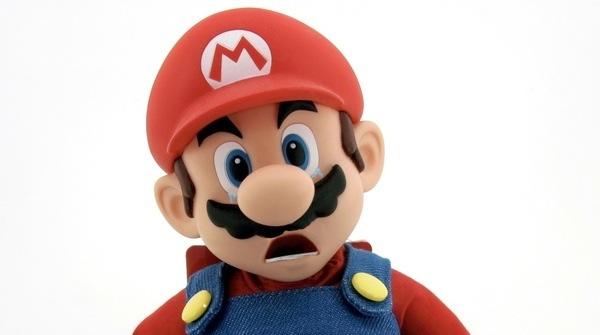
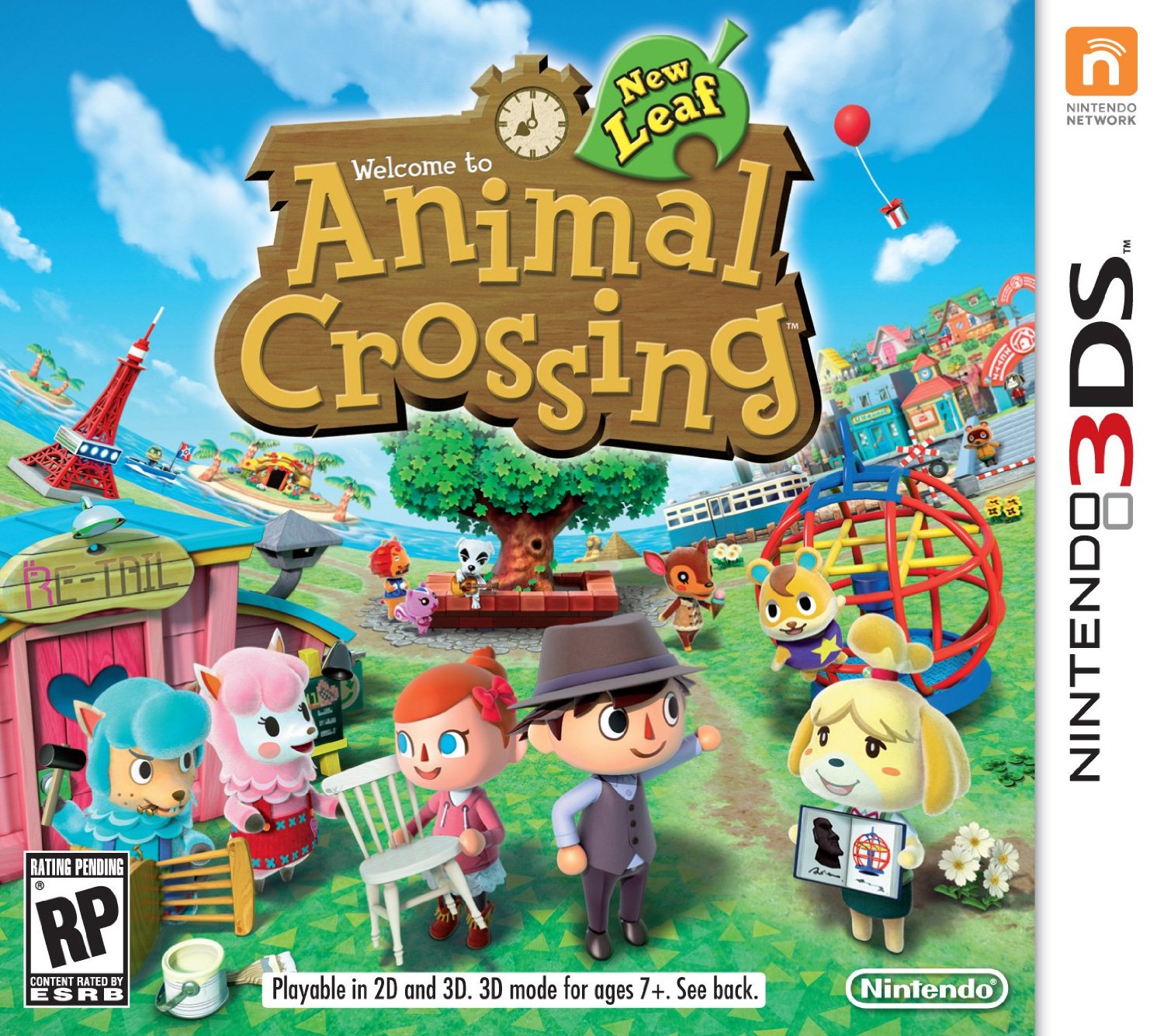
 You better get used to this Raccoon, because he owns you. Everything you do in your town goes through the Nook family (So much for being Mayor). If the above box art wanted to be anymore accurate to the game, there would be a large translucent Tom Nook in the sky laughing manically while looking down upon the town that crumbles at his whim. Tom Nook has what you need: somewhere to live and the tools required to live. He starts small of course, giving you a measly single room home with room for little more than a bed and a light, but he plays on your own greed, roping you into contracts for bigger and grander houses until you’re his slave. It’s then that your play time is consumed by fishing and bug catching just to pay back your immense debt to the Nook family.
 It shows, as the world of Animal crossing is a harmonious world where all types of animals live together under one town. The alligator resident isn’t ripping into the cat resident and there are no major fights over property: it’s a nice world. These acts of kindness make for a good lesson: be nice and play nice, and maybe you’ll be rewarded. Sure, you can also be a terrible villager and axe all of the trees and let your town go to ruin, but that would make for a pretty dull gameplay experience.



 The Sociology of Videogames