Can the Nintendo Switch Create Physical Gaming Spaces?

I recently did a pilot study of physical gaming spaces and why individuals choose to attend gaming events. I’m currently looking to extend the pilot study to a fully realized research project, and will hopefully share it when it is complete, but an interesting phenomenon occurred during the course of my research: The Nintendo Switch was released.

pane1


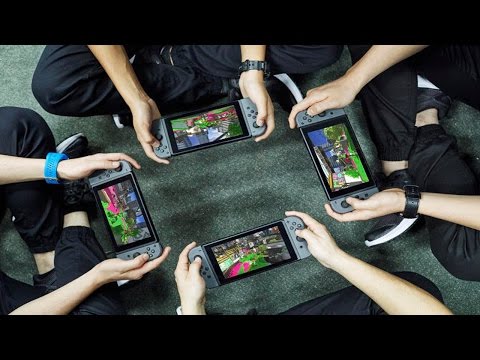
Released in early March, Nintendo’s new console handheld hybrid has been a hot topic in the gaming industry, but few are talking about what potential the console may hold for create physical gaming spaces. Simply put, physical gaming spaces are local gaming gathering, events, or meetings with the intent purpose of interacting together in a shared local environment. Examples of physical gaming spaces range anywhere from LAN Parties to competitive competitions.  Although handhelds have had wireless multiplayer for over a decade, those seeking a true console local multiplayer experience often had to go to great lengths to create physical gaming spaces around console gaming. With the Nintendo’s Switch’s ability to immediately transfer between Console and handheld, it has the unique ability to create authentic local multiplayer experiences anywhere, without the need to connect to a television or several handhelds.
hqdefault

Anecdotally, we’ve seen new stories of  athletes turning to the Nintendo Switch to kill time during rain delays and long travels, pointing to the console early success in reaching new audiences with innovative ways to create physical gaming spaces anytime, anywhere. Such an occurrence is exciting for anyone who is passionate about local multiplayer, as a rise in people playing in physical gaming spaces may result in more developers designing games that take advantage of space and place.  Although games like the Jack Party Box and Towerfall Ascension have had success in the ever increasing niche local multiplayer market, the industry is progressive moving towards one that promotes online interaction in lieu of local multiplayer; the 2017 ESA Report on video game consumption and use  found that the amount of time gamers play online with others is significantly higher than the amount of time they play with others locally. The Switch is still freshly on the market, and console shortages have prevented many gamers from being able to dive into all that console has to offer, so we’ll have to see how the console develops in regards to physical gaming spaces once the console is more readily available. Nonetheless, it’s an exciting time for people who enjoy playing locally; the industry has seen its first big developer’s push since the launch of the Wii.

I hope to update the blog as my research continues, but I would love your opinion about the Switch and what it may offer to both local multiplayer and physical gaming spaces. Feel free to post a comment or message me with your opinions or questions.


2017 ESA Essential Facts About the Computer and Video Game Industry

header

The Entertainment Software Association (ESA) has published their annual report about the computer and video game industry. This yearly report is an invaluable asset for researcher looking for statistics and figures concerning video game usage and consumption, as the ESA is the foremost collectors of this type of data. Each year they’re kind enough to report their findings, so let’s take a look at what this year’s report found.

Who is playing

averageage

More and more people are playing games, and the stereotype of video games being relegated to young boys is a thing of the past. The “average gamer” has seen an age decrease across both genders, with 2016’s report finding the average female was 44 and the average male gamer was 35. Nonetheless,  the demographics of the gaming community is shifting towards being an activity participated across all ages. Female gamers above the age of 18 make up significantly larger population of the gaming community than men under the age of 18. That may sound unimportant, but consider it in relation to the general cultural perception of video gaming be a teenage boy activity.

whosbuying

Despite gains in the community, male gamers still make up the most frequent purchasers of video games. Considering that free-to-play titles are often a popular genre of games for females, this statistic may be slightly misleading as to who is actually playing games.

household

It is now more likely to have a gamer in your household than it is not to. The percentage of households that have at least one person who plays 3 or more hours a week has seen a slight increase from 2015 (63%). With this percentage growing each year, more and more we are moving towards a culture in which playing video games is the norm.

Who Are Gamers Playing With?

We’ve established that gamers are playing, but who are they playing with? With an increase in the number of online enabled games and access to online multiplayer platforms increasingly becoming easier each year, it’s not unreasonable to assume that more people are playing together.

playingtogether

The numbers suggest that people are connecting through games, with the majority of gamers believing gaming to be a way to connect with friends. This statistic falls in line with contemporary research on how gamers view multiplayer interaction within their lives. The amount of time spent online vs. playing in person has actually shrunk from 2015, with gamers playing half an hour more with individuals in person in 2016. With developers such as Nintendo investing considerable attention in local multiplayer, particularly with the newly released Switch, it will be interesting to see how this figure changes next year. All of this is to say that people are using gaming as a way to connect with those around them, including their family members and spouses.

parentsTo go along with those findings, the amount of parental approval of video games has stayed steady with a very slight decrease from 2015 (68%). Despite this decrease, the majority of parents are found to believe video games are a positive influence on their kids’ lives and nearly all parents control the games their kids play in some way.

Other Findings:

  • Games are big money: the video game industry is continuing to grow, with the industry growing to 30.4 Billion from 23.5 Billion in 2015.
  • Bang for your buck: most gamers believe video games to be a better value for their money than music, movies, and dvds combined.
  • Digital Games are on the rise: digital purchases now make up 74% of all sales, with an increase from 69% in 2015.
  • Video Games are good for America: Video games added more than 11 billion to the GDP of the US in 2016.

Some great information for social science researcher to use to analyze video games and gamers. I left out a good deal of findings, so I definitely recommend checking out the actual report from the ESA. All graphics and pictures were pulled directly from the ESA’s report.

Follow me on twitter at @SocialVideoGame

Google Releases Findings on What Teens Find Cool

How do you do, fellow Kids?

itslit

Google today released  It’s Lit: A Guide to What Teens Think is Cool  a report of the brands, technology, and products teens think are cool. Of the topics covered in the report are what teens think are the coolest video games and video games brands. It’s rare that we see a huge company like Google conduct such forms of qualitative research (and share it), so I thought it would be worth looking at.

The first thing you’ll probably notice is the theme of the the whole report. It’s…grabbing?  From the name of the report “It’s Lit” to the usage of headlines like “Gen Z are the most aware generations in recent history”, it’s definitely trying to pander to a certain crowd. Likewise, its attempts at presenting the data seems like a shallow attempt to come off as cool itself; from the terminology being used to the overall design of the report. Google is clearly targeting a specific audience with this report and evaluating a reports presentation, focus, and scope is an important step in analyzing it’s validity and purpose. I can poke fun at how ironically uncool this presentation manner comes off for hours, but let’s move on and look at the actually findings:

googlevg1mqze8


The report finds that the most popular video games  amongst teens are, surprise surprise, the most popular games. The part of this I do find interesting is the reports usage of  descriptions as to why teens like video games. “It’s no wonder most teen boys see video games as a cool escape from reality”. That’s an odd statement that seems to come out of no where, and I’m not completely sure if it’s something they polled for or if it’s something they’re just pulling out of no where.

The narrative of video games prevalence being in part due to its escapism aspects is certainly true, but studies have found that it’s often not the leading cause for why people choose video games. Granted they follow up with more options as to why people choose it, but even those options feel as if it’s interjection added in by the report.

Here are the final two findings regarding video games, and even they are not all that controversial. It’s not unreasonable that a younger generation finds X-Box as the “coolest” video game company, considering that Microsoft has done a considerable amount to appeal to the younger demographic and appear hip and cool. The second graphic of brands is…Odd. To think that teens are saying “oreo”, “doritios” and “chrome” are the coolest of brands sounds almost as if it was a made up as a joke. I’m not questioning their validity, but I do wonder if these answers were perhaps some what leaded.  Which brings us to their methods:

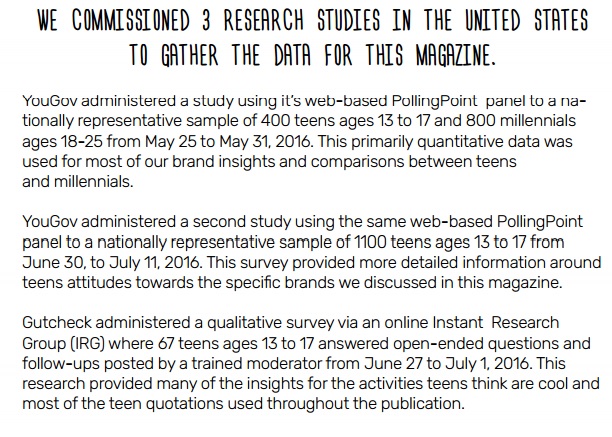
methods

It sounds like a solid piece of research, but I’d be interested to see what the actual poll looked like. I wonder if the poll was open ended or if it had specific answers for respondents to pick from. If the later was true, I think that would explain answers like “oreo” and “chrome” as appearing as the coolest brands.

In the end, it’s all a bit silly. This market research is attempting to label what is cool by the usage of products, as if they have some inherent value besides what we place upon them. It’s the ultimate capitalist research: we’re defining teens sense of “coolness” by products and things we can consume and buy. Any sort of philosophical or analytical thoughts of why things are “cool” are left to the background and almost completely left out of the findings.

Regardless, it’s interesting to see how a massive corporation like Google collect, interpret, and present data.

Video Game Music: Discussion and Resources

I often find myself listening to video game music as background music while I read or write. It makes sense, most of the tunes we hear in video games were meant to be just that: background music to your adventure and experience. Having played countless video games over the year, the right video game tune can bring back a deep memory or a long forgotten emotion. I can’t imagine I am the only one, so I’ve decided that the time may be right to discuss video game music.

image_1

Why should we care?

There’s some inherently interesting about video game music. Its evolution from basic background tunes composed out limited tech to grand orchestrated ballads that overlay movie level scenes is of interest in a historical context alone. Separated from the medium, sociology has had a long interest with music; the sociology of music has been a strong and intriguing sub-field within sociology because of music’s unique ability to bring people together in a shared experience. Many social researchers examine music and live-shows as a form of collective effervescence; a shared communal event in which people come together and share a release of emotion. All of this is to say that caring about the sociology of video game music is a natural extension of sociological interest that we can look at, explore, and try to understand. With an increase in the amount  musical events being formed around iconic video game series and songs (Legend of Zelda: Symphony of the Goddess, Video Games Live, etc.), more people are coming together to share their love for video game music and video games in general. If we’re to study video games as a medium and their social elements, then certainly video game music and the shared connections they forge are of pertinent interest to us researchers.

symphony
Symphony of the Goddess just announced a new world tour. If you’re a Zelda fan, it’s well worth checking out.

How should we research video game music and its community? Who should lead the charge in studying video game music? Game studies researchers? Music Researchers? Sociologists? Obviously Video Game music as a genre of music it doesn’t hold all the hallmarks of the dominant genres in the industry, but it does share a considerable amount with the overarching medium as a whole. Similarly there’s a considerable amount of concerns within the subfield as well; issues of archiving tracks, legality of who owns rights to tracks, and the place of fandom within maintaining and creating new remixes and tracks around their favorite games and series.There’s a good amount of questions that one can hypothesize concerning video game music, but the first and most accessible aspect is knowing one’s field. As such, I’ve put together a small resource list for researchers and fans alike to discover new and old video game tracks.

Resources

It may not dawn upon everyone that listening to your favorite video game tunes is something one can even do. We’re fortunate to live in a time in which more or less every video game soundtrack is readily available one way or another. Here are some useful resources to listen to some great video game music that don’t require you to pirate or spend tons of cash:

galaxysound

VGM Radio

VGM Radio is just that: a video game music radio station. If you’re feeling like having a mix of tunes, genres, and eras, then VGM is a great choice to let your video game music interest get set on shuffle.

RPG Gamer Radio

As with VGM radio, RPG Gamer Radio is another great choice for a video game related radio station available for free online.

Video Game Music Radio App (IOS)

If you feel like listening to video game music on the go and have a mobile device, the Video Game Music Radio App is a great free choice. Featuring an array of channels, you’re likely to find a station that meets your interest. I recommend RadioSega if you’re a fan of a classic Sega tunes.

/R/Gamemusic

If you’re more interested in discussing video game music, then you’ll need a place to do so. In this case Reddit provides a great outlet for gamers seeking to connect around video game music and discuss classic and modern tunes alike.

Youtube

Of course the most valuable resources for researching video game tunes is youtube. With a dedicated community of gamers uploading musical tracks, compiling playlists, and sharing remixes, youtube is a great place to find any video game track you’re looking for.

So this may have just been an excuse for me to talk about video game music and share some links to fellow gamers, but I do believe that video game music has a place within the analysis of the medium for social researchers. The amount of activities and shared interactions that are being created around video games are increasing with each year. As someone who has been to multiple of these video game related concerts and shows, I can tell you that the experiences and interactions shared there are genuine ones. We’ll see where video game music goes in the future, and where its place within the medium as a whole falls.


BBC’s The Women Challenging Sexism in E-Sports

A quick one to share today:

Apart of their 100 Women of 2016 series, a series of videos and articles about influential women in varying industries, the BBC has put together a video and accompanying piece about women in the world of competitive gaming.

Stephanie Harvey and Julia Kiran, two of the most prominent female gamers in the world of competitive gaming, speak out about the challenges they have had to overcome and the hurdles that still exist in the gaming industry.  Issues of pay gap between males and females and consistent harassment plague the industry, so it’s great to see issues brought up.

Documentary Review: Man Vs. Snake

10439394_674494945988417_2082168650138827161_n

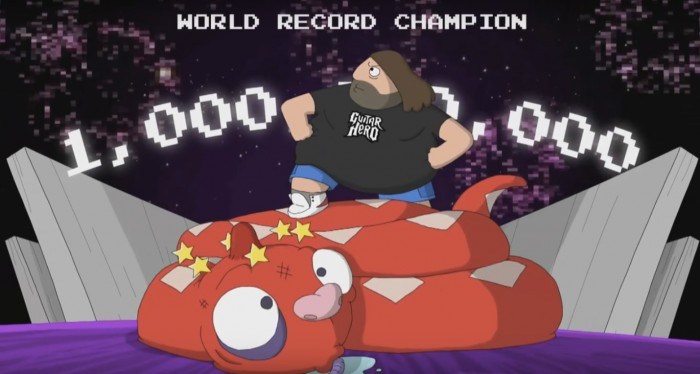
I had the chance to watch Man Vs. Snake, now streaming on Netflix, which tells the tale of the Nibbler world record holder. Like King of Kong before it, the movie  delves deep into the community of world-record arcade gaming and even brings out many of the characters at the forefront of King of Kong. I mention King of Kong because there’s undeniably no way this film wouldn’t be compared to it; it features a strikingly similar arc of individuals trying to achieve the high score of a old video game they once had high success with in their youth. Despite the comparison,  Man Vs. Snake actually tells its core tale more effectively than King of Kong; the story of Tim McVey trying to achieve the world record is one of constant struggle and hardships, and you get a genuine sense of McVey, his wife, and his life. That said, it perhaps isn’t quite as memorable as King of Kong, which was made extremely memorable by dynamic between Steve Weibe and Billy Mitchell and the absurdity of aspects of the community. For better or worse, Man Vs. Snake really puts its players at the forefront to make it a more human interest sort of documentary, which in this goal it succeeds in strides. McVey, who throughout the movie says he’s trying to expand the notoriety of Nibbler, comes off as an underdog trying to reclaim his early glory. Unlike Kong, the community comes off as much more unified and welcoming; with competitors not having the antagonistic relationships as much. Even Dwayne Richard, who in some ways plays the Billy Mitchell role in this film, comes off as supportive, even when he is faced with the controversy of perhaps rigging his record.

manvssnake-cartoon-billionpoints-700x374


What really is socially fascinating, for me at least, in both Man Vs. Snake and King of Kong are the communities built around these aged machines. World records of 30+ old video games aren’t typically the first thing you think about when you imagine communal gaming, but such movies speak to their power to bring people together and form bonds. One of the best moments of the movie comes in its final moments when Walter Day, whom has become a name synonymous with world record gaming, speaks to the power of video games:

walter_day_twin_galaxies_entertainment_center

“Video Games were just the device. It could have been all sorts of other things, but it happened to be video games… Video Games are like a superficial thing, it really was the essence of life challenging them, putting them at the forefront, making them have to go deep within, and really flower and pull out their own inner qualities and really decide what type of person they’re going to be”

All in all, it’s a fun and interesting enough documentary to fill your time. If you’re interested in gaming or have no prior knowledge of world record community I’d recommend giving it a shot.


New Research Finds Adult Men are Choosing Video Games Over Full-Time Work

It’s the end times my friends: Video games are destroying our economy.

New research coming out the Princeton, The University of Chicago, and University of Rochester has found a correlation between the abundance of high quality video games and uneducated adult men choosing to remain out of the workforce. The study itself isn’t yet available, but the Washington Post has a good summary of the study’s findings and an evaluation of what they may mean.

imrs

The study compares unemployment rates of adult men with happiness levels and screen time usage and found that, despite having higher unemployment rates than in previous years, adult men are on average reporting having higher levels of happiness, which is potentially tied to their increase in average video game usage. It’s a pretty interesting study with some pretty big implications:

While young men might temporarily enjoy a life of leisure, the implications could be troubling for them as well as the economy. The young men aren’t gaining job experience that will better equip them to work in their 30s and 40s. That, in turn, could lead to a lifetime of decreased wages, limited opportunities and challenges such as depression and drug use — problems that the United States is already seeing in areas hit with heavy job losses.

These are interesting findings, and in some way makes logical sense: the abundance of media is making people more content, unemployed or not. However, there are potentially other variables that are effecting this relationship. It’s not absurd to think that a contributing factor to adult men not entering the work force is because of the entry level job have been considerably reduced in recent decades due to shrinking opportunities for the working class: rather than enter the work force working for Mcdonalds and making next to little money, many adult men choose to stay at home and focus on their happiness instead.

imrs-happy

For an economist, these are certainly concerning findings because they exemplify how potentially disenfranchised uneducated adult men are with job opportunities. At the same time, it’s positive to see that happiness levels are steadily rising, potentially because of video games. Whats bad for the economy may be good for the individual.

I would need to read the entire study, including their methods, to make a better critique and analysis of it, but it’s great to see video games gradually become a more researched field. I highly recommend at least reading the Washington Post article as the research does do a good job of looking at the whole picture. Video games are important sociological variables that are pervading in all parts of society, so it’s great to see different disciplines starting to struggle with their place in society.

Capcom Investing In Benefits To Keep Female Employees

Really Quick one today:

capcom_logo

Japanese game developers have traditionally been slow towards creating more diverse work staffs, which makes Capcom’s announcement that they’ll be investing in medical benefits to encourage employees with children to stay with the company. In their annual report, which has lots of information about Capcom and where they see the industry headed, the veteran gaming made the commitment to keeping working mothers.

Capcom is engaged in improving the employment environment for women, promoting projects in which both women and men participate, and the proactive hiring of non-Japanese employees…In particular, with respect to improving the employment environment for women, we have introduced systems that promote utilization of paid leave before and after childbirth, childcare leave, and shortened working hours. In fiscal 2016, we promoted the establishment of children facilities within the company

It’s a small step, but an important one for a company that historically has had a lot of issues with gender representation. Capcom’s current workforce is made up of about 20% women, so hopefully this step towards retaining their currently female population will increase those numbers in future year.

You may be asking: “Hey, why should I care about female employees at Japanese gaming company getting benefits?”. Well, person who hates talking about benefits for Japanese women, the more video game companies invest in programs to diversify their work force the more we’ll get a diverse range of ideas and perspective in our games. Had Capcom had more female employees on their staff, maybe they wouldn’t have received such backlash for their depiction of  female characters in Street Fighter V….Just maybe.


Vice’s “The Invisible People: Why Asians Need to Be Better Represented in Video Games”

376266_v1

Vice News posted an article by Khai Trung Le entitled “The Invisible People: Why Asians Need to Be Better Represented in Video Games” that discusses the the lack or representation and misrepresentation of Asians in video games. It’s an interesting subject that often doesn’t get brought up in the community all that often. Before we discuss the article, here are some important tidbits from the article:

The issue of representation is perhaps more difficult to confront because Asians have always occupied a significant presence in games history, culture, and production, creating the assumption of a non-issue. China, Japan, and South Korea are strong markets for video games with their own idiosyncrasies, studios and market influence, and are certainly as responsible for propagating these tropes as Western developers and publishers. Nor do Asian men experience the same career barriers within the tech sector and generally are not currently under the extremities of harassment and hate felt by others: not under threat of deportation or assumptions of terrorist sympathies, nor under fear of trigger-happy law enforcement. Fortunately, there has been no organized social-media movement against Asians—although some of the coarser language certainly focused on ethnicity—but rather a continuous disregard.

Nevertheless, 49 percent of Asian American respondents to a 2015 Nielsen survey “strongly disagreed” with the statement of “all races have ample representation/inclusion in video game characters.” This is more than twice as high as Hispanic and African American respondents, and similarly more than twice as high than women that “strongly disagreed” with the same statement toward gender.

I think the reason representation in video games doesn’t often get brought up in regards to Asian communities is that there is a misconception that Asian characters are being well represented in video games, primarily due to Japanese characters having a good deal of representation in the medium. There in lies the issue; the terms Asian is such a broad term referring to such a vast number of cultures and people that one population within the umbrella term receiving representation in no way should trivialize other groups’ lack of representation. One Asian community does not represent all Asian communities, and nor should representation be looked at as a form of checking of groups.

The article is pretty articulate in regards to the problems of representation in gaming, but it should be noted that the article’s focus seems to be arguing more so for representation of Asian Americans within gaming, rather than Asian communities outside of the United States. Perhaps this division goes without saying, but the article doesn’t make the distinction which will perhaps lead viewers to extend his viewpoint to more communities than just Asian Americans. Regardless, representation within the Asian American community in general is a subject matter that extends to many forms of media and gaming is no different. As the author puts forward, we’re seeing some positive portrayals in recent games but a significant portion of Asian Americans feel that video games are underrepresenting or misrepresenting their communities. With more emerging game development communities forming in Asian countries like China and S.Korea, hopefully we’ll begin to see other Asian communities better represented within gaming as a whole. Similarly, American developers need to be more conscious of representing the entire American population within their game, which needs to include the various Asian American communities that call the United States home. More diverse characters with more diverse backgrounds mean for more interesting games.

Pokemon Go: A Bizarre Social Experiment

pokemongonewinfo

I don’t need to tell you that Pokemon Go released this week for IOS and Android in the U.S, you already know this because of the numerous grown adults who have stopped right in front of you while walking.  The game made headline and incredible numbers within hours of being released and it isn’t showing any signs of slowing. Popularity alone isn’t enough to be deemed noteworthy here on the Sociology of Video Games (Take that Overwatch!), but Pokemon Go is proving to be much more than just a game; it’s becoming a social experiment.

pokemon-go-nick_statt-screenshots-1-0

For those unaware, Pokemon Go has users going out into the world looking for Pokemon in their communities. Certain Pokemon appear is specific areas, and the abundance and availability of Pokemon change depending on your location.The game also features Pokestops and Gyms, which are specific landmarks that earn new tasks, abilities, and items, and these locations are scattered throughout various designated spots in each community. Players choose between 1 of 3 teams and each team must work together to claim the most gyms by battling it out with other players. How this translate to the real world is that users are venturing out of their homes to find new Pokemon and new locations that offer them rewards (I.E the baptist church down the street is seeing more people than it has in 20 years). What has developed since its release is a slew of very sociologically interesting events. To name a few:

Pokemon Go Pub Crawls are popping up in many major U.S Cities. Get wasted why you look at your phone and stumble into unknown territory with strangers. What could go wrong?

Pokemon Go is bringing a lot of new business to locations deemed Pokestops. You know that Barbershop down the street you never had the guts to try? Now you can, because a game developer has deemed them worthy of Mons.

Robbers are using Pokemon Go to lure potential victims. Sorry, no Jynxs here…Just The Jinx

Pokemon Go is showing positive benefits for people with metal illness and depression. Who needs a therapy dog when you can have 150 different Pokemon to tend to.

aaeaaqaaaaaaaawjaaaajguwzwy5ntkzltkxnzktngniny05ntizltayytc1owvlzdazmw

And those are just a start. What we’re seeing is that Pokemon Go is changing up many normal gaming conventions and creating a new way of play. People are interacting, bonding, cooperating, and working together in new and dynamic ways.It’s really quite something to observe, as one probably wouldn’t imagine that it would take a video game for people to venture further into the community and be opened to new locations and places. The developer, Niantic, ingeniously went about how they crafted their Pokemon world; Art installations, unique community landmarks, and lesser known locations make up many of the Pokestops and Gyms, spurring many players to discover new things in their local community. Similarly, the gym mechanic is making for something interesting partnerships between strangers, as taking over  a gym pretty much requires you to work with others in your group or else your Pokemon will be trounced by the opposing team.

pokemon-go

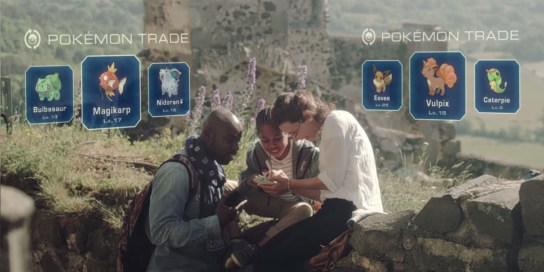
Pokemon, even if its first incarnation, has always been a social game and Pokemon Go is proving to be a brilliantly crafted take on the franchise’s social elements. I personally think Pokemon Go is a really unique app. I say app, because it’s honestly a little light on the actual game side. It’s more the social phenomenon that the game has created that keeps bringing me back to the app, checking to see if any new Pokemon are near me. Niantic has the basis of something amazing; if they improve upon the game’s features and add more of a built in social element (the ability to trade, battle near by trainers, etc) then Pokemon Go might be a near perfect social mobile adaptation of the Nintendo franchise. The developer seems to have plans to expand the game, and with their record breaking numbers it’s likely we’ll be hearing about Pokemon Go for years to come. We’ll keep watching this bizarre social experiment of catching fictional beasts out in our community and report back with any more sociologically interesting findings.